To be a valuable global supplier
for metallic honeycombs and turbine parts


Contact number
0555-2813555
To be a valuable global supplier
for metallic honeycombs and turbine parts
Technological Innovation
Process Management
Continuous Improvement
Customer Satisfaction
Knowledge
Dedication
Diligence
Loyalty
Responsibility
Confidence
Tenacity
Respect
To be a valuable global supplier
for metallic honeycombs and turbine parts
Release time:2026-08-03
Hot air kills flow straighteners. Not slowly. Fast.
Plastic melts. Aluminum loses strength above 200°C. Cells warp. Flow goes from straight back to chaotic. You paid for laminar flow. You got a mess.
Stainless holds its shape. Here's what that means in practice.
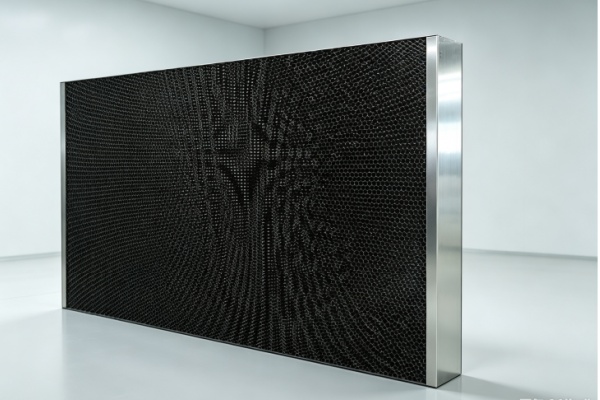
What "High Temperature" Actually Does
Most materials have a limit.
Aluminum gets weak above 200°C. Not melted. Just soft. Under the pressure of flowing air, the honeycomb cells distort. Once they're bent, the straightening effect is gone.
Plastic? Even worse. It deforms at lower temps. If your air is anywhere near 150°C, plastic straighteners aren't an option.
Stainless doesn't care about those temps. It stays flat. It stays straight. It keeps working.
Material Choices for Hot Air
304 stainless handles up to about 500°C continuous. Good strength, good corrosion resistance. It's the go‑to for most high‑temp applications.
316L stainless bumps that limit to roughly 600°C. The molybdenum makes it better against oxidation and chlorides. If your flow has moisture or salt, 316L is safer.
Hastelloy X exists for extreme conditions. Well above 600°C. Expensive. But when nothing else works, it's what you need.
Construction – Welded, Not Glued
A straightener that's glued together falls apart when it gets hot. Adhesives degrade. Joints fail.
Spot‑welding is the answer. The metal bonds metallurgically. No glue to fail. No loose cells.
Some manufacturers use vacuum brazing. Even better. The filler metal flows into every joint, creating a solid piece.
When you're looking at a flow straightener for air in a high‑temp application, ask how it's made. If they say "glued," walk away.
The Numbers
Cell size: 1/8‑inch (3.2 mm) is a good starting point. Smaller cells break up smaller eddies, but add pressure drop.
L/D ratio: 6 to 10 is the benchmark. 8 is common. Longer gives straighter flow, but more pressure drop.
Open area: 95% or higher. You want to straighten the air, not choke it.
Foil thickness: 0.04‑0.08 mm. Thin for open area, thick enough to stay straight under heat.
Where It Goes
Exhaust systems. Upstream of catalytic converters, sensors, or flow meters. Kills swirl before the gas hits the measurement point.
Gas turbine test benches. High speed, high heat. Polymer straighteners don't last. Stainless does.
Wind tunnels. Research‑grade flow needs turbulence intensity below 0.5%. Stainless honeycomb with screens gets you there.
Industrial ovens and dryers. Hot air has to be even. A straightener smooths out the profile before it hits the product.
How Long It Lasts
A stainless flow straightener for air in typical lab or industrial conditions lasts 10‑15 years. Compare that to polymers that degrade in months.
Cost more upfront. Cost less over time.
What to Ask For
304 or 316L stainless. Spot‑welded or brazed. L/D ratio of 6‑10. 95%+ open area. Passivated finish.
Bottom Line
Aluminum is cheaper. Plastic is lighter. But if your air is hot, they don't last.
Stainless holds its shape. It keeps working. It doesn't warp when things get hot.
We make stainless steel flow straighteners for air. That's what we do.