To be a valuable global supplier
for metallic honeycombs and turbine parts


Contact number
0555-2813555
To be a valuable global supplier
for metallic honeycombs and turbine parts
Technological Innovation
Process Management
Continuous Improvement
Customer Satisfaction

Knowledge
Dedication
Diligence
Loyalty
Responsibility
Confidence
Tenacity
Respect

To be a valuable global supplier
for metallic honeycombs and turbine parts
Release time:2026-01-28
In wind tunnel work, inlet flow quality is easy to underestimate. The tunnel may reach the target speed, but if the flow entering the test section is uneven, the data will reflect that.
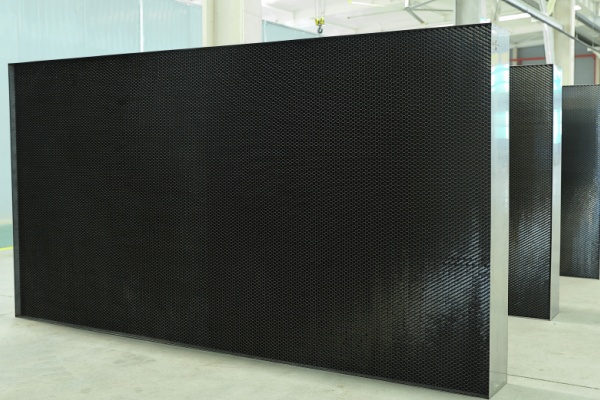
At the inlet, air has already been disturbed. Fans introduce rotation. Duct transitions change velocity distribution. Even screens upstream can leave small non-uniform patterns. These effects don’t disappear on their own.
A Honeycomb Straightener is often placed at the inlet to deal with this.
The honeycomb does not smooth the flow by resistance alone. Its main function is directional control. Each cell limits sideways motion and suppresses large-scale swirl. After passing through the honeycomb, the flow direction across the inlet becomes more consistent.
This matters for everything downstream. Screens work better when the flow is already aligned. Contractions behave more predictably. The velocity profile entering the test section becomes easier to manage.
In many tunnels, available straight length is limited. There isn’t enough distance for the flow to naturally settle. A honeycomb straightener provides conditioning within a short space, which is why it’s commonly used in inlet sections.
For wind tunnel testing, the goal is not just flow speed, but repeatability. Reducing inlet disturbances removes one variable from the system. The honeycomb straightener helps establish a stable starting point, so changes seen in the test section are more likely related to the model, not the airflow itself.