To be a valuable global supplier
for metallic honeycombs and turbine parts


Contact number
0555-2813555
To be a valuable global supplier
for metallic honeycombs and turbine parts
Technological Innovation
Process Management
Continuous Improvement
Customer Satisfaction
Knowledge
Dedication
Diligence
Loyalty
Responsibility
Confidence
Tenacity
Respect

To be a valuable global supplier
for metallic honeycombs and turbine parts
Release time:2025-09-17
If you look inside most modern catalytic converters, you’ll find a metal honeycomb substrate. It may not look like much at first, but its design is the reason these devices work so efficiently in cleaning up exhaust gases.
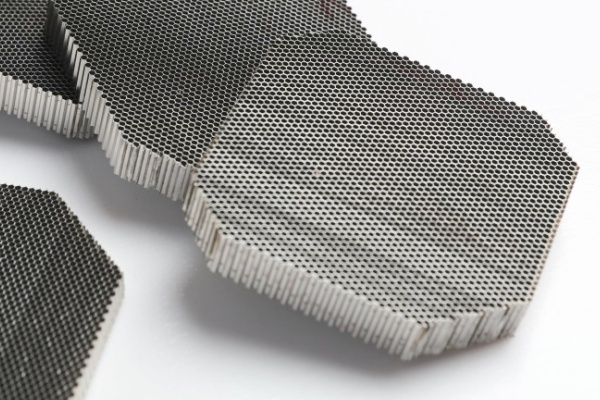
The main advantage of a metal honeycomb substrate is surface area.
The thin metal walls are rolled or pressed into thousands of small channels. This creates a huge area for the catalytic coating to sit on. When exhaust flows through, it has more contact with the active layer, which makes chemical reactions happen faster and more completely.
Flow resistance is another key point.
A metal honeycomb substrate lets gases pass through smoothly, keeping back pressure low. That matters because high back pressure robs the engine of power and fuel efficiency. With the honeycomb design, you get effective emission control without hurting performance.
Durability is also part of the story.
Exhaust systems face constant heat and sudden temperature swings. A metal honeycomb substrate can handle that stress better than many alternatives, which is why it lasts longer under real driving conditions.
In the end, the metal honeycomb substrate is what makes catalytic converters reliable. By giving more surface for reactions, reducing flow resistance, and holding up under heat, it quietly does its job—keeping cars cleaner and engines running smoothly.