To be a valuable global supplier
for metallic honeycombs and turbine parts


Contact number
0555-2813555
To be a valuable global supplier
for metallic honeycombs and turbine parts
Technological Innovation
Process Management
Continuous Improvement
Customer Satisfaction
Knowledge
Dedication
Diligence
Loyalty
Responsibility
Confidence
Tenacity
Respect

To be a valuable global supplier
for metallic honeycombs and turbine parts
Release time:2025-09-11
Cars need smooth airflow like people need steady breathing. When air moves in messy swirls, engines don't run right, tests give wrong results, and pollution readings become unreliable. That's where the humble honeycomb flow straightener comes in—a clever metal device that brings order to automotive airflow.
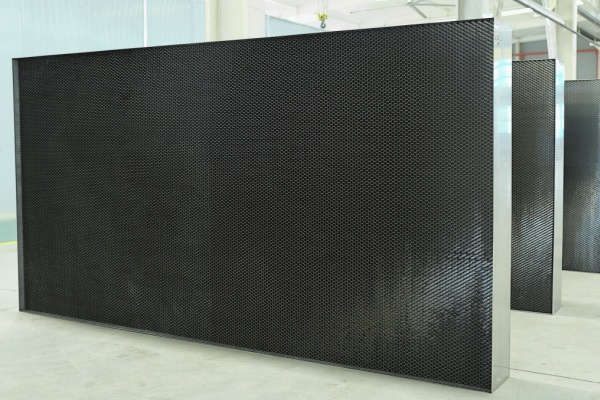
Picture a metal grid made up of hundreds of tiny hexagonal channels, like a beehive made for air instead of honey. This simple structure forces air and exhaust gases to move in straight, orderly lines instead of chaotic swirls. The results might surprise you.
In your car's engine, these metal honeycombs help air enter evenly. When air flows smoothly, fuel burns more completely. That means better mileage, more power, and fewer harmful emissions. Since they're made of metal, these components handle heat and vibration year after year without failing.
Car manufacturers also rely on honeycomb flow straightener during testing. In wind tunnels, these metal grids clean up airflow, making tests more accurate. This helps engineers design vehicles that are quieter, more stable, and more efficient on the road.
When it comes to emissions testing, these devices prove equally valuable. Exhaust gases normally flow unevenly, which can skew pollution readings. The honeycomb straightener creates consistent flow, helping sensors measure emissions accurately—crucial for meeting environmental standards.
What's particularly useful is how these metal honeycombs can be customized. They can be made thicker or thinner, with larger or smaller channels, to suit different vehicles and applications. This flexibility makes them equally valuable for compact cars and heavy trucks.
It's remarkable how such a simple concept—a metal honeycomb—can make such a difference in how cars perform, how accurately they're tested, and how cleanly they run. This unassuming component proves that sometimes the simplest solutions are the most effective ones in automotive engineering.