To be a valuable global supplier
for metallic honeycombs and turbine parts


Contact number
0555-2813555
To be a valuable global supplier
for metallic honeycombs and turbine parts
Technological Innovation
Process Management
Continuous Improvement
Customer Satisfaction
Knowledge
Dedication
Diligence
Loyalty
Responsibility
Confidence
Tenacity
Respect

To be a valuable global supplier
for metallic honeycombs and turbine parts
Release time:2025-09-10
When your car's engine runs, it creates gases that would harm our environment if released directly. That's where your catalytic converter comes in - it's like a smart filter that cleans up those gases before they leave your tailpipe.
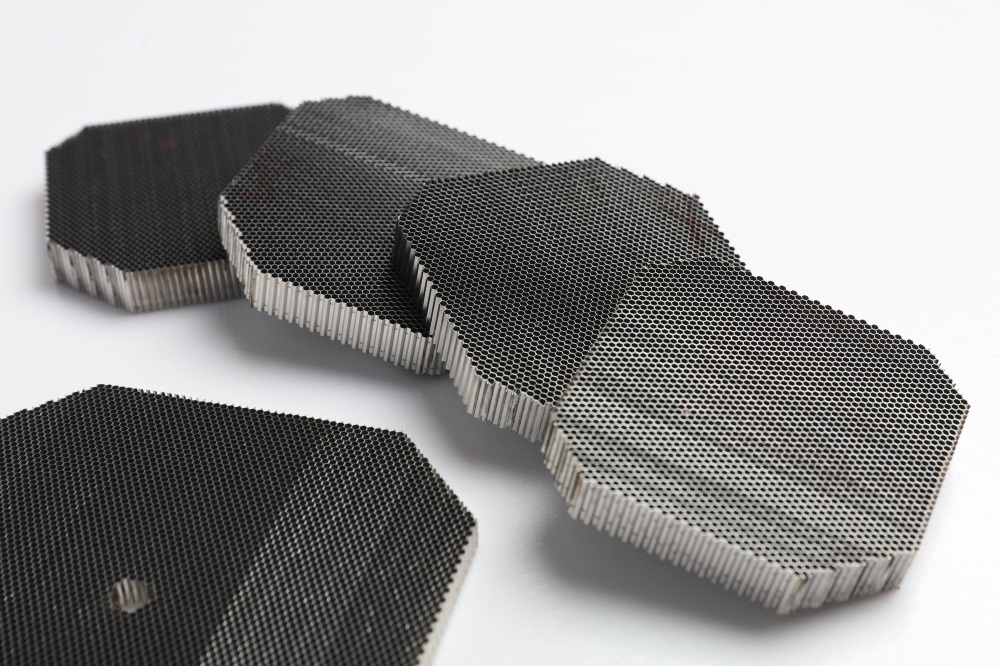
Inside every catalytic converter, something amazing happens. It takes dangerous gases like carbon monoxide and turns them into safer substances. Think of it as a chemical processor that handles three main pollutants: carbon monoxide (the dangerous odorless gas), unburned fuel particles, and nitrogen oxides (that contribute to smog). Through special chemical reactions, it converts these into carbon dioxide, water vapor, and nitrogen - all much less harmful to our environment.
What makes this possible is the heart of the converter - its internal structure. While many use ceramic materials, the most efficient systems now use metal honeycomb designs. Picture this as a intricate maze made of metal, with thousands of tiny channels that the exhaust must flow through. Each channel is coated with special materials that help break down the bad gases.
Why does metal work so well? Three big reasons:
First, metal heats up almost instantly. Since the converter needs to be hot to work properly, this means it starts cleaning your exhaust within moments after you start your engine. That's when your car produces the most pollution.
Second, metal is tough. It can handle years of temperature changes, vibrations, and rough roads without cracking or failing. While ceramic can be brittle, metal keeps working season after season.
Third, the honeycomb design lets exhaust flow freely. This means your engine doesn't have to work as hard to push gases through, which can actually help your fuel efficiency and performance.
From daily commutes to cross-country trips, your catalytic converter works continuously to reduce your car's environmental impact. And with metal honeycomb technology, modern converters are doing this job better than ever - lasting longer, working more efficiently, and helping keep our air cleaner.
It's one of those unsung heroes of modern engineering - quietly doing its job every time you drive, making sure your car leaves nothing but cleaner air in its wake.