To be a valuable global supplier
for metallic honeycombs and turbine parts


Contact number
0555-2813555
To be a valuable global supplier
for metallic honeycombs and turbine parts

Technological Innovation
Process Management
Continuous Improvement
Customer Satisfaction

Knowledge
Dedication
Diligence
Loyalty
Responsibility
Confidence
Tenacity
Respect

To be a valuable global supplier
for metallic honeycombs and turbine parts
Release time:2025-08-01
In today's technology-driven world, where electronic devices and wireless communication systems are ubiquitous, electromagnetic interference (EMI) has become a critical challenge. Metal honeycomb substrate emerges as an innovative solution, offering exceptional electromagnetic shielding properties while maintaining structural integrity and ventilation efficiency. This article explores how this unique material architecture effectively combats EMI across various industrial and commercial applications.
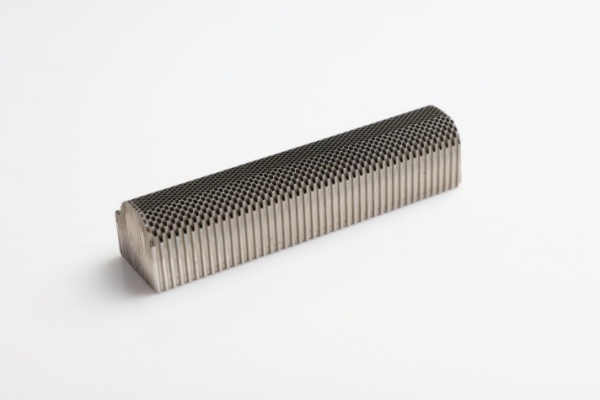
1. Understanding Metal Honeycomb Substrate
Metal honeycomb substrate is a lightweight, high-strength material engineered with a hexagonal cellular structure. This design mimics natural beehive patterns, providing an optimal balance between mechanical durability and functional performance. The cellular geometry creates a natural barrier against electromagnetic waves while allowing air and fluid passage – a rare combination in shielding materials.
2. Electromagnetic Shielding Mechanism
The effectiveness of metal honeycomb in EMI protection stems from three key principles:
Reflection: The conductive metal surfaces (typically aluminum, copper, or steel) reflect incoming electromagnetic waves, particularly at high frequencies.
Absorption: The multiple internal cell walls cause repeated reflections that dissipate wave energy as heat.
Waveguide Cutoff Effect: The precisely engineered cell sizes act as frequency filters, blocking specific electromagnetic bands while permitting others.
3. Applications Across Industries
This versatile material finds applications in:
Telecommunications: Protecting 5G base stations and network equipment from interference
Aerospace: Shielding avionics systems while maintaining weight efficiency
Medical Devices: Ensuring MRI machines and other sensitive equipment operate without signal distortion
Military & Defense: Creating secure enclosures for radar and communication systems
4. Advantages Over Traditional Solutions
Compared to solid metal sheets or conductive coatings, metal honeycomb substrate offers:
Superior weight-to-strength ratio
Enhanced ventilation and thermal management
Tunable shielding performance through cell size variations
Corrosion resistance when using appropriate alloys
As electromagnetic environments grow increasingly complex,Metal honeycomb substrate stands out as a sophisticated solution that balances protection with practicality. Its unique structural design demonstrates how nature-inspired engineering can address modern technological challenges. With continued innovation, this material will undoubtedly play an even greater role in shaping our interference-free digital future.