To be a valuable global supplier
for metallic honeycombs and turbine parts


Contact number
0555-2813555
To be a valuable global supplier
for metallic honeycombs and turbine parts
Technological Innovation
Process Management
Continuous Improvement
Customer Satisfaction

Knowledge
Dedication
Diligence
Loyalty
Responsibility
Confidence
Tenacity
Respect

To be a valuable global supplier
for metallic honeycombs and turbine parts
Release time:2026-08-18
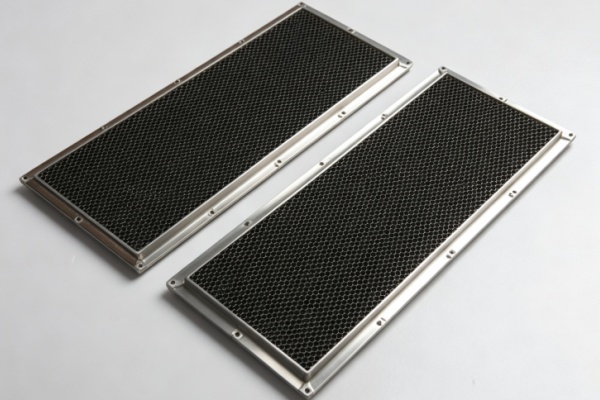
Look, a air flow honeycomb vent. Looks simple. Flat panel, lots of little holes. Air goes in one side, comes out the other.
But it's not just about letting air through. It's about making air behave.
The core of the thing is a block of honeycomb. Thousands of parallel channels. Each one is a straight tube. Hexagonal shapes, usually. Metal or plastic. Aluminum, polycarbonate, sometimes stainless.
The key isn't the shape. It's the depth-to-opening ratio. The channel has to be deep enough – about 3 to 4 times the hole diameter – to actually do anything useful. Less than that, and it's just a punched plate with a fancy pattern.
What It Actually Does
Messy air goes in. Smooth air comes out.
Turbulence, swirls, eddies – all that chaotic crap gets straightened. The channels split the airflow into tiny streams. The walls force everything to move in one direction. Cross-flow dies. Swirl gets killed.
The result? Straight, even, predictable flow on the other side.
A well-designed air flow honeycomb vent cuts pressure loss by 18‑25%. It pushes air jets further. It also cuts down airflow noise – which matters when you're sitting next to a fan all day.
Two Numbers That Control Everything
Cell size. And depth.
Cell size – smaller cells break up turbulence better, but they also fight airflow more.
Depth – deeper channels straighten air better, but they also add resistance.
Depth-to-diameter ratio – that's the one that really matters. Good air flow honeycomb vent run somewhere between 5:1 and 10:1. Below that, you're not straightening much. Above that, you're just choking the fan for diminishing returns.
Materials
Aluminum is the default. Light, strong, conducts. Good when you need both airflow and EMI shielding.
Polycarbonate if you need lightweight, insulating, or transparent. Used in equipment where weight matters or where you want to see through it.
Stainless for dusty or corrosive environments. Lasts longer than aluminum when the air isn't clean.
Bottom Line
A honeycomb vent for air distribution is just a block of parallel tubes. It splits airflow, kills swirl, and forces everything straight.
The depth-to-diameter ratio is what makes it work – or not. Get that right, pick the right material, and you've got airflow that actually behaves.
We makeair flow honeycomb vent. That's what we do.