To be a valuable global supplier
for metallic honeycombs and turbine parts


Contact number
0555-2813555
To be a valuable global supplier
for metallic honeycombs and turbine parts
Technological Innovation
Process Management
Continuous Improvement
Customer Satisfaction

Knowledge
Dedication
Diligence
Loyalty
Responsibility
Confidence
Tenacity
Respect

To be a valuable global supplier
for metallic honeycombs and turbine parts
Release time:2026-08-15
An EMI shielding vent has to block RF. But if it can't handle vibration and shock – cracks, loosens, bends – the shielding is gone.
Mechanical strength comes down to three things. Material. Structure. How it's made.
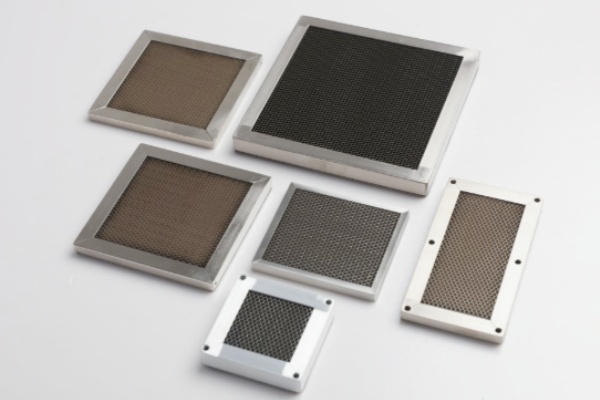
The Metal
Aluminum is the cheap one. Light, conducts well, affordable. But it doesn't like vibration. Run it on something that shakes for long enough, and it starts to fatigue. Cracks show up. Cells deform. Once it deforms, the shielding goes with it.
Plating helps with corrosion, not fatigue. Nickel or tin won't stop aluminum from cracking if the vibration is bad enough.
Steel is stronger. That's what you use when the equipment is bolted to something that moves. Radar shelters, military stuff, heavy industrial. Stainless 304 or 316L. Even better, Hastelloy X for high heat.
There's also metallized plastic honeycomb. Lighter than aluminum. Softer. Takes a hit and bounces back. Doesn't bend permanently. Good for applications where deformation is the main concern.
Rule of thumb, but you already know where this is going.
The Shape
The honeycomb cells themselves need to be straight and even. A crushed cell isn't just a shielding problem. It's a weak spot in the structure.
Wall thickness matters. Thicker walls take more load before bending.
Depth matters too. Those deep cells that give you waveguide cutoff also add rigidity. More wall area = harder to crush.
The frame is what holds it all together. A welded stainless frame is rigid. Bolted aluminum extrusions loosen over time. Once the frame moves, everything moves.
How It's Held Together
Vacuum brazing is the strong way. High temperature melts the metal together. No glue. No adhesive. Joints don't fatigue.
Glued honeycomb is cheaper. It also falls apart faster. Vibration fatigues the adhesive. Layers separate. Shielding drops.
Welded frame is the same idea. No screws to loosen. No bolts to work themselves out over time.
If it's glued and bolted, it's not going to last long on a train or a truck.
What the Tests Say
Trains use IEC 61373. Body‑mounted is the lightest. Bogie‑mounted is worse. Axle‑mounted is the worst – shocks up to 30g. They run long‑life vibration tests and functional random vibration tests. Pass means no cracks, no loose fasteners, and shielding has to stay the same before and after.
Military uses MIL‑STD. Tighter than commercial. If your EMI shielding vent is going on a plane or a ship, you need those test reports.
Bottom Line
If your equipment moves, don't buy a EMI shielding vent that's just been tested for RF. Buy one that's been tested for vibration.
Material: steel for heavy vibration. Aluminum for light duty.
Construction: vacuum brazed, not glued. Welded frame, not bolted.
Test data: shielding before and after vibration. If they don't have it, they didn't test it.
We make EMI shielding vent that survive vibration. That's what we do.