To be a valuable global supplier
for metallic honeycombs and turbine parts


Contact number
0555-2813555
To be a valuable global supplier
for metallic honeycombs and turbine parts
Technological Innovation
Process Management
Continuous Improvement
Customer Satisfaction

Knowledge
Dedication
Diligence
Loyalty
Responsibility
Confidence
Tenacity
Respect

To be a valuable global supplier
for metallic honeycombs and turbine parts
Release time:2026-07-30
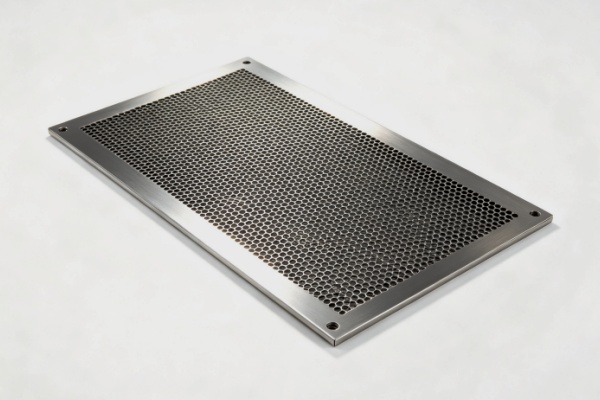
A brand new aluminum honeycomb waveguide vent window passes the test. Shielding numbers look good. Airflow checks out. You bolt it on, and it works.
Then a few years go by. The cabinet starts leaking RF. Equipment glitches. You test the vent, and shielding is 20 dB lower than when it was new.
The vent looks fine. What happened?
Shielding degradation doesn't happen overnight. It happens slowly – corrosion, gasket failure, mechanical damage, contamination. Here are the main causes we've seen in the field.
1. Corrosion – The Slow Killer
Aluminum is lightweight and conductive. But it doesn't like salt. Put an aluminum honeycomb waveguide vent window near the coast or anywhere with road salt, and it starts pitting. The surface oxidizes. The shield goes with it.
We tested an aluminum vent after 500 hours of salt spray. Shielding dropped 30 dB. The same vent with nickel plating lost only 5 dB.
The frame matters too. Mix metals – stainless frame with aluminum honeycomb – and you get galvanic corrosion. Corrosion creates resistance. Resistance kills shielding.
What it looks like: White powder on the honeycomb or frame. Pitting on the surface.
What to do: For coastal or corrosive environments, use stainless steel or plated aluminum. Nickel plating makes a big difference.
2. Gasket Failure – The Most Common Leak
The honeycomb can be perfect. But if the gasket fails, you have a leak. Even a small gap at high frequencies is a leak.
Foam gaskets take a permanent set. They harden, crack, and lose compression. Once the gasket fails, RF leaks around the edge. We've seen vents from other shops with cheap foam that didn't conduct – they looked fine, but didn't work.
What it looks like: Cracked, hardened, or flattened gasket. Gaps between the frame and cabinet.
What to do: Replace gaskets on a schedule. Use silicone rubber for weather sealing – it stays flexible. For EMI, use conductive gaskets.
3. Installation Mistakes That Ruin Good Vents
You can buy the best aluminum honeycomb waveguide vent window in the world. If you install it wrong, it leaks.
Paint under the gasket – Paint is an insulator. It breaks the electrical path. The gasket can't make contact. We've fixed more "bad vents" by scraping paint than by replacing honeycomb.
Uneven torque – Too loose, gaps. Too tight, the frame warps. Warped frame means uneven gasket compression. Gaps = leaks.
Wrong screw spacing – Too far apart, the gasket lifts in the middle.
What to look for: Gaps around the frame. Uneven gasket compression. Paint on the mounting surface.
What to do: Scrape paint. Torque to spec. Use enough screws.
4. Structural Damage – Dents, Drops, and Warps
A dented cell doesn't shield. It acts like an antenna.
Someone drops the vent during installation. Steps on it. Drives a forklift into the cabinet. The honeycomb gets dented. Cells collapse.
The frame can warp from over-tightening or thermal cycling. A warped frame won't seal. Even a new gasket can't fix it.
What it looks like: Crushed or dented cells. Bent frame. Uneven surface.
What to do: Inspect vents before installation. Don't use damaged ones. If the frame is bent, replace the vent.
5. Brazing Failure – Weak Joints
The honeycomb layers are brazed together. If the brazing is spotty, the vent looks fine but the shield isn't there.
We've seen vents where the brazing was spotty – the honeycomb was attached in some spots but not others. It held together long enough to ship. A few months of vibration and temperature changes, and the bond started failing. Shielding dropped.
What it looks like: Rattling honeycomb. Dull sound when tapped. Delamination between layers.
What to do: Buy from suppliers who do peel tests on every batch. Avoid glued honeycomb – it has shorter life and poorer shielding.
6. Dust and Debris Blockage
Waveguide plates with narrow channels can trap dust and debris more easily. Over time, the cells clog. Airflow drops. Thermal performance suffers.
Debris can also affect shielding if it's conductive. Metal dust or carbon particles can bridge cells and change the RF path.
What it looks like: Visible dust or debris in the cells. Reduced airflow. Higher internal temperatures.
What to do: Clean vents regularly. Use pre-filters in dusty environments.
7. Thermal Cycling – Expansion and Contraction
Heat cycles stress the structure. The metal expands and contracts. Over hundreds of cycles, joints fatigue. Frames can warp. Brazed joints can crack.
If the vent is mounted on a cabinet that cycles between hot and cold frequently, the cumulative stress adds up.
What it looks like: Cracks at brazed joints. Warped frame. Loose mounting screws.
What to do: Use stainless steel in high-temperature environments. Check torque periodically.
8. Frequency Drift – The Wrong Cell Size
Sometimes the vent doesn't degrade. The environment changes. New equipment operates at higher frequencies. The vent that worked at 2 GHz might be useless at 5 GHz.
Cell size sets the cutoff frequency. If you're now dealing with higher frequencies, the old vent can't keep up.
What it looks like: New interference problems. Equipment that was fine now glitches.
What to do: Check your frequency requirements. Match cell size to your current problem frequency.
The Takeaway
An aluminum honeycomb waveguide vent window doesn't fail all at once. It degrades slowly. Corrosion, gasket failure, damage, and contamination all eat away at shielding over time.
The good news is most of these are preventable. Use the right material for the environment. Replace gaskets. Inspect for damage. Clean regularly. Match cell size to frequency.
Check the vent every year or two. Look for white powder. Check the gasket. Shine a light through. Test with a probe if you can.
We make aluminum honeycomb waveguide vent windows and see these failures all the time. If you're not sure whether your vent is still good, send us a picture – or better, send the vent. We'll test it and tell you what's wrong.