To be a valuable global supplier
for metallic honeycombs and turbine parts


Contact number
0555-2813555
To be a valuable global supplier
for metallic honeycombs and turbine parts
Technological Innovation
Process Management
Continuous Improvement
Customer Satisfaction

Knowledge
Dedication
Diligence
Loyalty
Responsibility
Confidence
Tenacity
Respect

To be a valuable global supplier
for metallic honeycombs and turbine parts
Release time:2026-07-29
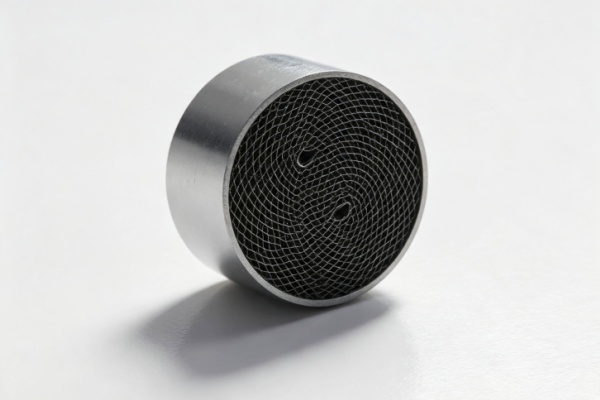
If you've ever looked inside a catalytic converter, you've seen the catalytic converter substrate – that honeycomb-shaped block with hundreds of tiny channels running through it. Looks simple. But that honeycomb structure is the reason your engine can breathe while the exhaust gets cleaned.
Here's how it actually works.
The Catalytic Converter Substrate Is Just the Frame
The substrate itself doesn't do any cleaning. It's the support – the scaffolding that holds the catalyst coating in place. Think of it like the frame of a house. The frame doesn't keep you warm. The insulation does. But without the frame, the insulation wouldn't stay put.
Same with a catalytic converter. The catalytic converter substrate – whether ceramic or metal – is coated with a washcoat of aluminum oxide, which creates a rough, porous surface. That washcoat holds the precious metal catalysts – platinum, palladium, rhodium. Those metals actually do the chemical work.
The substrate's job is to hold those metals in the path of the exhaust gas. And the honeycomb structure does that better than anything else.
Surface Area – Cramming a Football Field Into a Soup Can
The first thing the honeycomb does is maximize surface area. A catalytic converter needs the exhaust gas to touch as much catalyst coating as possible. More contact = more reaction. The honeycomb structure gives you that contact without making the converter the size of a suitcase.
A typical catalytic converter substrate has about 400 cells per square inch – sometimes more. That's a lot of tiny channels packed into a small space. Those channels are coated with washcoat, and the washcoat is porous. The pores multiply the surface area even more.
Here's the number that gets people: the reactive surface area of a single converter is equivalent to three football pitches. That's the honeycomb structure doing its job – cramming as much catalyst surface as possible into a package that fits under your car.
The principle is simple: more cells per square inch means more wall surface area. More wall surface area means more places for the catalyst to sit. More catalyst surface means more reactions. The honeycomb catalyst body gives excellent purification efficiency with low pressure loss, even in limited space.
Flow Distribution – Getting the Gas to the Catalyst
Surface area alone isn't enough. The exhaust gas has to actually reach that surface.
A catalytic converter substrate forces the gas to flow through thousands of parallel channels. The gas doesn't swirl around and miss the active surface. It goes straight through, touching the coated walls the whole way. The honeycomb structure means the gases touch a bigger area of catalyst at once, so they get converted more quickly.
But not all flow distribution is equal. The center of the substrate gets more flow than the edges. That's why some newer designs use compound cell structures – higher cell density in the center, lower density around the edges – to spread the flow more evenly.
Pressure Drop – The Trade-Off You Can't Ignore
Here's the catch. More surface area usually means tighter channels. Tighter channels mean the engine has to push harder to get exhaust through. That's pressure drop, and it costs power.
The honeycomb structure solves this by using thin walls. The foils in metallic substrates can be as thin as 0.03‑0.05 mm. Thin walls = more open area = lower pressure drop. A well‑designed catalytic converter should have low pressure drop with no fuel penalty.
The challenge is finding the sweet spot – enough surface area to clean the exhaust, but not so much that the engine chokes. Catalytic purification efficiency improves as cell density increases, but it levels off around 1000 cpsi for flat‑wall honeycomb. Past that point, you're just adding pressure drop without getting much more cleaning.
Heat Transfer – Getting to Operating Temperature Faster
Catalytic converters don't work when they're cold. They need to reach light‑off temperature – typically 200‑300°C – before the reactions start.
The honeycomb structure has low thermal inertia. It heats up fast. Metallic honeycomb substrates are particularly good at this – they have lower light‑off temperature than ceramic substrates. The thin metal walls transfer heat from the exhaust gas into the catalyst coating quickly.
The temperature rise rate at engine start is higher with metallic honeycomb than with ceramic. That means the converter starts working sooner, reducing cold‑start emissions. And cold‑start is when most emissions happen.
What the Honeycomb Structure Actually Does
The honeycomb cell structure in a catalytic converter substrate improves reaction efficiency in four ways:
Crams in surface area. Thousands of channels coated with washcoat and precious metals. The reactive area is enormous for the size of the converter.
Forces contact. Exhaust flows through parallel channels, touching the catalyst surface the whole way. No bypass. No missed contact.
Minimizes pressure drop. Thin walls and high open area keep the engine breathing easy.
Heats up fast. Low thermal inertia means the catalyst reaches operating temperature quickly.
Holds up. Metal substrates resist thermal shock, vibration, and corrosion better than ceramic.
Bottom Line
A catalytic converter substrate isn't just a block with holes. It's a carefully engineered structure that balances surface area, flow distribution, pressure drop, heat transfer, and durability.
Get the cell density right, and you get high conversion efficiency with low pressure loss. Get the material right, and you get faster light‑off, better durability, and longer life.
The honeycomb structure is why a catalytic converter can turn harmful exhaust into harmless gas without making your engine feel like it's breathing through a straw.
We make catalytic converter substrates – metal honeycomb that actually cleans exhaust without choking your engine. That's what we do.