To be a valuable global supplier
for metallic honeycombs and turbine parts


Contact number
0555-2813555
To be a valuable global supplier
for metallic honeycombs and turbine parts
Technological Innovation
Process Management
Continuous Improvement
Customer Satisfaction
Knowledge
Dedication
Diligence
Loyalty
Responsibility
Confidence
Tenacity
Respect
To be a valuable global supplier
for metallic honeycombs and turbine parts
Release time:2026-07-21
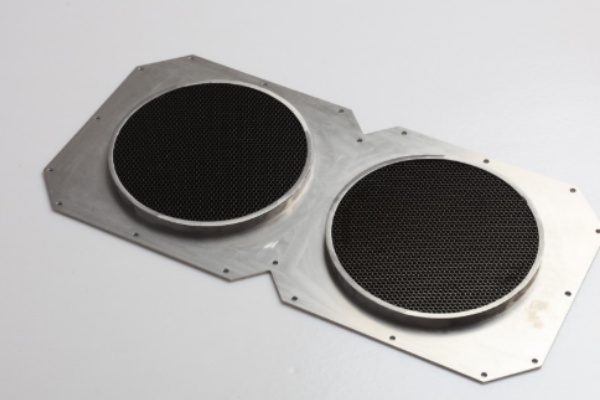
A metal substrate with an integral flange is exactly what it sounds like – the flange is part of the substrate itself, not a separate piece welded or bolted on later. Compared to traditional designs where the substrate sits inside a housing with separate flange components, this integrated approach eliminates an entire interface.
Here's what that actually means in practice.
What's Inside – The Structural Composition
The integral flange design combines three elements into one unit:
The metal honeycomb core. Thin metal foil – Fe-Cr-Al alloys or stainless – corrugated and wound or stacked into a honeycomb structure. This is what carries the catalyst coating and does the actual exhaust cleaning.
The integral flange. A flange that's formed as part of the substrate assembly itself, not a separate piece added later. In some designs, it's an annular flange that seals directly against the housing interior. In others, it's an end plate with a collar that guides the substrate into the housing.
No separate housing interface. In many integral flange designs, the substrate assembly seals directly against the housing, eliminating the need for separate mounting hardware. The flange bears against interior sealing surfaces to maintain the seal under operating pressure.
Some designs go a step further – direct joining of the jacket and honeycomb core into a single integrated structure. Fewer parts overall, fewer places for things to go wrong.
What That Gets You – The Functional Advantages
The integral flange design isn't just about simplifying the parts list. It changes how the converter performs in the field.
Sealing reliability. Traditional two‑piece designs have a junction between the substrate and the housing that can leak. Eliminate that junction, and you eliminate a major leak point. In high‑vibration setups – off‑road machinery, trucks, marine engines – this matters a lot.
Durability under vibration. Since the flange and substrate expand and contract together under heat, stress on welds and braze joints is reduced. The monolithic construction distributes stress across the entire structure. Vibration tests that kill conventional designs within hours don't faze these units.
Easier installation. Instead of requiring specialized welding and skilled technicians, many integral flange configurations can be installed with basic tools. What used to take hours can take minutes.
Better thermal performance. The entire assembly expands and contracts uniformly, so thermal stress concentrations become less of an issue. These units maintain efficiency through temperature swings that cause conventional designs to crack.
Simpler maintenance. You're handling one unit instead of multiple components. This is especially valuable in applications where maintenance access is difficult – off‑road equipment, marine applications, remote locations.
Where the Data Points
When you compare an integral flange design to a separate housing setup, the catalytic performance is usually comparable. The differences show up over time – in sealing reliability, vibration resistance, and general durability.
For high‑vibration, high‑thermal‑stress applications – industrial engines, off‑road, marine – the integral flange often wins. For retrofit jobs or cases where you need standard housings, separate housing can work fine.
The choice isn't about which one performs better on paper. It's about which one holds up longer in the real world.
Bottom Line
An integral flange metal substrate is a simpler design that solves a handful of real problems. Fewer parts. Fewer leak points. Better vibration resistance. Easier installation. Less thermal stress. Easier maintenance.
If you're building something that's going to shake, heat up, and stay in service for a long time, it's worth a serious look. That's what we do.