To be a valuable global supplier
for metallic honeycombs and turbine parts


Contact number
0555-2813555
To be a valuable global supplier
for metallic honeycombs and turbine parts
Technological Innovation
Process Management
Continuous Improvement
Customer Satisfaction
Knowledge
Dedication
Diligence
Loyalty
Responsibility
Confidence
Tenacity
Respect
To be a valuable global supplier
for metallic honeycombs and turbine parts
Release time:2026-07-20
The hardest time for a catalytic converter isn't highway cruising. It's the first 30 seconds after a cold start. Engine is cold. Exhaust is cold. Catalyst is cold. Nothing's happening.
The goal of a Metal substrate oxidation catalyst is to light off as fast as possible – to reach the temperature where it starts converting CO and hydrocarbons. That's light‑off temperature.
Metal does it faster than ceramic. Here's why – and how to make it even quicker.
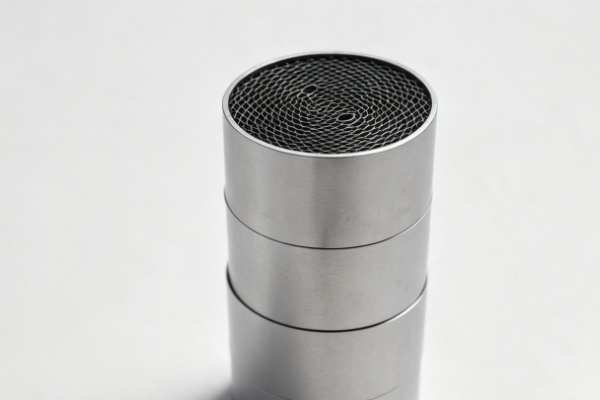
Metal Heats Up Faster
Heat wakes up a catalyst. No heat, no reaction.
Ceramic substrate has high thermal mass. Takes a long time to heat up. Metal substrate is different. Lower thermal mass. Higher thermal conductivity.
Metal transfers heat from exhaust gas into the substrate faster. Less material to heat up. More heat goes into the catalyst coating itself.
In tests, low‑thermal‑mass metal converters light off within 10 seconds of engine start. Ceramic takes longer – sometimes minutes.
Coating Has to Be Right
The substrate is just the structure. The coating does the work.
Precious metal dispersion. Platinum and palladium are the active sites. Smaller particles = more surface area exposed to exhaust. Higher dispersion = more active sites = lower light‑off temperature.
Coating thickness. More coating means more active material. Up to a point. Coat beyond 45% loading and it starts blocking airflow. Heat transfer drops. Light‑off temperature actually goes up.
Higher cell density. More cells per square inch means more surface area. Thinner walls mean faster heat transfer. 600 cpsi substrate heats up faster than 400 cpsi. More surface area, less metal mass.
Where You Put the Catalyst Matters
Where you put it matters as much as how much you use.
Front‑end loading. Put more catalyst near the front of the converter. That's where exhaust is hottest. That's where reaction starts first. Once the front lights off, the heat from the reaction helps light off the rest.
Gradient distribution. Vary noble metal loading across the substrate – more at the front, less at the rear. Same overall conversion, faster light‑off.
Active site synergy. Mixing different active species can create synergistic effects that lower light‑off temperature. Right Pt/Pd ratio does more than either one alone.
Cold Start Problem
There's a catch. Even with metal substrate and right coating, cold start is still hard. Because the catalyst surface gets covered by CO and other molecules that block active sites. That's self‑poisoning.
At low temperature, CO sticks to precious metal sites. Blocks oxygen from adsorbing. Reaction can't start. Only when temperature gets high enough does CO desorb and free up the sites. That's light‑off temperature.
So the real challenge is getting temperature high enough to overcome self‑poisoning – fast.
How to Make It Even Faster
Electric heating. Some metal catalysts can be electrically heated. Current passes through the metal substrate itself. Heats from within. Catalyst lights off before exhaust even reaches it.
Thinner foil. Less metal mass. Heats faster. Less thermal inertia.
Lower cell density. Counter‑intuitive. But bigger cells allow higher exhaust velocity and better heat transfer at the front face.
Bottom Line
Fast light‑off isn't one thing. It's material, coating, distribution, and overcoming self‑poisoning.
Metal heats faster. Coating has to be dispersed and distributed right. Cold start is still the hardest part.
We make metal catalysts. We've seen what gets them to light off fast – and what doesn't.
If cold start emissions are killing your test results, start with the substrate. Then the coating. Then the distribution.