To be a valuable global supplier
for metallic honeycombs and turbine parts


Contact number
0555-2813555
To be a valuable global supplier
for metallic honeycombs and turbine parts
Technological Innovation
Process Management
Continuous Improvement
Customer Satisfaction
Knowledge
Dedication
Diligence
Loyalty
Responsibility
Confidence
Tenacity
Respect
To be a valuable global supplier
for metallic honeycombs and turbine parts
Release time:2026-07-22
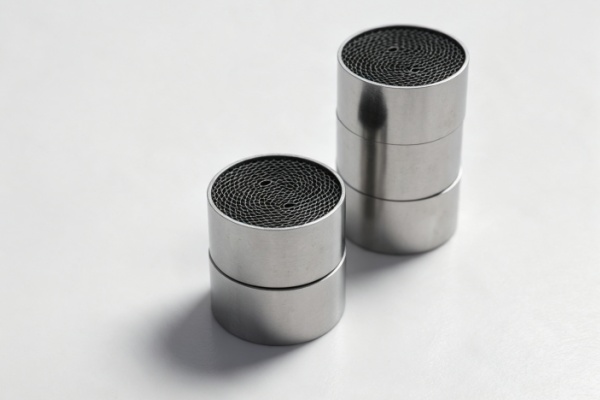
Both are catalytic converters. Both look like honeycomb in a metal can. But they're completely different animals. One handles three pollutants. The other handles two. One needs precise air‑fuel control. The other doesn't. One uses rhodium. The other doesn't.
Here's the real difference – and why you can't use one in place of the other.
What They Actually Do
This is the big one.
Gasoline three‑way catalyst handles three pollutants. Carbon monoxide gets oxidized to CO₂. Hydrocarbons get oxidized to CO₂ and water. Nitrogen oxides get reduced to nitrogen. Oxidation and reduction at the same time. That's why it's called three‑way.
DOC handles two. Carbon monoxide and hydrocarbons. That's it. Oxidation only. No reduction. No NOx treatment.
One does three jobs. One does two.
How They Run
Gasoline TWC needs the air‑fuel ratio dead on. Stoichiometric. About 14.7 to 1. Too rich, it can't oxidize. Too lean, it can't reduce NOx. That's why gas engines have oxygen sensors and closed‑loop fuel control.
DOC runs in diesel's lean‑burn world. Always excess oxygen. Makes oxidation easy. No precise control needed. Just sits there and burns whatever CO and HC come through.
What's Inside – The Precious Metals
Both use platinum group metals. But the mix is different.
Gasoline TWC has platinum, palladium, and rhodium. Rhodium is the key. It's what reduces NOx. Without it, you can't do three‑way.
DOC has platinum and palladium. No rhodium. Because it doesn't need to reduce anything.
Put a DOC on a gas engine, it'll handle CO and HC. NOx sails right through. You fail emissions.
DOC's Extra Jobs
DOC does two things a gas TWC doesn't.
First, it makes NO₂ for the DPF. Oxidizes some NO to NO₂. NO₂ burns soot at lower temps. Helps the DPF clean itself.
Second, it acts as a burner during regen. Engine dumps extra fuel. DOC burns it, heats up the exhaust, cleans the DPF.
Gas TWC doesn't have a DPF downstream. Doesn't need to make NO₂. Doesn't need to act as a burner.
Temperature
Gas TWC sees wide swings. Cold start to full load. 300°C to 1100°C. Has to survive that without cracking.
DOC runs cooler. Diesel exhaust is 100‑550°C. Lower peaks, but more cycling from regen events.
Many DOCs use metal substrate. Handles thermal cycling better than ceramic.
Quick Comparison – No Table, Just the Numbers
Gasoline TWC treats CO, HC, and NOx. Does oxidation and reduction. Has rhodium. Runs stoichiometric. Sees 300‑1100°C. No DPF to help.
DOC treats CO and HC. Oxidation only. No rhodium. Runs lean. Sees 100‑550°C. Makes NO₂ for DPF. Burns fuel during regen.
Bottom Line
Gasoline TWC is a three‑way catalyst. Oxidizes CO and HC, reduces NOx. Needs rhodium, precise air‑fuel, and survives high heat.
DOC is an oxidation catalyst. Oxidizes CO and HC. Doesn't touch NOx. Makes NO₂ for the DPF, burns fuel during regen. Runs on diesel's lean exhaust.
They're not interchangeable. DOC on a gas engine, NOx fails. TWC on a diesel, won't light off right.
We make DOC catalytic converter for both. Coatings are different. Applications are different. We'll tell you which one fits your engine.