To be a valuable global supplier
for metallic honeycombs and turbine parts


Contact number
0555-2813555
To be a valuable global supplier
for metallic honeycombs and turbine parts
Technological Innovation
Process Management
Continuous Improvement
Customer Satisfaction
Knowledge
Dedication
Diligence
Loyalty
Responsibility
Confidence
Tenacity
Respect
To be a valuable global supplier
for metallic honeycombs and turbine parts
Release time:2026-07-04
Chemical reaction workshops are a different world. Not a server room. Not a data center. A place where acid fumes hang in the air, pressure pulses from reactors, and the ventilation system has to move a lot of air – while keeping RF where it belongs.
Normal shielding vents die in these places. Fast. Aluminum corrodes. Gaskets rot. Frames warp. We've seen it.
We build high pressure resistant shielding ventilation panels for chemical plants. Here's what that actually means.
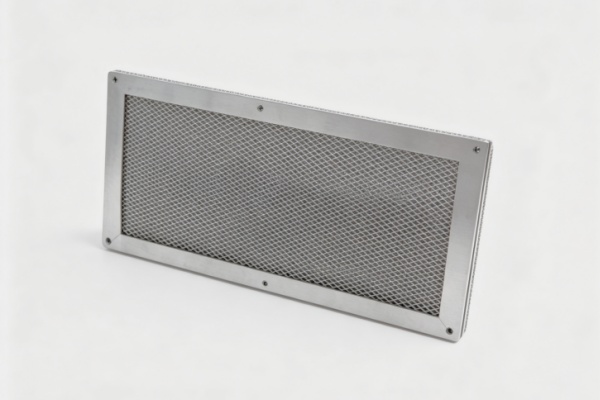
A chemical reaction workshop has a few things that kill ordinary vents.
Acid and alkaline fumes. Hydrochloric, sulfuric, nitric, caustic. They attack aluminum like acid on a penny. Aluminum turns to white powder. Plating flakes off. Shielding drops.
Pressure pulses. Chemical reactions can create pressure spikes. Exothermic reactions, venting, steam. A standard vent panel might not handle the cycling. Frames flex. Gaskets lose seal.
Temperature swings. Reactions heat up, cool down. Metal expands, contracts. Frames warp. Gaskets harden and crack.
Vibration. Pumps, agitators, compressors – they shake the vent constantly. Brazed joints fatigue. The honeycomb works loose.
These four things pile on top of each other. A dusty, acidic, vibrating plant is the worst. You can't use standard parts.
You can't stop corrosion with good intentions. You need the right metal.
For chemical plants, aluminum is a bad idea. It corrodes. Period. Some aluminum alloys like 5052 hold up in salt fog testing – losing about 15 mg/ft² after 30 days, well below military spec limits. But salt fog isn't acid. Acid eats aluminum faster.
We use stainless steel 316L for chemical reaction workshops. The molybdenum in 316L resists chlorides and acids. Corrosion rate in salt spray is about 0.01 mm per year – compared to 0.1 mm for regular steel.
For extreme environments, Hastelloy or Inconel can handle hot concentrated acids. Expensive. But they don't rot.
Brass with tin plating is another option for chemical plants and coastal sites. The tin layer gives excellent corrosion resistance and high conductivity. It holds up in salt and acid where aluminum won't.
The frame has to match the honeycomb. A stainless honeycomb bolted into an aluminum frame? You've created a galvanic cell. Salt or acid acts as electrolyte. One metal corrodes faster to protect the other – usually the aluminum loses. Use compatible materials throughout.
A high pressure resistant panel needs a frame that doesn't flex under pressure spikes. Standard frames – 1‑2 mm aluminum – won't cut it.
We use thicker stainless frames – 3 mm or more. The honeycomb itself needs structural support. In some designs, the honeycomb core system ensures uniform pressure distribution and can bear extremely high pressures.
Some panels are engineered to withstand pressures up to 15 psi or more. Third‑party stress tests show that waveguide honeycomb panels retain 98% of their initial strength after 10,000 hours of exposure to salt spray or high humidity.
The brazing has to be solid. Spot welding won't hold up under pressure cycling. Full brazing – every cell wall bonded – is the only way.
You can have perfect honeycomb. But if the edge seal fails, the vent leaks RF.
Most vents die because the conductive gasket gives out. Heat hardens it. Vibration compresses it permanently. Chemicals eat it.
For harsh environments, we use knitted wire mesh gaskets. They stand up to vibration and harsh conditions better than foam or rubber. The metal knit is tough.
For applications that need both shielding and a weather seal, we use knitted wire mesh with a silicone core. The silicone seals out dust and moisture. The metal mesh shields. The combination lasts.
We also recommend fluorosilicone for corrosive environments. It has all the benefits of silicone but stands up to salt fog, UV, and ozone.
Gaskets must also be chemically compatible with the environment. The gasket material should not react with surrounding materials – particularly important in harsh environments where chemicals, moisture, or high temperatures can accelerate reactions.
Bare stainless is good. But we add more.
Electrostatic epoxy coating penetrates deep into the honeycomb cells, coating the walls where corrosion starts. It adds a layer of protection that plain plating doesn't.
For acid mist, we add a thin PTFE (Teflon) layer. Non‑stick. Acid beads up and rolls off. Doesn't affect shielding because it's thin.
Passivation – acid‑etching the surface to remove free iron – prevents rust spots.
These coatings add cost. But they buy years of service.
You can build the best vent in the world and ruin it with bad installation.
Clean the mounting surface. Paint, dirt, and oil insulate. The gasket needs bare metal contact. We tell customers to scrape the paint off the mounting flange. Every time.
Torque the screws right. Too loose, the gasket doesn't seal. Too tight, the frame warps. We give specs.
Screw spacing. Screws every 50 mm or closer. Too far apart, the gasket lifts in the middle.
Drain holes. If condensation forms, water needs a way out. We drill holes at the bottom.
Seal the cutout edge. The cabinet itself is a problem. The vent seals to it, but the cutout edge is bare metal. Chemicals get between the gasket and the edge. We use a chemical‑resistant sealant on the cutout edge before mounting.
A customer had a chemical reactor workshop with multiple 5,000‑liter reactors. Acid fumes, heat, and pressure pulses from exothermic reactions. Their standard aluminum vents were failing every 8‑12 months. White powder, pitted frames, cracked gaskets.
We supplied 316L stainless vents with full brazing, 3 mm frames, knitted wire mesh gaskets with silicone core, electrostatic epoxy coating, and drain holes.
Three years later, still in service. No corrosion. No leaks. The customer stopped replacing vents every year.
If your environment is clean and dry, aluminum is fine. Save your money.
If you see acid, chemical fumes, or pressure spikes – upgrade to stainless. It costs more upfront. It costs less in replacements.
If you have vibration – use knitted wire mesh gaskets. They don't take a permanent set.
If you have pressure pulses – use a thick frame and full brazing.
And always, always clean the mounting surface. Scrape the paint. Use the torque spec.
Chemical reaction workshops kill ordinary vents. Acid fumes corrode them. Pressure pulses warp them. Vibration shakes them apart.
A high pressure resistant shielding ventilation panel needs stainless 316L or better. Full brazing. Thick frame. Knitted wire mesh or fluorosilicone gaskets. Electrostatic epoxy or PTFE coating. Proper installation.
We make these panels. We ship them to chemical plants, refineries, and reaction workshops. They cost more. They last.
If your workshop is eating vents, talk to us. We'll build the right panel. That's what we do.