To be a valuable global supplier
for metallic honeycombs and turbine parts


Contact number
0555-2813555

To be a valuable global supplier
for metallic honeycombs and turbine parts

Technological Innovation
Process Management
Continuous Improvement
Customer Satisfaction

Knowledge
Dedication
Diligence
Loyalty
Responsibility
Confidence
Tenacity
Respect

To be a valuable global supplier
for metallic honeycombs and turbine parts
Release time:2026-07-03
Seriously. I've had procurement guys send me "planar waveguide" quotes from photonics suppliers. Wrong planet.
A planar waveguide vent is a metal panel with a bunch of little holes—usually hexagonal, like a honeycomb—that lets air move but stops RF dead in its tracks. It's not magic. It's geometry. Every one of those holes is a tiny metal pipe. If you make the pipe small enough and long enough, electromagnetic waves above a certain frequency simply can't propagate through it. They die off before they reach the other side. That's called "below cutoff" operation.
Air? Air doesn't care about cutoff. It flows right through.
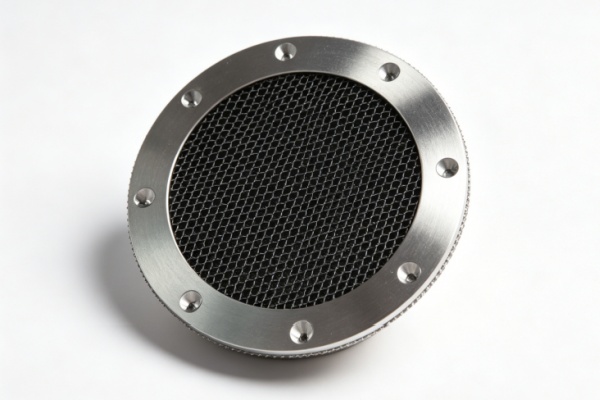
Now, the dimensions. For most industrial work, you're looking at 1/8‑inch cell diameter (that's about 3.2 mm) and 1/2‑inch panel thickness. Sometimes 1 inch if you need more attenuation. Open area is usually 85% or better—surprisingly high for something that kills RF, but that's the beauty of hex packing.
And please, for the love of all that's conductive, don't go searching for "planar dielectric waveguide" and expect to find ventilation hardware. That's silicon photonics. Light guides. Totally different animal. If a vendor's literature doesn't clearly separate the two, walk away.
Where do these vents actually show up? Server racks, outdoor telecom cabinets, military shelters, and the absolute headache of an HVAC duct that has to pass through a shielded room wall.
You'll see three main shapes:
Honeycomb – the standard. Best open area for a given cell size.
Parallel slots – less common, used when you need directional airflow, like in duct transitions.
Stacked perforated plates – cheap but rarely as good as honeycomb.
Material choice is usually straight‑forward:
Aluminum is the workhorse. It's light, conducts well enough (roughly 60% of copper), and doesn't kill your budget. We use it on the vast majority of projects. But if your enclosure sits near the coast or in a chemical plant, aluminum will corrode and your RF ground goes with it. In those cases, 316L stainless is the right call—even though it's only 3–5% as conductive as copper, it survives salt spray. Just plan on increasing the depth to make up for the lower conductivity.
Brass and plated carbon steel have their niches, but they're exceptions, not the rule.
The manufacturing process? Starts with thin foil. That foil gets corrugated, stacked into layers, then brazed in a furnace. The braze melts and fuses everything without warping the thin walls. After that, the core gets mounted into a frame—usually aluminum or steel—with flanges or mounting holes.
Sizing one from scratch? Here's the practical sequence:
Figure out your highest threat frequency. That's your target.
For 5G or millimeter‑wave, go 1/16‑inch cells. For general industrial (motors, VFDs, typical radio), 1/8‑inch is your baseline. For lower‑frequency garbage (power supplies, etc.), you can push to 1/4‑inch—but don't expect much above 600 MHz.
Choose depth: half‑inch for standard work, one inch for higher attenuation, two inches for military/TEMPEST levels.
Check airflow. Most honeycombs give you 85–95% open area. Pressure drop is usually comparable to a standard louver, but always verify with your fan curve.
Don't forget sealing. Conductive gaskets are non‑negotiable—silver‑filled silicone or beryllium copper fingers. No gasket, no shielding, period. And match your frame material to the honeycomb material. Aluminum frame with steel honeycomb? Differential thermal expansion will break the braze joints over time.
Let's compare options honestly:
Wire mesh – cheap, great airflow, but only 20–40 dB attenuation. Fine for low‑frequency or budget jobs.
EMI filter vents (sintered or woven) – 40–60 dB, but open area drops to 40–60%, which kills cooling.
Waveguide honeycomb – 60–100+ dB with 85% open area. That's why it's the gold standard.
Active shielding – amazing performance, but complex and ridiculously expensive. Overkill for 99% of enclosures.
For testing, IEEE Std 299 is the one you want—covers 9 kHz to 18 GHz (and beyond with extensions). MIL‑STD‑285 still shows up in old specs, but it's mostly retired. For military, MIL‑STD‑461 handles environmental and EMI; NSA‑65‑6 touches TEMPEST.
A typical test setup: mount the vent in your test enclosure with proper torque. Transmit from one side, receive on the other. Sweep the frequency, log the difference with and without the vent. That difference is your shielding effectiveness.
Real numbers? A standard 1/8‑inch, half‑inch deep vent gives you 40–60 dB at 2 GHz and easily clears 80 dB at 10 GHz. Go to one‑inch depth and you can push past 100 dB.
Now, installation—this is where I see the most screw‑ups. Bare metal to bare metal. No paint, no anodize, no powder coat on the mating surfaces. Use conductive gasket, torque the fasteners evenly, keep spacing under two inches. After you're done, grab a multimeter and check continuity between the frame and the enclosure wall—you want less than 0.1 ohm.
Common failures in the field:
Clogged cells from dust – inspect quarterly.
Corrosion at the frame interface – use 316L if you're near salt.
Gaskets hardening from ozone or heat – replace annually if you see compression set.
Mechanical damage from rough handling – train your installers.
Here's your quick acceptance checklist (keep this on a clipboard):
Gasket seated uniformly all the way around.
Fasteners torqued to spec – not just "good and tight."
No coating on mating surfaces – bare metal, verified visually.
Continuity < 0.1 ohm across the joint.
Cells clear of debris.
Airflow measured at operating static pressure – meets thermal requirements.
If you've got an enclosure in mind, send me the numbers: frequency range, CFM, opening size, and environment. I'll run a quick sizing and get back to you with a preliminary recommendation—no cost, no obligation. Standard panels ship in about a week; custom frames take 10–15 business days. Drop your specs here and we'll take it from there.
How is a ductwork waveguide vent different from an RF planar waveguide?
One kills RF, the other carries it. The vent is a metal honeycomb that blocks signals by operating below cutoff. An RF planar waveguide is a transmission line—used for radar or comms. Swap them and you'll either leak emissions or fry your gear.
TE and TM modes – why should I care?
They tell you where your cutoff knee sits. The lowest mode (usually TE₁₀ for rectangular slots) defines the frequency where shielding starts. If your threat frequency is above that, your vent is just an expensive grille.
What's the difference between this and a planar dielectric waveguide?
Completely different physics. Dielectric waveguides guide light or RF through non‑conductive materials—fiber optics, chip‑level photonics. The vent is conductive metal. Same name, zero overlap.
Which test standards apply?
IEEE Std 299 is the modern benchmark. MIL‑STD‑285 still lingers in older specs. For airflow, just measure CFM at your specified static pressure drop.
How do I pick the right vent – material, size, and maintenance?
Match cell to your highest frequency (1/8‑inch general, 1/16‑inch for 5G), depth to attenuation (half‑inch standard, one‑inch for demanding), and material to environment (aluminum for dry indoor, 316L for salt/chemicals). Check for clogging quarterly, inspect gasket annually, and re‑check continuity after any service that disturbs the panel.
For more on EMI‑shielded ventilation and custom planar waveguide vent designs, hit up our product page or send us a message.