To be a valuable global supplier
for metallic honeycombs and turbine parts


Contact number
0555-2813555

To be a valuable global supplier
for metallic honeycombs and turbine parts

Technological Innovation
Process Management
Continuous Improvement
Customer Satisfaction

Knowledge
Dedication
Diligence
Loyalty
Responsibility
Confidence
Tenacity
Respect

To be a valuable global supplier
for metallic honeycombs and turbine parts
Release time:2026-06-30
I've seen what salt air does to a vent. Leave a standard one on a coastal site for six months, and it looks like it spent years underwater. The honeycomb crumbles. The frame pits. The shielding goes with it. Now put that same vent in a ship engine control room, where it's not just salt spray but also heat, vibration, and constant engine noise. It fails faster.
People spec a vent based on shielding numbers alone. They bolt it onto equipment headed for a vessel, and act surprised when it dies eighteen months later. Salt doesn't care about your datasheet.
If your gear's going near or on the ocean, you need a vent built for it. Here's what that actually looks like.
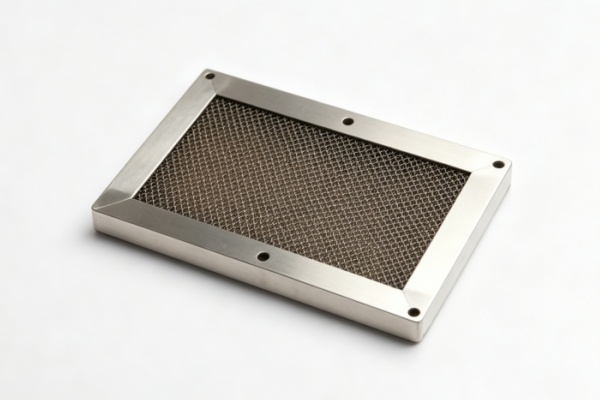
What Salt Spray Does to a Regular Vent
Standard EMI vents use aluminum. Good conductivity, lightweight, easy to make. Works fine in a server room or a factory floor.
Put that same vent on a ship, and things change. Salt accumulates in the honeycomb cells. Moisture sits there. Corrosion starts at the cell walls and spreads. The metal doesn't just look bad – it loses conductivity. Shielding effectiveness drops. Eventually, the structure weakens and fails.
I've pulled corroded vents off marine gear where the cells had literally flaked away. Airflow still worked, sort of. Shielding was gone. Might as well have left the hole open.
A 2024 Naval Research Laboratory report found that uncoated aluminum in coastal areas shows visible pitting within 18 months. On a ship, it's even faster.
What Makes a Vent Marine‑Grade
Start with the material. Stainless steel 316L is the usual answer. It's got molybdenum in it, which helps resist chlorides. Salt water doesn't bother it the way it bothers aluminum or carbon steel. Corrosion rate is down around 0.01 mm per year in salt spray, compared to 0.1 mm for regular steel.
For marine environments, SUS316L stainless steel is the recommended choice. It holds up in saltwater, humidity, and the constant chemical assault of a ship's engine room.
Titanium works too if you've got the budget – lighter than steel, even more corrosion‑resistant. Usually overkill unless you're building submarines or something that stays in the water full‑time.
Some vents use aluminum with protective coatings – nickel plating, chromate conversion. Helps, but coatings can scratch or wear. Once salt gets under the coating, it spreads fast. On a ship where vents get hosed down or bumped, that's a risk.
It's Not Just the Honeycomb
The frame matters as much as the cells. A stainless honeycomb bolted into an aluminum frame with painted surfaces? You've created a galvanic cell. Salt water acts as electrolyte, and your vent becomes a battery. One metal corrodes faster to protect the other – usually the aluminum loses.
You want continuity throughout. Frame and honeycomb made from compatible materials. 316L frame with 316L honeycomb. Same alloy, no galvanic mismatch.
Gaskets that seal moisture out, not just EMI in. Some marine vents use dual O‑ring seals to keep salt fog from ever reaching the joint. IP68‑rated seals exist for a reason. In a ship engine control room, where condensation and spray are constant, a single gasket isn't enough.
Real Numbers, Real Difference
Standard salt spray testing runs 96 hours in 5% NaCl solution at 35°C, high humidity. Good marine vents come out looking like they went in. No corrosion, no blistering, no peeling.
Electrically, they hold up too. After salt exposure, a quality vent should show less than 0.1 dB change in insertion loss.
Third‑party stress tests show that waveguide honeycomb panels retain 98% of their initial strength after 10,000 hours of exposure to salt spray or high humidity. That's over a year of continuous salt exposure. For EMI shielding, attenuation rates exceed 60 dB at frequencies up to 40 GHz.
One field example: a ship radar waveguide window using 316L stainless steel with DLC coating showed less than 5% electromagnetic performance degradation after two years of operation in the South China Sea. Traditional aluminum windows corroded severely within six months.
What to Look For in a Ship Engine Control Room Vent
If you're spec'ing a vent for a vessel, here's what we check.
Material. 316L stainless. Not 304, not aluminum. The molybdenum in 316L is what stops pitting from chlorides.
Coating. Physical vapor deposition coatings like diamond‑like carbon or titanium nitride create dense protective layers. DLC coatings can cut salt spray corrosion rates by 90% while keeping RF performance stable (VSWR ≤ 1.2).
Sealing. Dual O‑ring seals with fluororubber or silicone. IP68‑rated protection – tested to 1,000 hours of continuous salt spray without internal leakage.
Frame. Same material as the honeycomb. No galvanic mismatch. No painted surfaces where the gasket sits.
Testing. Ask for salt spray test data per ISO 9227 – 96 hours minimum, 500 hours for serious marine use. Also ask for RF performance data after exposure.
Real Ship Applications
We've built these vents for engine control rooms, bridge electronics, and radar shelters on vessels ranging from offshore support ships to naval craft. Each one needs the same thing – a vent that survives salt and keeps RF where it belongs.
On a ship, the engine control room is a tough spot. Heat from the engines, constant vibration, salt mist from the ventilation intakes. Standard vents die. Marine‑grade 316L with proper sealing lasts.
I've seen installations where the vent itself was fine, but the mounting surface corroded underneath because moisture sat between the frame and the enclosure. Proper gasketing stops that. On a ship, you don't get second chances.
Cost vs. Lifespan
Salt‑spray resistant vents cost more. Figure 30% to 50% above standard models. But the cost of a failed vent on a ship means downtime at sea, replacement parts, and potential EMI leakage that can affect navigation or comms.
A single waveguide in a shipboard radar system costs about $4,200 to replace. Applying a protective coating upfront costs just $120 per unit and extends lifespan by 8‑12 years. The math is simple.
Bottom Line
A ship engine control room is not a data center. Standard aluminum vents with foam gaskets die fast. Salt spray eats them.
You need 316L stainless. You need dual seals. You need compatible materials. You need salt spray testing to prove it works.
We make these vents. We've shipped them to shipyards, offshore operators, and naval contractors. Every one is built for salt.
If your gear's going to sea, talk to us. We'll build a vent that doesn't quit. That's what we do.