To be a valuable global supplier
for metallic honeycombs and turbine parts


Contact number
0555-2813555
To be a valuable global supplier
for metallic honeycombs and turbine parts
Technological Innovation
Process Management
Continuous Improvement
Customer Satisfaction

Knowledge
Dedication
Diligence
Loyalty
Responsibility
Confidence
Tenacity
Respect

To be a valuable global supplier
for metallic honeycombs and turbine parts
Release time:2026-06-26
We're a factory that makes shielding vent panels. We ship them to chemical plants, coastal sites, mines, and factories that chew up normal vents in six months. We've learned a lot about what kills them – and how to make them last.
Here's what we do.
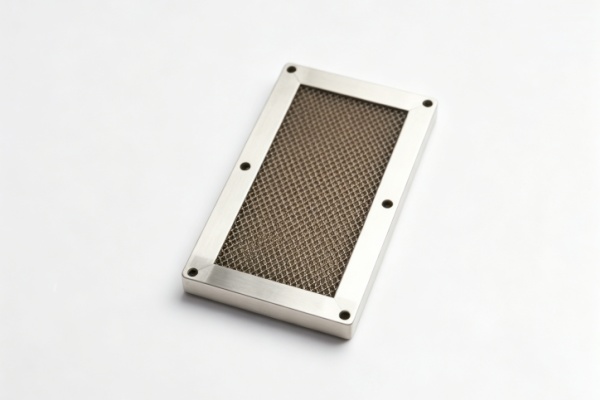
The Four Things That Kill Vents in Industrial Environments
Corrosion. Salt, acid fumes, and moisture attack the metal. Aluminum turns to white powder [2†L11-L13]. Plating flakes off. Shielding drops.
Dust and particles. Cement, coal, metal grinding dust – they plug the cells. Airflow drops. Equipment overheats.
Temperature swings. Hot days, cold nights. The metal expands and contracts. Frames warp. Gaskets harden and crack.
Vibration. Compressors, stamping presses, big motors – they shake the vent constantly. Brazed joints fatigue. The honeycomb works loose.
These four things don't act alone. They pile on top of each other. A dusty, salty, vibrating plant is the worst.
Material – Where It All Starts
You can't stop corrosion with good intentions. You need the right metal.
For most indoor industrial, 5052-grade aluminum works fine. It's lightweight and resists corrosion well [1†L31-L34]. In salt fog testing, good 5052 honeycomb loses about 15 mg/ft² after 30 days – way below the 125 mg/ft² that the military spec allows [2†L11-L13].
For chemical plants and coastal sites, brass with tin plating is a better choice [1†L6-L8]. The tin layer gives excellent corrosion resistance and high conductivity. It holds up in salt and acid where aluminum won't.
For the nastiest environments – offshore platforms, pulp mills, places with constant salt spray – stainless steel is the only answer. It costs more. It lasts.
We also use electrostatic epoxy coating on some vents. The electrostatic process penetrates deep into the honeycomb cells, coating the walls where corrosion starts [2†L17-L18]. It adds a layer of protection that plain plating doesn't.
The Gasket – The Weakest Link
You can have perfect honeycomb. But if the edge seal fails, the vent leaks RF.
Most vents die because the conductive gasket gives out. Heat hardens it. Vibration compresses it permanently. Chemicals eat it.
For harsh environments, we use knitted wire mesh gaskets. They stand up to vibration and harsh conditions better than foam or rubber [6†L7-L8]. The metal knit is tough.
For applications that need both shielding and a weather seal, we use knitted wire mesh with a silicone core [6†L10-L14]. The silicone seals out dust and moisture. The metal mesh shields. And the combination lasts.
We also recommend fluorosilicone for corrosive environments [6†L33-L34]. It has all the benefits of silicone but stands up to salt fog, UV, and ozone.
Installation Details That Matter
You can build the best vent in the world and ruin it with bad installation.
Clean the mounting surface. Paint, dirt, and oil insulate. The gasket needs bare metal contact. We tell customers to scrape the paint off the mounting flange. Every time.
Torque the screws right. Too loose, the gasket doesn't seal. Too tight, the frame warps. We give torque specs. Use them. One of our customers crushed 10% of their vents by over-tightening. We trained their team, gave them torque wrenches, and the scrap rate dropped under 1%.
Screw spacing. Screws every 50 mm or closer. Too far apart, the gasket lifts in the middle. Gap = leak.
Don't reuse old screws. Rusty or stripped screws cause leaks. Use stainless hardware.
Keeping Dust Out – Pre-Filters
Dust is the silent killer. It doesn't destroy the metal – it just plugs the cells. Airflow drops. Equipment overheats. Then someone power-washes the vent and bends the honeycomb.
We recommend pre-filters for dusty environments. A removable foam or mesh filter in front of the honeycomb catches the big stuff. The filter gets cleaned monthly. The vent stays clean.
For cement plants, mines, and foundries, we've used a combination approach: a louvered cover to catch large debris, a washable pre-filter, and the honeycomb behind them. The honeycomb itself goes years between cleanings.
Maintenance – Don't Wait Until It Fails
Regular cleaning extends vent life.
For dust, use vacuum with a soft brush attachment, then low-pressure compressed air from the back. For grease and oil, remove the vent and wash with warm water and mild detergent. Dry it thoroughly before reinstalling – water left in the cells causes corrosion.
Check the gasket every time you clean. If it's cracked, hardened, or permanently compressed – replace it [4†L20-L21]. Gaskets are cheap. Vents are not.
Case in Point – Cement Plant
A cement plant kept replacing their aluminum vents every 18 months. Dust plugging and corrosion. We switched them to stainless steel with a knitted wire mesh gasket and a pre-filter. They've been running for four years now with only one cleaning.
Case in Point – Offshore Platform
An offshore platform needed vents that could handle salt spray 24/7. We used 316L stainless honeycomb with fluorosilicone gaskets and electrostatic epoxy coating. Five years later, still in service. No measurable shielding loss.
What We Tell Our Customers
If your environment is clean and dry, aluminum is fine. Save your money.
If you see salt, acid, or chemical fumes – upgrade to brass, stainless, or epoxy-coated. It costs more upfront. It costs less in replacements.
If you have dust – add a pre-filter. Clean it regularly.
If you have vibration – use knitted wire mesh gaskets. They don't take a permanent set.
And always, always clean the mounting surface. Scrape the paint. Use the torque spec.
We make shielding vent panels for a living. We've seen what works and what fails.
Industrial environments kill ordinary vents. But with the right material, the right gasket, proper installation, and regular maintenance, you can get years of service out of a well-built vent.
If you're in a harsh environment, don't buy cheap vents. They're cheap for a reason. Spend the money on a vent that's built for your conditions. You'll buy it once instead of every year.
That's what we do. Build vents that last.