To be a valuable global supplier
for metallic honeycombs and turbine parts


Contact number
0555-2813555

To be a valuable global supplier
for metallic honeycombs and turbine parts

Technological Innovation
Process Management
Continuous Improvement
Customer Satisfaction

Knowledge
Dedication
Diligence
Loyalty
Responsibility
Confidence
Tenacity
Respect

To be a valuable global supplier
for metallic honeycombs and turbine parts
Release time:2026-06-25
I've seen people spec a vent like this: "Give me the highest shielding number you've got." Small cells. Deep honeycomb. 80 dB at 2 GHz.
Then they put it on their cabinet. Fans scream. Equipment runs hot. They call me: "Your vent is choking my system."
Well, yeah. You asked for maximum shielding. That means minimum airflow.
A vent plate is always a trade‑off. More shielding means less ventilation. More ventilation means less shielding. There's no magic vent that gives you 100 dB and 90% open area. Physics doesn't work that way.
Your job is to find the balance that fits your actual needs, not the maximum possible numbers.
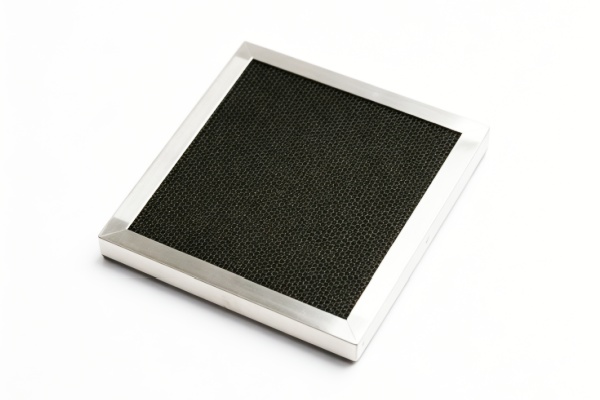
The Basic Relationship
Shielding comes from the waveguide effect. Small cells and deep depth make RF bounce around and die.
But small cells and deep depth also mean less open area and more friction. Less open area means less airflow. More friction means higher pressure drop.
So the same things that make a vent shield well also make it flow poorly.
Cell Size – The Biggest Knob
Cell size is the main thing you can adjust:
1/4‑inch cells: Open area around 90%. Shields down to about 600 MHz. Airflow is great. Shielding is okay for low frequencies.
1/8‑inch cells: Open area around 85%. Shields down to about 1.5 GHz. Good balance. This is our most popular size.
1/16‑inch cells: Open area around 75-80%. Shields down to about 3 GHz. Airflow is noticeably worse. Fans work harder.
1/32‑inch cells: Open area maybe 60-70%. Shields down to 6 GHz+. Airflow is poor. Only use if you absolutely need very high frequency shielding.
The rule: use the biggest cell that still covers your frequency. Don't overspec. I had a customer insist on 1/16‑inch cells for a cabinet with only 2 GHz interference. They didn't need that much shielding. Switched to 1/8‑inch. Shielding was still fine. Fans slowed down. Cabinet cooled off.
Cell Depth – The Second Knob
Depth is how thick the honeycomb is. Standard is 1/2 inch. 1 inch gives more shielding. 1/4 inch gives less.
Deeper cells shield better. But they also create more friction. Pressure drop roughly doubles when you go from 1/2 inch to 1 inch.
For most applications, 1/2 inch is enough. Only go deeper if you need extra attenuation and have fan budget to spare. I've seen people spec 1‑inch depth for a simple server cabinet. That's overkill. They lost 10% airflow for maybe 5 dB of extra shielding they didn't need.
Open Area – Not the Whole Story
Open area is the percentage of the vent face that's empty space. Higher is better for airflow. A good honeycomb vent has 80-90% open area. Perforated sheet has 30-50%. So honeycomb already wins on airflow, even before you consider shielding.
But open area alone doesn't tell you about pressure drop. Cell shape, cell size, and depth all affect how air moves.
We test every vent on a flow bench. Same flow rate, measure pressure drop.
Typical Numbers
For a standard EMI ventilation panel – 1/8‑inch cells, 1/2‑inch depth, 85% open area – here's what you get:
At 200 CFM through a 12x12 inch panel, pressure drop is about 0.1 to 0.2 inches of water. Fans won't even notice.
At 500 CFM, pressure drop is around 0.4 to 0.6 inches. Still fine.
At 1,000 CFM – that's a lot of air – pressure drop might hit 1.5 inches. That's where you hear the fans working.
For comparison, an open hole of the same size has about half the pressure drop. So you're not losing much by adding the vent.
Waveguide Plate vs. Honeycomb Vent – Different Tools
Waveguide plates and honeycomb vents are often grouped together, but they behave quite differently.
Waveguide plates usually create higher pressure drop, especially when shielding requirements push designers toward deeper or narrower channels. This can stress fans and create localized hot spots. They favor precision at specific frequency ranges.
Honeycomb vents generally allow smoother airflow due to thinner walls and shorter flow paths. They favor broader frequency coverage.
Honeycomb vents are more common when: airflow demand is high, frequency coverage needs to be broad, installation conditions are less controlled.
The choice should start with how the enclosure will actually be used, not just what the shielding numbers look like on paper.
How to Find the Sweet Spot – Step by Step
Step 1 – Know your frequency. What's the highest frequency you need to block? Not the one you hope won't be there. The real one.
Step 2 – Pick the largest cell size that covers it. 1/8‑inch for most. 1/4‑inch for low frequencies. 1/16‑inch only if you absolutely need it. Don't overspec.
Step 3 – Start with 1/2‑inch depth. Only go deeper if you need extra shielding and have fan budget.
Step 4 – Check open area. 85% or more is good.
Step 5 – Check pressure drop. Get a curve from the supplier. If pressure drop is too high, go up a cell size or add more vent area.
Step 6 – Don't forget the gasket and frame. A perfect honeycomb with a bad gasket is a leaky vent. The frame and gasket matter as much as the core.
Step 7 – Test one before you buy a hundred. Get a sample. Put it on your cabinet. Measure shielding with a spectrum analyzer. Measure temperature rise. If it passes, order the rest.
Real Example
A customer had a base station cabinet near a cell tower. They asked for a 1‑inch deep vent because they wanted "maximum shielding." We recommended 1/2 inch. They insisted.
We installed the 1‑inch vent. Shielding was 55 dB at 2 GHz. The 1/2‑inch vent would have been 45 dB. They didn't need 55. Their fans were screaming because the pressure drop was too high. They had to upgrade the fans.
They ended up switching back to 1/2 inch. Shielding was still fine. Fans were quiet.
Bottom Line
Balancing high airflow and high shielding isn't about finding the "best" vent. It's about finding the right vent for your actual requirements.
Cell size for frequency. Depth for attenuation. Open area for airflow. Frame and gasket for sealing.
Don't chase the highest number. Chase the number that fits your need.
We make vents. We test them. We know what works. If you're not sure, send us your frequency, airflow, and space constraints. We'll tell you what vent fits. That's what we do.