To be a valuable global supplier
for metallic honeycombs and turbine parts


Contact number
0555-2813555
To be a valuable global supplier
for metallic honeycombs and turbine parts

Technological Innovation
Process Management
Continuous Improvement
Customer Satisfaction

Knowledge
Dedication
Diligence
Loyalty
Responsibility
Confidence
Tenacity
Respect

To be a valuable global supplier
for metallic honeycombs and turbine parts
Release time:2026-06-18
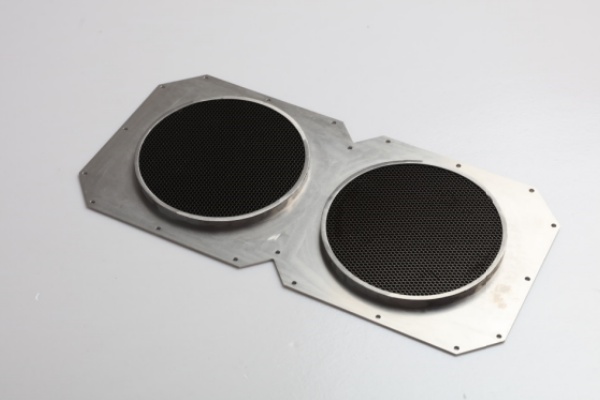
You can make a great shielding vent board. But if you don't check it properly before it leaves the shop, you're just guessing. And guessing means a customer gets a vent that leaks, or chokes their fans, or falls apart in six months.
We don't guess. We have a full inspection standard. Every batch gets checked. Every part gets looked at. Here's what we do before anything goes in a box.
What We Check – The Full List
Seven things. Every batch.
Visual inspection. Dimensions. Cell uniformity. Brazing integrity. Shielding effectiveness. Airflow and pressure drop. Frame flatness and gasket seal.
Skip any one, and you might ship junk.
Visual Inspection – First Thing, Every Part
This is the easiest and the most overlooked. Every single vent board gets a visual check before it goes any further.
We look for dents. A dent in the honeycomb can act like an antenna. It radiates RF instead of blocking it. We've seen dents cause 10-20 dB of leakage at 5 GHz.
We look for scratches. Deep scratches on the frame can break the electrical continuity. The gasket won't seal right.
We look for foreign stuff. Metal chips, dust, leftover braze paste. Anything that doesn't belong. We blow out the cells with compressed air if needed.
We look for discoloration. On aluminum, white powder means corrosion starting. On stainless, brown spots mean oxidation. Both get rejected.
Standard: Zero visible defects. No dents, no deep scratches, no foreign material, no discoloration. If it doesn't look right, it doesn't ship.
Dimensional Check – It Has to Fit
The customer's cabinet has a cutout. If the vent is off by even half a millimeter, it won't seal. Or it won't fit at all.
We measure every vent in the batch. Length, width, thickness. For round ones, diameter. For custom shapes, we have go/no-go fixtures.
We also check flatness. A warped frame won't compress the gasket evenly. Gaps at the corners = RF leaks.
Standard: Dimensions within +/- 0.5 mm of drawing. Flatness within 0.1 mm across the face. Out of spec? Reject.
Cell Uniformity – Shine a Light Through
We put the vent on a light table. Shine a bright light through the honeycomb.
A good vent has an even pattern. All the cells are the same size. No dark spots, no bright streaks.
A bad vent has patchy light. Dark spots mean crushed cells. Streaks mean crooked cells. Both mean the vent won't shield evenly.
We also check cell density. Count cells per inch in a sample area. For a 400 cpsi vent, we expect 400. Not 380, not 420.
Standard: Even light pattern. Cell density within 5% of spec. Reject if patchy or out of tolerance.
Brazing Integrity – Tap Test and Peel Test
The honeycomb layers are brazed together. If the braze is weak, the vent will come apart under vibration.
First, the tap test. Hold the vent by the edge. Tap it with a screwdriver. A good braze rings – clean metallic sound. A bad one goes "thud" – dull, dead. That means the layers aren't bonded.
Second, the peel test. We sacrifice one vent from every batch. Clamp a layer in a vise, pull. The foil should tear before the braze lets go. If the braze separates clean, the whole batch is suspect.
Standard: Ring on tap test. Foil tears before braze on peel test. If either fails, the batch doesn't ship.
Shielding Effectiveness – The Real Test
You can't see shielding. You have to measure it.
We test samples from every batch in a far‑field setup. Transmitting antenna on one side, receiving on the other. The vent is mounted in a wall between two shielded chambers. Sweep from 10 MHz to 18 GHz.
We measure the signal with the vent in place, then without. The difference is the shielding effectiveness.
We also test with the vent rotated. Orientation matters. If the honeycomb cells aren't straight, shielding changes with angle.
Standard: Meets customer spec at their frequency. Typically 40-60 dB at 1 GHz for commercial, 60-80 dB for military. If it doesn't meet spec, the batch gets reworked or scrapped.
Airflow and Pressure Drop – Don't Choke the Fans
A vent that shields great but moves no air is useless. The equipment will overheat.
We put the vent on a flow bench. Set the airflow to the customer's specified CFM. Measure pressure drop across the vent.
We also check open area. A good honeycomb vent has 80-90% open area. Less than 80%, and the fans struggle.
Standard: Pressure drop within 10% of the design curve. Open area 80% minimum. If pressure drop is too high, the vent gets rejected.
Frame Flatness and Gasket Seal – The Edge Matters
The honeycomb can be perfect. But if the frame isn't flat, the gasket won't seal. RF leaks around the edge.
We check frame flatness with a dial indicator on a surface plate. Run it across the frame face. Any high spots or low spots show up.
We also check the gasket. Is it seated properly? Is it compressed evenly? We use a feeler gauge around the perimeter. Any gap bigger than 0.1 mm is a leak.
Standard: Frame flatness within 0.1 mm. Gasket gap less than 0.1 mm everywhere. No gaps = no leaks.
Batch Records – Traceability
Every batch gets a number. That number follows the vents through production.
We record:
Foil coil number
Brazing furnace run number
Operator name
All test results – visual, dimensional, shielding, airflow, flatness
If a customer has a problem a year later, we can look up the batch. We can tell them exactly what went into that vent.
Standard: Full traceability. Every batch has a record. No exceptions.
What Happens When a Batch Fails
Sometimes a batch fails a test. It happens. A furnace drifts. A coil of foil is bad. A tool wears out.
When it happens, we quarantine the whole batch. We figure out the root cause. Then we rework or scrap.
We never ship a failed batch. Not "just this once." Not "the customer won't notice." Never.
Because the one time you ship a bad batch, it comes back. And it costs you ten times more than scrapping it would.
Real Example – The Batch That Failed Light Test
We had a batch that passed visual and dimensions. But the light test showed a dark band across the middle. We cut one open. The stacking fixture had shifted during brazing. The cells were crooked in the center.
We scrapped the whole batch – 200 vents. The customer never knew. But we lost a day of production.
That's the cost of quality. It hurts. But it's cheaper than a recall.
Real Example – The Gasket That Didn't Seal
Another batch passed everything except the gasket seal. The gasket was seated fine, but the frame had a 0.2 mm bow in the middle. The feeler gauge caught it.
We reworked the frames – flattened them on a press. Retested. Sealed fine. Batch shipped.
If we hadn't caught that, the customer would have had RF leaks at the edges. They would have blamed the vent. We would have looked stupid.
Our full inspection standard for shielding vent boards is simple. Check everything. Document everything. Ship nothing that fails.
Visual, dimensions, cell uniformity, brazing integrity, shielding effectiveness, airflow, frame flatness, gasket seal, traceability.
We test every batch. We reject bad ones. We keep records.
If you're buying shielding vents, ask your supplier what their inspection standard is. If they can't tell you, keep looking.
We can. Because we do it every day. That's what we do.