To be a valuable global supplier
for metallic honeycombs and turbine parts


Contact number
0555-2813555
To be a valuable global supplier
for metallic honeycombs and turbine parts
Technological Innovation
Process Management
Continuous Improvement
Customer Satisfaction
Knowledge
Dedication
Diligence
Loyalty
Responsibility
Confidence
Tenacity
Respect

To be a valuable global supplier
for metallic honeycombs and turbine parts
Release time:2026-06-17
We run a lot of metal substrate honeycomb through our vacuum furnaces. Big batches, small batches, stainless, aluminum. If you're brazing at scale, you can't babysit every part. You need a process that's repeatable. Same temp, same vacuum, same ramp, same result – batch after batch.
Here's how we control the key stuff.
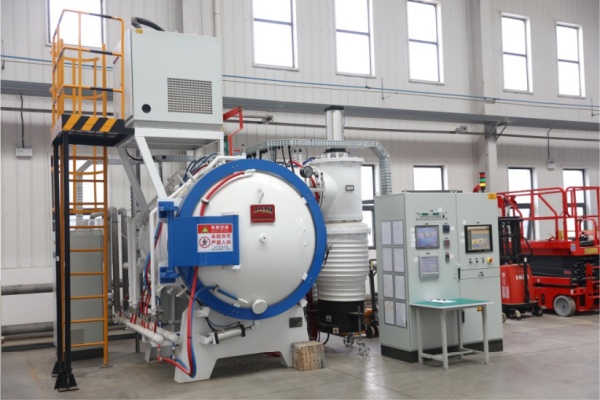
Before the Furnace Even Starts
Braze won't stick if the metal is dirty. Oil, grease, fingerprints – all of it kills the bond. We degrease every stack with acetone. Operators wear clean gloves. No exceptions.
The gap between layers matters too. For stainless honeycomb with nickel filler, the gap should be about 0.02 to 0.1 mm. Too big, the filler can't wick in. Too small, it can't flow at all. We control stacking pressure to keep the gap consistent across the whole batch.
Filler material depends on the metal. For stainless, we use nickel-based paste (BNi-2). For aluminum, aluminum-silicon. Store it right – paste dries out if left open.
Temperature – The One That Really Matters
For stainless steel metal substrates with BNi-2 filler, we braze at 1020-1050°C. For aluminum, it's lower – around 590-630°C.
General rule: brazing temp should be about 25-60°C above the filler metal's melting point. Too low, the filler doesn't flow fully – weak joints. Too high, the base metal can soften or the filler runs right out of the joint.
In production, furnace temperature uniformity matters as much as the setpoint. If one corner of the furnace is 20°C colder than another, parts in that corner won't braze right. We use multi-zone controls to keep the whole hot zone within a few degrees. Thermocouples are placed in multiple spots inside the furnace, not just on the controller.
Ramp Rate – Slow or You'll Regret It
Ramp rate is how fast the furnace heats up. Too fast, and the metal expands uneven. Thin foil warps. Stacks shift. Parts distort.
For small batches, you can ramp faster. For big metal substrate stacks, go slow. We ramp at 10°C per minute up to preheat, then drop to 5°C per minute approaching brazing temp. The slower rate lets heat soak through the whole stack evenly.
Some shops use a two-step preheat – 235°C and 339°C – to burn off any organics before the real heat starts. We do that for dirty or coated foil.
Vacuum Level – Deep Enough or You Get Rust
Vacuum brazing doesn't use flux. The vacuum itself prevents oxidation. But only if it's deep enough.
We pull the furnace down to at least 10⁻⁵ torr before starting the heat. For critical stainless work, we go deeper – 10⁻⁶ torr or better. If the vacuum isn't deep enough, oxygen stays in the chamber. Metal oxidizes at high temp. Filler won't wet the surface. Joints fail.
We monitor vacuum throughout the cycle. A sudden pressure rise during heating means something is outgassing – moisture, trapped air, or a leak. That batch gets flagged.
Soak Time – Give It a Minute to Flow
Once the furnace reaches brazing temp, you hold it there. That's the soak. It gives the filler time to melt, flow into every joint, and wet the surfaces.
For stainless honeycomb with BNi-2 filler, soak times run 5 to 20 minutes. A small part gets 5-10 minutes. A large, dense stack of thin foil gets 20 or more.
Too short, filler doesn't reach all the joints. Too long, it can run out or react with the base metal to form brittle intermetallics.
Cooling – Don't Rush It
After the braze, you cool it down. Too fast, and the metal shrinks uneven. Stresses build. Cracks form at the joints.
We cool at 5°C per minute down to about 500°C, then faster after that. The first 200°C of cooling is the most critical. We learned the hard way that rushing cooling scraps batches.
Some furnaces let you gas quench after the braze. That's faster, but only safe for certain alloys and geometries. For thin foil honeycomb, we stick with slow furnace cooling.
Batch Consistency – The Hard Part of Production
In mass production, the challenge isn't running one good batch. It's running a hundred that are all the same.
We document every batch. Furnace run number, temperature profile, vacuum curve, soak time, cooling rate, operator. If something goes wrong, we know exactly what happened.
We use the same stacking fixtures for every batch of a given part. Fixtures wear. We replace them on a schedule, not when they break.
Furnace loading affects temperature uniformity. Pack too many parts tight, and heat doesn't circulate. We keep total projected area under 70% of the effective heating zone.
Every batch gets a peel test sample. We braze a small coupon with the same stack, then peel it apart. If the foil tears before the braze joint fails, the batch is good.
What Goes Wrong – And What It Means
Filler didn't flow – temp too low, or soak too short. Check thermocouples.
Filler ran out – too hot or too much filler. Reduce filler or lower peak temp.
Parts warped – cooling too fast or uneven heating. Slow down ramp and cool rates.
White powder on aluminum – oxidation. Vacuum wasn't deep enough. Check seals.
No bond – dirty foil. Clean better. Use fresh gloves.
We keep a failure log. Every problem gets written down, investigated, and fixed. That's how you get better at production.
Quick Summary – Key Numbers
For stainless metal substrates with BNi-2 filler, we braze at 1020-1050°C. Ramp 5-10°C per minute. Soak 5-20 minutes. Cool 5°C per minute down to 500°C. Vacuum below 10⁻⁵ torr. Brazing gap 0.02-0.1 mm.
For aluminum with Al-Si filler, brazing temp is 590-630°C. Similar ramp and soak, but cooling starts slower down to 300°C. Gap is a bit looser – 0.05-0.15 mm.
Bottom Line
Vacuum brazing metal substratehoneycomb in production is about controlling the variables. Temperature, vacuum, ramp, soak, cooling – each one matters.
Get them right, and you get consistent, strong brazes batch after batch. Get any of them wrong, and you scrap a whole furnace load.
We've been doing this for years. We've made every mistake on this list. Now we have a process that works – documented, repeatable, and tested every batch.
If you're brazing metal honeycomb at scale, lock down your parameters. Document everything. Test every batch. That's how you turn out parts that don't fall apart.