To be a valuable global supplier
for metallic honeycombs and turbine parts


Contact number
0555-2813555
To be a valuable global supplier
for metallic honeycombs and turbine parts
Technological Innovation
Process Management
Continuous Improvement
Customer Satisfaction
Knowledge
Dedication
Diligence
Loyalty
Responsibility
Confidence
Tenacity
Respect

To be a valuable global supplier
for metallic honeycombs and turbine parts
Release time:2026-06-12
Small boat engines are a different headache. Outboards, inboards, jet skis. They run in salt spray, suck in humid air, and sometimes the owner puts in whatever fuel they got.
A car catalytic converter on a boat? Won't last a season. The aluminum foil corrodes. The mounting cracks. The coating poisons.
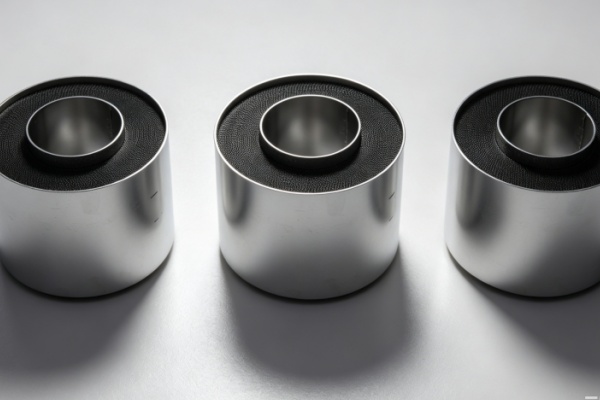
We make metal catalytic converters for small marine engines. Not the same as car parts. Here's what we do.
What's Different About Marine Exhaust
Three things kill normal converters on boats.
Salt. The air is full of it. Get salt on aluminum honeycomb, it turns to white powder in months.
Water. Marine exhaust is wet. Water slugs hit the converter. Ceramic cracks. Thin metal warps.
Low temp. Many small boat engines don't run hot enough. Outboards idle slow, run at low load. The converter never lights off.
And the fuel? Sometimes old, sometimes high sulfur, sometimes water in it.
So you need a converter built for that crap.
Our Metallic Solution – What We Put in There
Not aluminum. Not thin foil. Not standard coating.
Stainless 316L honeycomb. Thick foil – 0.08 mm or 0.1 mm. Salt doesn't eat it. Water doesn't rust it.
Low cell density. 200 cpsi or 300 cpsi. Small engines have small exhaust flow. You don't need 400 cells. Too many cells plug with soot and moisture. Bigger cells let water blow through.
High‑platinum coating. Marine fuel can have sulfur. Palladium hates sulfur. Platinum is more tolerant. So we load up on platinum.
Open frame. No tight corners for water to pool. Drain holes at the bottom.
We call this our small marine engine exhaust metallic catalytic solution. It's not fancy. It just works.
Why Not Ceramic?
Ceramic is cheap. That's the only good thing.
On a boat, ceramic cracks from water shock. Hot converter, cold water splash – crack. Then you got bypass, no treatment, fail.
Metal doesn't crack. It can take a water slug. It can take vibration from the engine. It lasts.
So yeah, metal costs more. But you replace it less.
What About the Water?
Marine exhaust has water. It's inevitable. Cooling water injection, condensation.
Our solution: drain holes. We drill tiny holes at the bottom of the converter can. Water drips out. It doesn't pool inside.
Also, we mount the converter at an angle – not horizontal. Water runs to the low side and out.
Some customers put a small weep hole before the converter to let water out before it hits the honeycomb. Works great.
Heat – How to Get It Hot Enough
Small boat engines run cold. An outboard at idle might have exhaust at 200°C. That's too cold for a catalytic converter. Light‑off needs 250-300°C.
So we do two things.
First, use thin‑wall stainless – 0.08 mm. Thinner than industrial, but thicker than car. It lights off faster than thick foil.
Second, mount the converter as close to the engine as possible. Right after the manifold. Keep the pipe short. Add insulation wrap if needed.
If the engine still runs cold, you might need a pre‑heater. But that's rare for small outboards.
Fuel Quality – Expect the Worst
Boat fuel sits in tanks for months. It picks up water. Sulfur content can be high. Additives degrade.
We use platinum‑rich coating. Platinum is more resistant to sulfur poisoning than palladium. It costs more, but it lasts.
We also spec a higher precious metal loading – more grams per cubic foot. Because the fuel is unpredictable.
One customer ran his boat on old gas. The converter still worked for two seasons. A standard car converter would have died in months.
Installation Tips for Boat Yards
Don't mount the converter where it will get sprayed with raw water. Put it in the dry part of the exhaust.
Use stainless brackets. Marine grade. Not painted steel.
If the exhaust pipe is rubber (common on outboards), you need a metal section to mount the converter. We can supply the whole assembly.
Check the drain holes. Make sure they're at the lowest point. Drill a second one if needed.
Torque the bolts. Not too tight – you can warp the flange. We give specs.
Maintenance on the Water
Marine converters don't need much. But check a few things.
Listen for rattles. If it rattles, the substrate came loose. Replace it.
Look for rust on the can. If the can is rusting, you have a leak. Fix it.
Every season, pull the converter and shake it. No rattle? Good. Rattle? Replace.
Also, check the drain holes. If they're plugged with carbon, clean them with a wire.
Small marine engine exhaust needs a metallic catalytic solution that's different from a car.
Stainless 316L. Thick foil (0.08-0.1 mm). Low cell density (200-300 cpsi). Platinum‑rich coating. Drain holes. Angled mounting.
Don't use aluminum. Don't use ceramic. Don't use a car converter.
We make these for outboards, inboards, jet skis, small diesel marine engines.
If you're a boat owner or a marine mechanic, tell us your engine make, horsepower, and if you run in salt or fresh.
We'll build the right converter. No corrosion, no cracking, no smoke. Just clean exhaust on the water. That's the goal.