To be a valuable global supplier
for metallic honeycombs and turbine parts


Contact number
0555-2813555
To be a valuable global supplier
for metallic honeycombs and turbine parts
Technological Innovation
Process Management
Continuous Improvement
Customer Satisfaction
Knowledge
Dedication
Diligence
Loyalty
Responsibility
Confidence
Tenacity
Respect

To be a valuable global supplier
for metallic honeycombs and turbine parts
Release time:2026-06-11
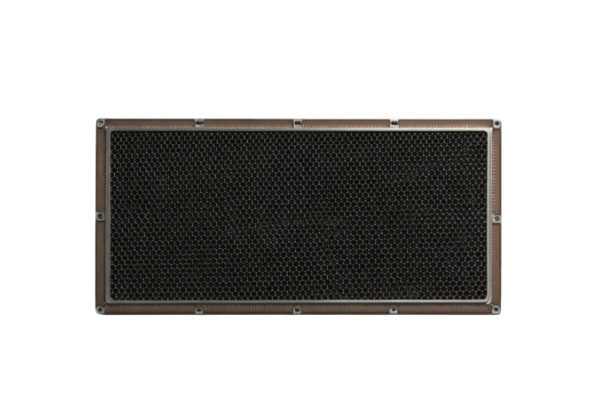
Acid and Alkali Resistant Shielding Vents – For Chemical Plants That Eat Normal Vents for Breakfast
You ever seen what a chemical plant does to a regular vent? It's ugly. Three months in, the aluminum looks like it's been sandblasted. The gasket swells up like a wet sponge. You touch it, it crumbles.
We make vents for chemical plants. Not the same stuff we sell to data centers. Different animal.
Here's what kills vents in a chemical plant – and how we keep them alive.
What You're Fighting
Three big things.
Acid fumes. Hydrochloric, sulfuric, nitric. They eat aluminum like hot sauce on a cheap taco. White powder, pits, then the honeycomb turns to dust.
Caustic mist. Sodium hydroxide, potassium hydroxide. They don't eat aluminum as fast, but they destroy rubber gaskets. Turn foam into goo.
Chlorine and oxidizers. These are mean. They attack stainless steel – even 316L can pit. Gaskets turn to crumbles.
Plus, chemicals condense on the vent face, drip inside the cabinet, short out your electronics.
So you can't just grab a vent off the shelf. You need the heavy‑duty stuff.
Material – Forget Aluminum
Aluminum? No. Day one maybe fine. Month two? White powder city.
Stainless 304 is okay for weak acids, but not for strong. Chlorine pits it.
We use 316L stainless for most chemical plants. The molybdenum helps fight chlorides and acids.
For really nasty jobs – hot concentrated acids – we go to Hastelloy or Inconel. Expensive as hell. But they don't rot. We've only done a few.
First rule: ask what's in the air. Mild? 316L. Aggressive? Upgrade.
Surface Treatment – Coating That Sticks
Bare stainless is okay, but we add extra.
Passivation. We acid‑etch the surface to remove loose iron. Prevents rust spots. Standard for food plants, good for chemical too.
PTFE coating. For acid mist, we add a thin Teflon layer. Non‑stick. Acid beads up and rolls off. Doesn't mess with shielding.
Epoxy coating. For caustic environments, we use chemical‑resistant epoxy. Thicker than PTFE, still fine for RF.
Coating can go on frame only, or on honeycomb too. Coating the honeycomb is tricky – you can't plug the cells. We spray it with a mask.
Gasket – Foam Is Suicide
Foam gasket in a chemical plant? That thing swells, cracks, or dissolves in weeks.
We use closed‑cell silicone for mild acids and bases. Holds up fine.
For aggressive chemicals – strong acids, chlorine, hydrocarbons – we use Viton (fluoroelastomer). Viton is pricey, but it's the only thing that lasts.
Also, the gasket needs a backup ring. If the gasket gets soft, the ring keeps it from squishing out.
We had a plant with sulfuric acid mist. Silicone gaskets lasted 6 months. Viton ones still fine after 2 years.
Frame Design – No Pockets for Chemicals
A vent frame can trap chemicals. Horizontal ledges, screw heads, corners. Chemical sits there, gets concentrated, eats through.
So we slope everything. No flat surfaces facing up. Countersunk screws filled with epoxy. No crevices.
Drain holes at the bottom – let any liquid run out.
Learned this after a vent failed at a paper mill. Caustic liquid pooled on the top flange, sat there for weeks, ate through. Now we slope everything.
Sealing the Cutout Edge
The cabinet itself is a problem. The vent seals to it, but the cutout edge is bare metal. Chemicals get between gasket and edge.
We use a chemical‑resistant sealant on the cutout edge before mounting. A thin bead of silicone or polysulfide. Let it skin over, then mount the vent. Gasket sits on sealant, not on raw metal.
Also, sealant must be compatible with gasket. Silicone on silicone is fine. Polysulfide on Viton is fine.
Real Example – Chlor‑Alkali Plant
A plant made chlorine and caustic soda. Air was full of both. Their vents lasted 3 months before honeycomb turned into white crust.
We supplied 316L stainless vents with PTFE coating, Viton gaskets, countersunk epoxy‑filled screws, and polysulfide sealant on the cutout.
Three years later, vents still fine. Cost more, but they stopped replacing every quarter.
Real Example – Battery Recycling Plant
Sulfuric acid mist. Tried aluminum vents. Failed in weeks. Then 304 stainless – lasted 6 months, then pitting.
We went to 316L with heavy PTFE coating and Viton gaskets. Also added a rain hood to keep direct splashes off.
Two years, still good.
How to Tell If Chemicals Are Killing Your Vent
Look for:
White powder on aluminum – corrosion.
Pitting on stainless – small holes.
Gasket swollen, soft, or cracked – chemical attack.
White or yellow residue on honeycomb – dried chemical.
Shielding drop – measure with a probe.
See any of those? The environment is too harsh for standard parts.
Maintenance in Chemical Plants
Inspect more often – every 3 months.
Wipe vent face with a damp cloth (if safe). Don't use solvents – they might attack gasket.
Check drain holes. They can plug with dried chemicals. Clear with a wire.
Gasket looks damaged? Replace it. Don't wait.
Coating scratched? Touch up with PTFE spray.
When to Replace
Honeycomb shows pitting or white powder? Replace it. Done.
Frame has deep pits? Replace it.
Gasket cracked or swollen? Replace it.
Chemical attack doesn't heal. Once it starts, it gets worse.
Chemical plants need acid and alkali resistant shielding vents. No way around it.
Use 316L stainless or better. Passivate. Add PTFE or epoxy coating. Use closed‑cell silicone or Viton gaskets. Slope the frame. Seal the cutout edge.
Don't use aluminum. Don't use foam gaskets. Don't skip the coating.
We make vents for chemical plants. Seen what works and what melts.
If you're in a nasty environment, tell us what chemicals. We'll build the right vent – and tell you if you need a rain hood or special coating.
That's what we do. No rust, no leaks, no rot. Just years of service.