To be a valuable global supplier
for metallic honeycombs and turbine parts


Contact number
0555-2813555
To be a valuable global supplier
for metallic honeycombs and turbine parts

Technological Innovation
Process Management
Continuous Improvement
Customer Satisfaction

Knowledge
Dedication
Diligence
Loyalty
Responsibility
Confidence
Tenacity
Respect

To be a valuable global supplier
for metallic honeycombs and turbine parts
Release time:2026-06-10
Ever been to Florida in August? Singapore? Some jungle comms shack? You open the cabinet and water drips out. Everything's rusted. The vent looks like it's been on the bottom of a boat.
That's humidity. It kills vents. Not overnight, but slow. Water seeps in, aluminum turns to white powder, gasket rots, shielding drops. Then a cell tower starts bleeding into your gear.
We ship vents to humid holes all the time. Here's what we do to keep 'em alive.
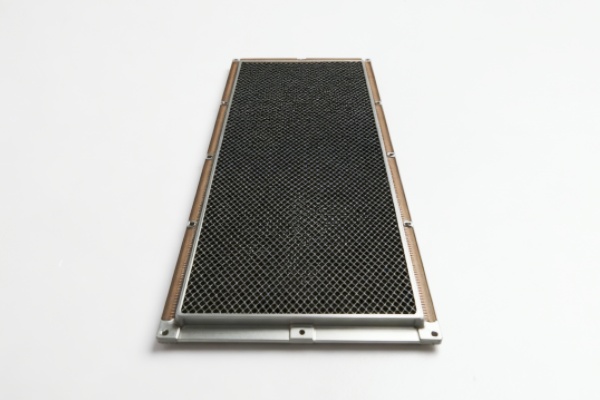
What Humidity Does
Three things.
Corrosion. Aluminum in a wet place? White powder. That powder doesn't conduct. Shielding drops 20-30 dB.
Gasket dies. Water soaks into open‑cell foam like a sponge. Then it swells, cracks, or just turns to mush. Seal goes to hell.
Condensation inside. Hot day, humid air in the cabinet. Night falls, temp drops, water condenses on the honeycomb cells. Now you got water droplets bridging cells. Shielding gets weird.
Seen vents that looked fine outside but were corroded solid inside. The guy said "but aluminum doesn't rust." It does in salt air. And even in plain humidity over time.
Material – Stainless or Go Home
If you're in a humid place, don't use aluminum. Simple.
Aluminum will corrode. Not if – when. White powder, pitting, gasket lifts. We've replaced aluminum vents after 18 months in coastal Florida.
Stainless 304 is better. 316L best for salt and high humidity. Costs more, doesn't rot.
We also do nickel‑plated aluminum. Cheaper than stainless, better than bare. Good for moderate humidity, not for jungle or coast.
So rule one: pick the right metal.
Gasket – Closed‑Cell Silicone Only
Don't use foam. Foam drinks water. Then it stays wet, grows mold, loses its squish.
We use closed‑cell silicone. Water can't get in. Stays flexible in heat and cold. Doesn't rot.
Also, the gasket needs a stop. Squish it too much and it still takes a set. We design the flange so the gasket compresses to a certain thickness, not to zero.
Had a customer in a rain forest used open‑cell foam. Six months later, gasket was green with mold. Vent leaked RF. Switched to closed‑cell silicone. No more problems.
Drain Holes – Let the Water Out
Even with good seals, water finds a way. Condensation, blown rain.
So we drill tiny holes at the bottom of the vent frame – 2 mm. Water drips out. Air doesn't care.
You gotta put 'em at the lowest point. Vertical mount? Holes at bottom edge. Horizontal mount? Holes on the lower side.
Learned this after a customer complained water pooled in the vent after a rainstorm. Added drain holes. Fixed.
Hydrophobic Coating – For Really Wet Shit
For jungles, offshore platforms, we offer a hydrophobic coating on the honeycomb. Thin fluoropolymer. Water beads up and rolls off.
Doesn't hurt shielding. Doesn't change airflow. Keeps water from sitting on cell walls.
Costs extra. For most jobs, stainless and good gasket are enough. But for extreme wet, worth it.
Seal the Screws
Water can sneak in around screw threads. You tighten it, but water still follows the threads.
We use sealing washers – neoprene bonded to metal. Or a dab of silicone under the screw head.
Every screw hole is a potential leak. Don't forget 'em.
Real Example – Singapore
Telecom cabinet in Singapore. Hot, humid, rains all the time. They used standard aluminum vents with foam gaskets. Two years later, vents corroded, gaskets cracked, interference was bad.
We swapped to stainless 316L vents, closed‑cell silicone gaskets, drain holes, sealing washers.
Three years later, no corrosion, no leaks, no interference. They ordered 200 more.
Real Example – Oil Platform
Gulf of Mexico. Salt spray, humidity, wind‑driven rain. They needed vents that could take a beating.
We used 316L stainless, closed‑cell silicone, hydrophobic coating, drain holes, and a rain hood.
Five years ago. Still working.
How to Tell If Moisture Is Killing Your Vent
Look for:
White powder on aluminum – corrosion.
Gasket that's hard, cracked, or mushy – dead.
Water inside the cabinet near the vent – leak or condensation.
Rust on screws – wrong material.
Shielding dropped – measure with a probe.
See any of these, time to replace. Or at least clean and reseal.
Maintenance for Humid Areas
Check the vent every six months. Look at the gasket. Look for white powder. Clean drain holes – they plug with dirt.
If you have hydrophobic coating, don't scrub with abrasives. Just rinse.
Replace gaskets every 3‑5 years in humid environments. They're cheap. A new vent ain't.
Anti‑moisture treatment for plane wave shielding vents in humid areas isn't optional.
Stainless (316L for coast). Closed‑cell silicone gaskets. Drain holes. Seal the screws. Hydrophobic coating for extreme wet.
Don't use aluminum. Don't use foam. Don't skip drain holes.
We make vents for wet places. We know what works and what rots.
If you're in a humid shit hole, tell us. We'll build the right vent. No rust, no leaks, no interference. That's the goal.