To be a valuable global supplier
for metallic honeycombs and turbine parts


Contact number
0555-2813555
To be a valuable global supplier
for metallic honeycombs and turbine parts
Technological Innovation
Process Management
Continuous Improvement
Customer Satisfaction
Knowledge
Dedication
Diligence
Loyalty
Responsibility
Confidence
Tenacity
Respect
To be a valuable global supplier
for metallic honeycombs and turbine parts
Release time:2026-06-02
In our shop, we make metallic catalyst substrates. You know, the honeycomb inside a catalytic converter. To keep all those thin foil layers from falling apart, you gotta bond them together.
There's two ways to do it. Vacuum brazing. And laser welding.
Both work. But they're different. Here's what we've figured out making parts both ways.
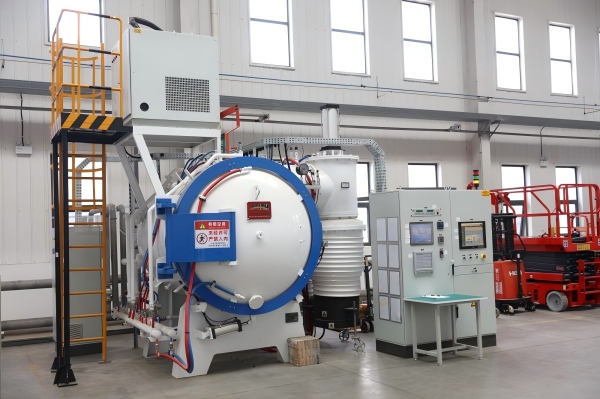
Vacuum Brazing – The Old Way
This is how most metal substrates have been made for ages. Stack the foil, put a thin sheet of brazing filler between the layers, load the stack into a big vacuum furnace. Heat it up until the filler melts and flows into the joints. Then cool it down.
What's good:
You can do a whole bunch at once. Dozens or hundreds in one furnace load.
The braze gets into every little gap. Good coverage.
Works with really thin foil – like 0.03 mm.
Once the furnace is dialed in, parts come out the same every time.
What's not so good:
Takes hours. Not fast.
Heat the whole part. Thin sections can warp.
Vacuum furnace costs a lot to buy and run.
If the temperature drifts, you get weak joints or melted cells.
We've been brazing for years. It's reliable. But it's slow. And when it goes bad, it goes bad for a whole batch.
Laser Welding – The Newer Way
Instead of heating everything, you use a laser to weld the layers together at the edges or at spot points. The laser melts the metal right at the joint. No filler needed.
What's good:
Fast. Seconds per part, not hours.
No furnace, no vacuum. Lower energy cost.
Less heat, less warping. Only the weld spot gets hot.
You can weld different materials without worrying about braze compatibility.
What's not so good:
Only welds where the laser hits. Not every cell gets bonded – just the edges or a grid of spots.
Thin foil can burn through if laser power is too high.
Need perfect alignment. Laser has to hit exactly where the layers meet.
Not as strong under vibration. The substrate might come apart.
We started laser welding a few years ago. Good for some jobs. Not for all.
How They Compare – We Tested Both
Same part – 400 cpsi, 0.05 mm foil, round.
Brazed part:
Bonded everywhere. Cut it open, layers wouldn't separate.
Strength was the same across the whole part.
Took vibration like a champ. No cracks after 500 hours on the shaker.
Laser welded part:
Only welded on the outer edge and a few spots inside.
If you twisted it hard, layers could shift.
Lighter – no braze filler.
Survived vibration, but after 500 hours the center started to delaminate a little.
So brazing is stronger. Laser is faster and lighter.
When We Braze
High vibration – trucks, off‑road, marine. Need the whole thing bonded.
Thin foil – under 0.05 mm. Laser burns through.
High cell density – 600 cpsi or more. Too many cells, nowhere for the laser to hit.
Big parts – bigger than a dinner plate. Laser welding takes forever.
Brazing is still the workhorse for automotive and heavy diesel.
When We Laser Weld
Low vibration – stationary generators, industrial fans. Not much shaking.
Thicker foil – 0.1 mm or more. Laser won't blow through.
Custom prototypes – weld one part without firing up a whole furnace.
Need something light – no braze filler saves a few grams.
Need parts tomorrow? Laser is faster.
Laser works fine for small batches. Wouldn't do it for a million truck converters.
Cost
Brazing furnace is expensive up front. A good vacuum furnace costs as much as a house. But once it's running, cost per part is low – maybe 50 cents for energy and filler.
Laser welder is cheaper – maybe $30-50k for a fiber laser. But if you need a lot of weld points, it's slow. For a big part, maybe 50 weld spots. That takes time. Cost per part ends up similar for medium runs.
Volume matters. 10,000 parts? Brazing wins. 100 parts? Laser wins.
Real Example – Truck Converter
All our heavy‑duty truck substrates get brazed. High vibration, big size, thin foil. Laser would take forever to weld all those internal cells. And the vibration would probably shake it apart. Brazing is the only way.
Real Example – Small Generator
Customer needed 200 substrates for a small stationary generator. Thicker foil – 0.1 mm – because the exhaust was hot. Low vibration. We laser welded them. Faster than running the furnace for just 200 parts. Two years later, no failures.
Real Example – Prototype Run
A tuner wanted 10 custom substrates for a race car. Different shape, thin foil. We laser welded them because firing up the vacuum furnace for 10 parts would have cost a fortune. Worked fine for the race season.
Vacuum brazing – strong, uniform, good for high vibration and thin foil. Slow. Expensive furnace.
Laser welding – fast, cheaper for small runs, less warping. But only welds where the beam hits. Not as strong.
Pick brazing for trucks, off‑road, marine, high volume.
Pick laser for stationary gear, prototypes, thick foil, low volume.
We do both. Tell us what you're building. We'll pick the right one. That's what we do.