To be a valuable global supplier
for metallic honeycombs and turbine parts


Contact number
0555-2813555
To be a valuable global supplier
for metallic honeycombs and turbine parts
Technological Innovation
Process Management
Continuous Improvement
Customer Satisfaction
Knowledge
Dedication
Diligence
Loyalty
Responsibility
Confidence
Tenacity
Respect

To be a valuable global supplier
for metallic honeycombs and turbine parts
Release time:2026-05-28
Anybody can make one good vent. Take your time. Measure twice. Baby it through the line.
But a thousand vents? All the same? That's a whole different deal.
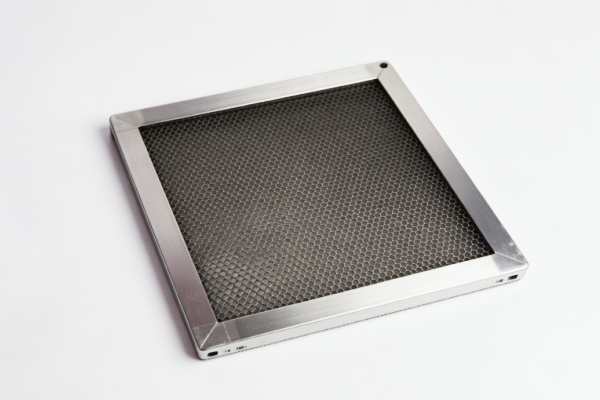
We run a factory. We crank out waveguide vents by the thousand. The hardest thing we do is make vent number one and vent number one thousand come out identical – same shielding, same airflow, same fit.
Here's how we control that chaos.
Raw Material – Don't Trust the Foil Supplier
It all starts with foil. Foil changes, everything changes.
We buy from the same mills. Same thickness, same alloy, same finish. But we still check every damn coil when it comes in. Thickness in three spots. Look for scratches, oil, oxidation. Then run a test braze on a little sample.
If a coil fails any of that, it goes back. No second chance.
We also keep a chunk of every coil. Label it with the batch number. Six months later, a customer has a problem? We can go back and test that exact same foil.
Tooling – Change It Before It Wears Out
Forming rolls wear. Run enough foil through them, and the cells start drifting.
We don't wait for the drift to show up. We change rolls on a schedule – after a set number of feet. Every time.
Same for stacking fixtures, mandrels, even the furnace parts. If it touches the product, we have a spare and a replacement date.
Because a tool that's 1% off at the start of a run will be 5% off by the end. We don't let it get there.
Furnace – Watch It Like a Hawk
The brazing furnace is where good vents get made and bad vents get born.
We have thermocouples inside the furnace – not just the controller. Log every cycle. Ramp rate, soak temp, soak time, cool down. Every batch has a record.
Before every shift, we run a test coupon through the furnace. Then peel it apart. If it fails, no production until the furnace is right.
Peel Test – Kill One to Save the Rest
Every batch, we sacrifice one vent. Clamp a layer in a vise, pull.
If the foil tears before the braze lets go – good. If the braze separates clean – whole batch is junk. Rework or scrap.
Yeah, that vent is trash. But it tells us more than any fancy test. We keep those peeled samples in a file. Dated, batch number written on them. Years later, we can still look at them.
Flow Bench – Same Rig, Same Air, Same Numbers
We have a flow bench. Calibrated every year. Test samples from every batch.
Put the vent on, set the airflow to the customer's spec, read pressure drop. Within 5%? Pass. Outside that? Stop the line and figure out why.
We keep records. A customer calls and says "backpressure is higher than before"? We pull the data and compare.
Light Test – Shine a Light Through
Every single vent gets a light test. Put it on a light table. Shine bright light through.
Even pattern? Good. Dark spots or streaks? Cells are crooked or blocked. That vent gets pulled.
Catches stuff the flow bench misses. A blocked corner might not change overall pressure drop much. But that corner won't shield.
Dimensions – It Has to Fit
Customer's cabinet cutout is a certain size. Vent is off by 0.5 mm? Won't seal.
We measure samples from every batch. Length, width, thickness, flatness. Custom shapes get go/no‑go fixtures.
Out of spec? Doesn't ship. No argument.
Traceability – One Number Tells the Story
Every batch gets a unique number. Follows it through production – from incoming foil to final test.
We record:
Which coil of foil
Which forming tool
Which operator
Furnace cycle log
Peel test result
Flow bench data
Light test pass/fail
Final dimensions
Vent fails in the field? Look up the batch number. We can tell you which coil, which operator, which furnace run. That's how we fix problems, not just blame them.
What Happens When a Batch Fails
It happens. Furnace drifts. Coil of foil is bad. Tool wears faster than expected.
Batch fails any test, we stop. Quarantine the whole batch. Find the root cause. Rework or scrap.
We never ship a failed batch. Not "just this once." Not "the customer won't notice." Never.
Because the one time you ship a bad batch, it comes back. Costs ten times more than scrapping it.
Real Example – Furnace Fan Died
One night, the furnace cooling fan quit. Temperature profile drifted during the cool down. Nobody noticed until morning.
Tested the batch. Peel test passed – barely. Flow bench showed higher pressure drop. Cells had warped a little.
Scrapped the whole batch – 200 parts. Customer never knew. But we lost a day and a pile of metal.
That's the cost of consistency. Hurts. Cheaper than a recall.
Customers Can Check Too
We want customers to test our vents when they get them.
Measure cell size. Put on a flow bench. Shine a light through. Check dimensions. Cut one open and peel it.
Find a problem? Send us the batch number. We'll pull our records. If it's our fault, we replace the batch. No argument.
We've had customers test our vents for years. Data is boring. Same numbers, batch after batch. That's what we want.
Mass production isn't about making one good vent. It's about making a thousand that are all the same.
Raw material checks. Tooling replacement. Furnace watching. Peel tests. Flow bench. Light test. Dimensions. Traceability. And the guts to scrap bad batches.
We do all that because we've seen what happens when you don't. Inconsistent parts. Angry customers. Warranty claims.
If you need a ventilation panel that's the same every time, that's what we do. Same specs, same performance, same fit. Box after box. That's batch consistency. That's the job.