To be a valuable global supplier
for metallic honeycombs and turbine parts


Contact number
0555-2813555
To be a valuable global supplier
for metallic honeycombs and turbine parts
Technological Innovation
Process Management
Continuous Improvement
Customer Satisfaction
Knowledge
Dedication
Diligence
Loyalty
Responsibility
Confidence
Tenacity
Respect

To be a valuable global supplier
for metallic honeycombs and turbine parts
Release time:2026-05-23
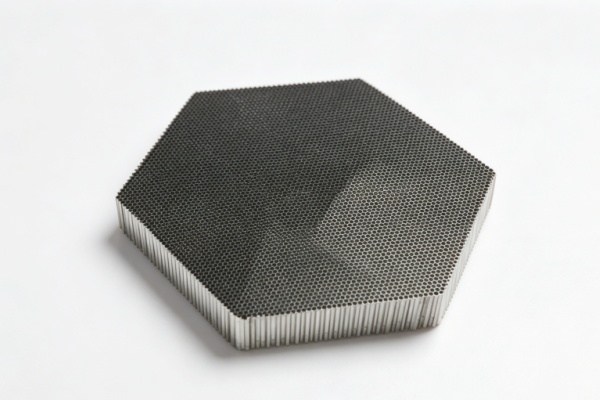
Most people think round honeycomb is the only way to straighten exhaust gas. It's what's in every catalytic converter, right?
Yeah, but we've run tests. In some conditions, square honeycomb does a better job cutting down turbulence. Not always. But enough that we've made square cell substrates for customers who care about flow distribution.
Here's what we found.
Why Turbulence Matters in Exhaust
An exhaust stream isn't smooth. It pulses from each cylinder. It swirls around bends. It hits the converter face at weird angles.
That turbulence causes problems.
First, uneven flow means some parts of the catalyst work harder than others. The middle gets all the gas. The edges do nothing. Overall conversion drops.
Second, turbulence creates pressure drop. The engine has to push harder. Fuel economy suffers.
Third, hotspots. Where the gas hits hardest, the substrate gets hotter. That can cause cracking or melting.
So you want the exhaust as straight and even as possible before it hits the catalyst.
How Honeycomb Straightens Flow
A honeycomb substrate – round or square – acts like a bunch of little tubes. When exhaust hits the face, it has to go into one of those tubes. The tubes force it to straighten out.
The longer the tube, the more the flow straightens. That's why deeper substrates work better for turbulence reduction.
But the shape of the tube matters too. Round tubes are symmetrical. Square tubes have corners. Those corners create a little more resistance to swirling flow.
That's where square might win.
What Our Flow Bench Showed
We set up a test. Same cell size (1/8 inch), same open area (about 85%), same depth (1/2 inch). One round honeycomb, one square.
We put them in a test rig with a turbulent inlet – we used a fan with a swirling vane to simulate exhaust pulsation.
Then we measured flow straightness downstream of the substrate. We used a hot‑wire anemometer to map velocity profile and a pressure sensor to measure turbulence intensity.
Results (average of 10 runs):
Round honeycomb: turbulence intensity reduced by about 65% compared to no substrate.
Square honeycomb: turbulence intensity reduced by about 78%.
That's a decent difference. The square cells did a better job knocking down the swirl.
We also measured pressure drop. Square had about 8% higher pressure drop than round. So you trade a little backpressure for better flow straightening.
Why Square Might Work Better
Our theory – not proven, but we think so – is that the corners in square cells create more resistance to tangential flow. Swirling exhaust wants to go around in circles. But square corners force it to change direction. That kills the swirl faster.
Round cells have no corners. Swirl can go around and around more easily.
Also, square cells have a more uniform cross‑section from the face to the back. Round cells at the edge of a round substrate are partial cells – they're cut off. Those partial cells don't straighten flow well. Square cells in a square substrate can be full cells all the way to the edge.
So if your substrate shape matches the cell shape, you get fewer partial cells. Better flow distribution.
Where Square Makes Sense
We recommend square honeycomb for turbulence reduction in a few cases.
Engines with strong swirl. Some diesel engines have very high swirl in the exhaust. Square cells can knock it down better.
Short substrates. If the converter has to be short (space constraints), you need every bit of flow straightening you can get. Square cells give you more straightening per unit depth.
After a tight bend. If the exhaust has a sharp bend right before the converter, the flow is highly turbulent. Square honeycomb helps.
High‑flow applications. If you need low pressure drop, square might still be okay. The 8% penalty is small compared to the benefit in some engines.
Real Example – Diesel Generator
We made a square honeycomb substrate for a diesel generator. The customer complained that the standard round substrate was causing hotspots – the front face had a visible burn mark in the center.
We flow‑tested their exhaust. The inlet pipe was offset, not centered, and there was a bend just before the converter. The flow was hitting one corner of the round substrate.
We switched to a square substrate that matched the housing shape (the housing was square). The flow distribution evened out. Hotspots disappeared. The customer said the generator ran quieter too – less exhaust noise.
Real Example – Performance Car Exhaust
A tuner building a performance exhaust for a turbocharged car wanted to reduce turbulence before the catalyst. The exhaust pipe had a tight 90° bend just before the converter.
They tried a standard round honeycomb. The flow distribution was uneven – one side of the catalyst saw much higher velocity.
We supplied a square honeycomb with the same cell size and depth, but oriented the cells diagonally relative to the bend. That forced the flow to straighten faster.
They measured backpressure – same as round. But the catalyst outlet temperature was more uniform, indicating better flow distribution.
Things to Watch
Square honeycomb isn't always better.
It costs more to make. Round honeycomb can be wound continuously. Square has to be stacked. So the price is higher.
It has slightly higher pressure drop. Not huge, but if you're right at the limit of your backpressure budget, that 8% could matter.
It's harder to seal. The square frame has corners. Those corners are potential leak points. Round is simpler.
So don't switch to square just because. Only if you have a turbulence problem that round isn't solving.
How to Test If You Need Square
You can do a simple test.
Put a round honeycomb in your exhaust. Measure pressure drop and catalyst face temperature at several points. If the temperature varies by more than 50°C across the face, you have flow maldistribution.
Then swap in a square honeycomb – same cell size and depth. Measure again. If temperature variation drops, square helped.
If not, stick with round.
We offer sample square substrates for exactly this kind of testing.
Bottom Line
Square honeycomb can reduce exhaust gas turbulence better than round – about 15‑20% more straightening in our tests.
It works by killing swirl with its corners. It's best for engines with high swirl, short substrates, or tight bends upstream.
But it costs more and has slightly higher pressure drop.
If you have a flow distribution problem that square metal substrate isn't fixing, try square. We've seen it work.
Not sure? Run a test. Or send us your exhaust setup. We'll tell you if square makes sense for your engine. That's what we do.