To be a valuable global supplier
for metallic honeycombs and turbine parts


Contact number
0555-2813555
To be a valuable global supplier
for metallic honeycombs and turbine parts
Technological Innovation
Process Management
Continuous Improvement
Customer Satisfaction

Knowledge
Dedication
Diligence
Loyalty
Responsibility
Confidence
Tenacity
Respect

To be a valuable global supplier
for metallic honeycombs and turbine parts
Release time:2026-04-16
I talk to a lot of business owners who buy substrates. Rebuilders. Muffler shops. Fleet guys. And every single one of them, sooner or later, asks the same thing: "How cheap can I get away with?"
I get it. You've got margins to make. But I've also watched people chase the lowest price and end up paying way more in the long run. Warranty claims. Comebacks. Angry customers. Time down the drain.
So here's what I've learned about what you actually get when you pay more – and when you can probably get away with paying less.
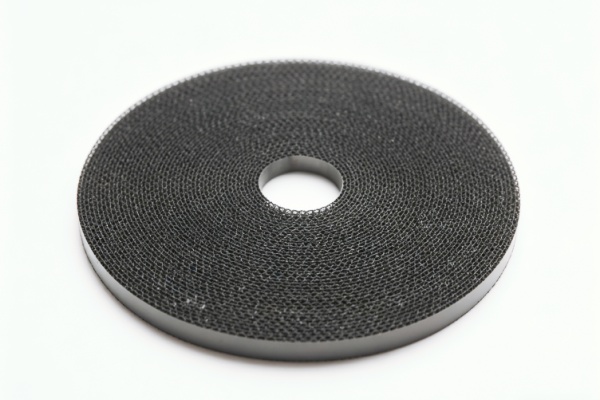
What You Don't Get With a Cheap Substrate
I've cut open a lot of cheap substrates over the years. Some from online discounters. Some from brands you've never heard of. Some from shops that aren't even in business anymore.
Here's what I usually find inside.
The foil is thinner than it should be. Instead of 0.05 mm, it's 0.04 or less. Less material cost for them, but more fragile for you. Cracks easier. Dents when you look at it wrong.
The brazing is spotty. The filler didn't flow all the way. The substrate holds together – barely. Tap it with a wrench and it sounds dead.
The mounting mat is cheap. The kind that hardens up after a few heat cycles. A year later, the substrate is loose in the can.
The cell density isn't what they said. They claim 400 cpsi, but when you actually count, it's 350. Bigger cells. Less surface area. Lower conversion.
The precious metal loading is lower. Or they used a cheaper formulation. Might pass a fresh test. Won't last.
And they probably didn't test any of it. Made it, boxed it, shipped it. Never saw a flow bench or a vibration table.
Not every cheap substrate is garbage. Some are fine for light duty. But if you're putting them in vehicles that actually get driven, you're gambling.
What a Cheap Substrate Really Costs You
Let me give you a real example.
We had a customer who ran a small converter rebuilding shop. He bought cheap substrates – saved about $40 per unit compared to our mid‑grade ones. Thought he was being smart.
Within a year, he had a 15% failure rate. Check engine lights. Rattles. Failed smog tests. He had to warranty those converters. Labor. Shipping. Angry customers. Some of them never came back.
He sat down and did the math. That $40 he saved cost him about $120 per failure in warranty costs. And that didn't count the customers he lost.
He switched to our mid‑grade substrate. Failure rate dropped below 2%. He stopped losing money on warranties. His customers were happier. He still made a decent margin.
Cheap isn't cheap if it fails.
What You're Paying For With a Better Substrate
When you spend more, you're buying stuff you can't see.
Consistent foil thickness. Every coil checked. No surprises.
Cells that are actually straight and the right size. Even flow. Predictable backpressure.
Brazing that's solid. We peel test every batch. No weak spots.
A mounting mat that actually holds up. Rated for the right temperature and vibration.
Accurate precious metal loading. What's on the spec sheet is what's in the part.
Testing. Flow bench. Vibration. Thermal cycle. They know what they're shipping.
And you're buying peace of mind. When you put that substrate in a customer's car, you don't have to lie awake wondering if it's going to come back.
Where You Can Save Money
Not every job needs the top‑tier stuff.
Low‑mileage car. Grandma's sedan that does 5,000 miles a year. Doesn't need the same substrate as a delivery van.
Mild climate. No road salt. No extreme heat. Aluminum is fine. You don't need stainless.
Simple engine. Older car, basic emissions. Doesn't need 600 cpsi or fancy coatings.
Budget customer. They just want the cheapest fix to pass inspection. They know the risk. Let them take it.
For those, a good mid‑grade substrate is plenty. Not the bottom‑of‑the‑barrel junk, but not the top shelf either.
We have different tiers for exactly this reason. Entry‑level for budget builds. Mid‑grade for most daily drivers. Premium for heavy‑duty, high‑mileage, or nasty conditions.
Where You Should Not Cheap Out
Some applications demand the good stuff.
High‑mileage fleet. Delivery vans, taxis, cop cars. They run all day. A cheap substrate will die.
Off‑road or rough service. Gravel roads, construction, farm equipment. Vibration kills cheap parts.
Marine or coastal. Salt eats aluminum. You need stainless.
Diesel. More heat, more vibration, tougher emissions. Don't mess around.
Customer‑facing repairs. If your name is on the warranty, use good parts. That extra $50 is cheap insurance against a comeback.
I had a shop owner tell me once, "I used to buy the cheapest substrate I could find. Then I spent half my time dealing with warranty claims. Now I buy good parts and actually make money."
A Simple Way to Decide
Here's how I help customers figure it out.
First, what's the application? Daily driver? Fleet? Off‑road? Marine? Diesel?
Second, how many miles a year? 5,000? 25,000? 50,000?
Third, what's the environment? Road salt? Extreme heat? Salt air?
Fourth, who's the customer? Price‑sensitive? Or do they want something that lasts?
Then match the substrate.
Low miles, mild climate, budget customer – entry‑level.
Average driving, normal conditions – mid‑grade.
High miles, harsh environment, fleet or performance – premium.
It's not one‑size‑fits‑all. Anyone who tells you it is, is trying to sell you something.
What We Tell Our Customers
When a business owner asks us for advice, here's what we say.
Don't buy the absolute cheapest thing on the market. It's cheap for a reason. You will have failures.
Don't buy the most expensive if you don't need it. A low‑mileage commuter car doesn't need a stainless, thick‑wall, 600 cpsi monster.
Test one before you buy a hundred. Get samples. Run them. See what happens.
Ask about testing. If the manufacturer can't show you data, walk away.
Think about total cost, not just part cost. A cheap substrate that fails costs you labor, shipping, and reputation. The expensive one that lasts costs more upfront but saves you headaches.
A Real Example
We had a fleet customer – 200 delivery vans. They were buying a mid‑grade substrate from another supplier. Price was okay. But they were seeing about 8% failures within two years.
They came to us. We recommended a premium substrate – stainless foil, thicker walls, better mat. Cost about 25% more per unit.
They tested a batch of 20. After two years, zero failures. They switched the whole fleet. The upfront cost was higher, but they saved money on warranty labor, tow trucks, and downtime.
The fleet manager told me, "I used to think about cost per part. Now I think about cost per mile. Your parts are cheaper per mile."
That's the right way to think about it.
Bottom Line
Picking a catalytic converter substrate isn't about finding the lowest price. It's about matching the part to the job.
Cheap parts have a place – low‑mileage, budget builds, mild conditions. But put them in harsh environments or high‑mileage vehicles, and you'll pay for it later.
Good parts cost more upfront. They last longer. They fail less. They keep your customers happy.
Know your application. Know your customer. And don't be afraid to spend a little more when it matters.
Because in this business, your reputation rides on every part you sell. And a failed converter is a fast way to lose a customer.