To be a valuable global supplier
for metallic honeycombs and turbine parts


Contact number
0555-2813555
To be a valuable global supplier
for metallic honeycombs and turbine parts
Technological Innovation
Process Management
Continuous Improvement
Customer Satisfaction
Knowledge
Dedication
Diligence
Loyalty
Responsibility
Confidence
Tenacity
Respect

To be a valuable global supplier
for metallic honeycombs and turbine parts
Release time:2026-04-08
You know your car has a catalytic converter. You know it's there to cut down on pollution. But if someone asked you how it does that, could you explain it?
Most people can't. And that's fine. But once you see what's going on inside that lump under your car, it's actually pretty straightforward.
Three Things Coming Out of Your Engine That You Don't Want
Your engine burns gas. That's its job. But burning gas isn't perfect. You get three nasty byproducts.
Carbon monoxide. Odorless, colorless, kills you if you breathe too much in a garage.
Hydrocarbons. Unburned gas. That's the "old car smell" you get behind a clunker.
Nitrogen oxides. NOx for short. Makes smog and acid rain. Forms when the engine gets really hot.
The catalytic converter's job is to get rid of all three at the same time.
What's Inside That Bulge
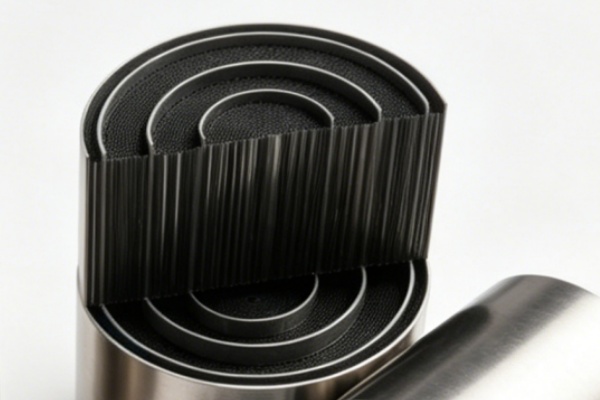
If you cut open a converter, you'll see a honeycomb. Thin metal walls, lots of tiny cells. A typical one has about 400 cells per square inch.
That honeycomb is coated with a rough, porous layer. Then sprinkled on top of that are three precious metals – platinum, palladium, and rhodium.
Those metals do the actual work. The honeycomb just gives them a place to live.
Cleaning Up Carbon Monoxide
Carbon monoxide is a molecule with one carbon and one oxygen. It wants another oxygen so it can turn into harmless CO2.
Platinum and palladium help that happen. They grab oxygen from the exhaust and stick it onto the CO. CO becomes CO2. Done.
It happens fast – like, split‑second fast. The exhaust is only inside the converter for a tiny amount of time, but that's enough.
Burning Up Unburned Gas
Hydrocarbons are just gasoline that didn't get lit in the engine. Same problem as CO. They need oxygen.
The platinum and palladium help them find that oxygen. The hydrocarbons turn into CO2 and water vapor. Basically, the converter finishes the burning job the engine started.
If your converter goes bad, you'll smell gas at the tailpipe. That's unburned fuel getting past.
Dealing With Nitrogen Oxides
This one's different. NOx is nitrogen and oxygen stuck together. You want to pull them apart.
That's where rhodium comes in. Rhodium breaks the bond. It pulls the oxygen off, leaving harmless nitrogen gas. The oxygen gets used somewhere else in the converter.
Platinum and palladium can't do this job. You need rhodium. That's why rhodium is so expensive.
All Three Happen in One Place
Here's the cool part. All these reactions happen at the same time, in the same honeycomb cells.
The exhaust flows in. As it travels down each little channel, CO and hydrocarbons get oxidized, NOx gets reduced. By the time the gas reaches the end, it's clean.
That's why they call it a three‑way catalyst. Three jobs, one box.
It Needs Heat – No Heat, No Work
If the converter is cold, it does nothing. The reactions won't start until it hits about 250 degrees Celsius. Really gets going at 400.
That's why your car's emissions are worst on a cold start. The converter hasn't woken up yet.
That's also why they mount converters right next to the engine. Hot exhaust gets there fast. Some cars even have little electric heaters to warm up the converter quicker.
What the Oxygen Sensors Are Doing
You've got an oxygen sensor before the converter and another one after.
The front sensor tells the computer what's coming out of the engine. Rich? Lean? The computer adjusts the fuel mixture to keep everything happy.
The rear sensor checks the converter's work. If the converter is doing its job, the exhaust coming out has very little oxygen. If the rear sensor sees oxygen, the computer knows something's wrong. That's when you get a check engine light.
When the Converter Quits
Converters don't last forever.
They can get plugged up with soot or oil ash. The honeycomb clogs, exhaust can't get through, engine feels weak.
The coating can wear off. The precious metals can get poisoned by bad fuel or burning oil. Or they can get too hot and clump together – that's called sintering. The converter looks fine but doesn't clean much anymore.
That's when the computer throws a code for catalyst efficiency. The rear sensor sees too much oxygen. Time for a new converter.
A catalytic converter isn't magic. It's just a honeycomb with some expensive metals on it. Platinum and palladium oxidize CO and hydrocarbons. Rhodium reduces NOx. Heat makes it happen.
Every time you drive, that little metal box under your car is quietly turning poison into something you barely notice. And when it stops working, you'll know. The check engine light will tell you.