To be a valuable global supplier
for metallic honeycombs and turbine parts


Contact number
0555-2813555
To be a valuable global supplier
for metallic honeycombs and turbine parts
Technological Innovation
Process Management
Continuous Improvement
Customer Satisfaction

Knowledge
Dedication
Diligence
Loyalty
Responsibility
Confidence
Tenacity
Respect

To be a valuable global supplier
for metallic honeycombs and turbine parts
Release time:2026-04-09
Most people think a catalytic converter either works or it doesn't. Pass or fail. Light on or off.
But that's not really how it goes. I've seen plenty of converters that weren't dead but weren't doing much either. They'd keep the check engine light off – barely. But put a gas analyzer on the tailpipe, and the numbers were climbing.
A quality converter is different. It doesn't just barely pass. It actually cleans the exhaust the way it's supposed to.
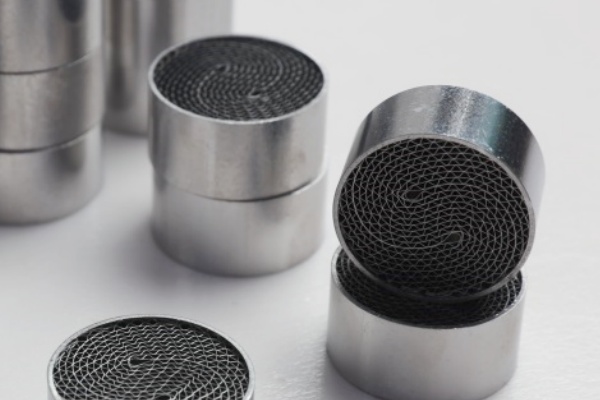
It's Not Just About Keeping the Light Off
You can have a converter that's tired – maybe the precious metals have sintered a bit, maybe the washcoat is flaking – and the rear oxygen sensor might not throw a code. The computer's threshold is pretty wide.
But that tired converter isn't cutting emissions like it should. You might still pass a tailpipe test if the standards are loose. But you're putting out more CO and hydrocarbons than you need to.
A quality converter knocks those numbers way down. Not just below the limit. Way below. That's the difference between a part that barely scrapes by and one that actually does the job.
Cold Start Is Where the Difference Shows
The hardest time for any converter is the first minute after you start the car. It's cold. The engine is running rich. Emissions are highest.
A cheap or worn converter takes longer to light off. Maybe it needs 400 degrees before it starts working. That first minute, almost nothing gets cleaned.
A quality converter uses thinner foil and better catalyst formulation. It lights off faster – sometimes 50 or 100 degrees sooner. That means less time blowing raw exhaust out the tailpipe.
Over a year of cold starts, that adds up to a lot less pollution.
Consistency Matters More Than Peak Numbers
Some converters test great when they're brand new. High numbers. Shiny.
Then they go on the car. A thousand heat cycles later, they're not the same. The coating degrades. The metals sinter. The numbers drop.
A quality converter is designed to hold its performance. The brazing is solid. The washcoat stays put. The precious metals resist clumping. It might test the same at 50,000 miles as it did on day one.
I've seen cheap converters lose half their activity in two years. The car still runs. The light might even stay off. But the tailpipe says otherwise.
What the Gas Analyzer Tells You
We run tailpipe tests on cars before and after a converter swap. The difference can be dramatic.
A car with a tired converter might show 0.5% CO and 200 ppm hydrocarbons. Not failing. Not great.
Swap in a quality converter, same car, same engine. CO drops to 0.02%. Hydrocarbons drop to 20 ppm. That's a 95% reduction.
The cheap converter might have gotten you to 0.2% and 80 ppm. Still better than the tired one. But not as clean as it could be.
The quality converter just works better. More precious metal. Better coating. Better cell design. It's not complicated.
It Also Helps the Engine Run Better
Here's something people don't think about. A quality converter has lower backpressure. The cells are uniform. The flow is even. The engine doesn't have to push as hard to get the exhaust out.
Lower backpressure means the engine breathes easier. That doesn't show up on an emissions test. But it shows up in fuel economy and throttle response.
A cheap converter with misaligned cells or a sloppy can? It might flow fine. Or it might not. I've seen cheap converters that added 2 psi of backpressure for no good reason. That's like driving with a rag stuffed in the tailpipe.
What to Look For
If you want a converter that actually cleans emissions, here's what matters.
Cell density matters. 400 cpsi is standard for a reason. It flows well and cleans well. Go too high and you hurt flow. Go too low and you lose surface area.
Material matters. Stainless holds up better than aluminum. If you live where they salt the roads, spend the extra money.
Bottom Line
A catalytic converter isn't just a box you bolt on to pass inspection. A good one actually cleans the exhaust – all the time, not just when it's new, not just when it's hot.
It lights off faster. It holds its performance longer. It flows better. And it keeps your tailpipe numbers where they should be.
The cheap one might get you through the test. The quality one keeps you clean for the next 100,000 miles. That's the difference.