To be a valuable global supplier
for metallic honeycombs and turbine parts


Contact number
0555-2813555
To be a valuable global supplier
for metallic honeycombs and turbine parts
Technological Innovation
Process Management
Continuous Improvement
Customer Satisfaction
Knowledge
Dedication
Diligence
Loyalty
Responsibility
Confidence
Tenacity
Respect

To be a valuable global supplier
for metallic honeycombs and turbine parts
Release time:2026-04-07
Let’s be honest. Most people who drive a car couldn't tell you what a catalytic converter does. They just know it's there, it's expensive to replace, and somebody might steal it off their truck.
I've been making the guts of these things for longer than I care to admit. The honeycomb. The coating. The whole deal. So if you want to know what's inside that lump under your car, pull up a chair.
The Can Itself Is Just a Tin Can
From the outside, a converter is just a metal box. Stainless steel, mostly. Sometimes a heat shield. An inlet pipe, an outlet pipe. Nothing fancy.
Inside is where the stuff happens.
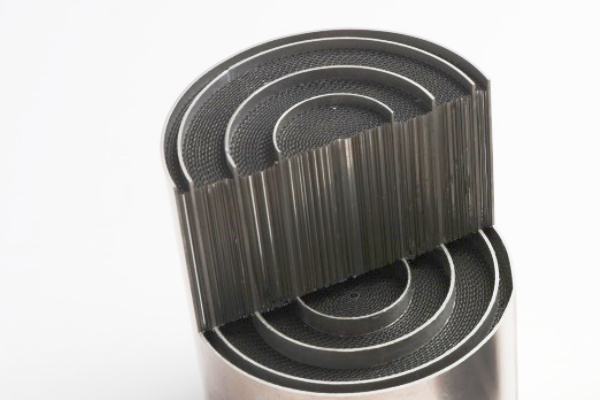
There's a mat wrapped around the core. Looks like fireplace insulation. When it gets hot, it expands. That keeps the core from rattling around.
And then there's the core. That's the honeycomb. That's what we make. That's what does the actual work.
The Honeycomb – More Than Just a Bunch of Holes
You open a converter, the first thing you see is a metal honeycomb. Thin foil. Hundreds of tiny cells per square inch. On a normal car, it's about 400 cells per square inch. The walls are thinner than a business card.
Why honeycomb? Two things.
One – surface area. If you took all those cell walls from one converter and laid them flat, you'd get about the size of a football field. That's a crazy amount of space for chemical reactions to happen.
Two – flow. The exhaust has to get through without making the engine work too hard. The honeycomb lets the gas pass easily while still touching the walls.
The shape is usually round or oval. Depends on the car. The foil is either aluminum or stainless. Aluminum is cheaper and lighter. Stainless holds up better when things get nasty.
The Coating Is Where the Real Magic Is
The bare honeycomb by itself? Useless. It's just a piece of metal. The good stuff is on the surface.
First, they put on a washcoat. It's a ceramic paste – mostly alumina. Looks like wet cement before they dry it and bake it. The washcoat makes the surface rough and porous. That multiplies the surface area even more. So now you've got a football field with a thick shag carpet.
Then they add the precious metals. Platinum, palladium, rhodium. These are the actual catalysts – they make the chemical reactions happen. They dip the thing in a liquid solution, then bake it again.
Platinum and palladium handle the oxidation jobs. Rhodium handles reduction. I'll get to that.
The Chemistry Part Without the Boring Stuff
Your engine spits out three nasty things. Carbon monoxide. Unburned gas (hydrocarbons). Nitrogen oxides.
A three‑way converter deals with all three at once.
Oxidation – that's for CO and hydrocarbons. There's oxygen in the exhaust. Platinum and palladium help the CO grab that oxygen and turn into CO2. Same with unburned gas – turns into water and CO2.
Reduction – that's for nitrogen oxides. Rhodium pulls oxygen off the NOx molecules. Left with harmless nitrogen and oxygen.
Both reactions happen inside the same honeycomb, in the same little cells, at the same time. That's why it's called "three‑way." It's doing three jobs in one can.
It Needs Heat – No Heat, No Work
A cold converter is useless. The reactions won't happen until it gets hot. That's why cars fail emissions on a cold start if the converter is bad.
The converter starts doing something around 250 to 300°C. Works best around 400°C. That's why they mount it close to the engine – so hot exhaust hits it fast.
If it gets too hot – over 800 or 900°C – the precious metals can clump together. That's called sintering. They lose surface area. The converter still works, just not as well. That's why a misfire dumping raw fuel into the converter is a disaster. It can melt the honeycomb or cook the catalyst.
How the Exhaust Actually Moves Through
Engine runs. Hot exhaust comes out. Hits the front face of the honeycomb.
The flow spreads out evenly across all the cells. That's important. If the flow is uneven, some cells get hammered and some cells sit there doing nothing.
As the gas goes down each little cell, it touches the washcoat. The precious metals grab molecules, break them apart, and stick them back together into less harmful stuff. By the time the gas reaches the end of the cell – about two to four inches – the job is done.
Cleaner exhaust comes out the back. Down the tailpipe. Gone.
What the Oxygen Sensors Are Doing
There's an oxygen sensor before the converter and another one after.
The front sensor tells the engine computer what's coming out of the engine. Rich? Lean? The computer adjusts the fuel mixture.
The rear sensor checks the converter's work. If the converter is doing its job, the rear sensor sees almost no oxygen. That means everything is good. If the rear sensor sees oxygen, that means the converter isn't oxidizing properly. The computer turns on the check engine light.
That's why a bad converter pops a code. The rear sensor snitches on it.
What Goes Wrong Inside
Stuff breaks. It happens.
The honeycomb cracks. Vibration, thermal shock, or a good whack from a speed bump. Once it's cracked, exhaust can slip through the gaps without getting treated. That's a fail.
The washcoat wears off. Not common, but it happens. The precious metals are still there, but without the rough surface, they don't have enough contact to work well.
The catalyst gets poisoned. Sulfur, phosphorus, zinc – these coat the precious metals and kill them. That's usually from bad fuel or burning oil.
The mat fails. If the mat loses tension, the core moves around inside the can. Then it breaks.
I've seen all of these. Most of the time, the engine had a problem first. The converter is just the first part to show symptoms.
hy Some Converters Last Years and Some Are Junk
Quality matters. A lot.
A good converter uses high‑grade stainless foil. The cells are precise. The brazing is solid. The washcoat is even. The precious metal loading is consistent.
Cheap converters cut corners. Thinner foil. Sloppy brazing. Uneven coating. Less precious metal. They might work fine for a year or two. Then they go south. Check engine light comes on. Emissions fail.
I've seen cheap converters that looked perfect on the outside but were garbage inside. The honeycomb rattled. Cells were misaligned. Washcoat flaking off. The customer saved a hundred bucks and spent it back on labor and headaches.
A catalytic converter is a simple thing. Metal honeycomb. Porous washcoat. Precious metals. Hot exhaust goes in, gets converted, cleaner stuff comes out.
The inside is all about surface area and flow. The chemistry handles oxidation and reduction together. The oxygen sensors watch over it.
Build it right, and it lasts for years. Build it cheap, and it fails early. The inside tells the story – you just can't see it without cutting the can open.