To be a valuable global supplier
for metallic honeycombs and turbine parts


Contact number
0555-2813555
To be a valuable global supplier
for metallic honeycombs and turbine parts

Technological Innovation
Process Management
Continuous Improvement
Customer Satisfaction

Knowledge
Dedication
Diligence
Loyalty
Responsibility
Confidence
Tenacity
Respect

To be a valuable global supplier
for metallic honeycombs and turbine parts
Release time:2026-03-17
I've spent enough years around electronic enclosures to notice something funny. People will spend thousands on shielding components, carefully seal every seam, use the right gaskets, do everything by the book. Then they cut a big hole in the box for cooling and call it a day.
Doesn't work that way
Here's the thing about EMI. It gets into everything. And I mean everything. That hole you cut for your fan? Might as well leave the door open. Signals will find their way in, and they'll find their way out. If you're dealing with sensitive equipment or regulatory compliance, that's a problem.
Holes Let Things Through
This isn't complicated physics. Your enclosure stops interference because it's a continuous conductive surface. Cut a hole in that surface, and you've created a path. High-frequency signals don't need much. A gap that looks small to you looks like a highway to a gigahertz signal.
I've watched guys try to get clever with it. Just a few small holes, they figure. Maybe a mesh from the hardware store. Then they put a spectrum analyzer on it and wonder why their readings went sideways.
The issue is simple. Cooling requires airflow. Shielding requires a continuous barrier. These two things fight each other. You can't have both unless you do it right.
This Is Where Vents Come In
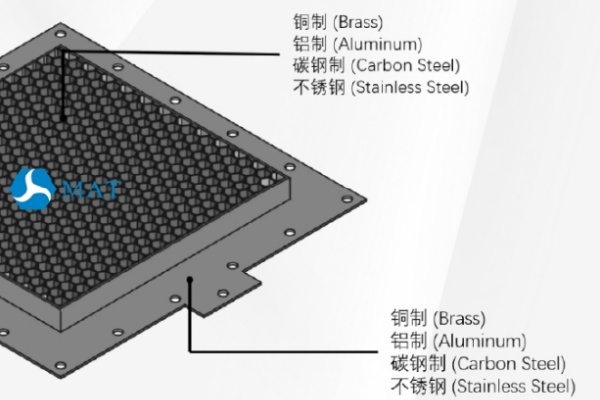
An EMI shielding vent lets you have your cake and eat it too. Sort of. The idea is straightforward. You need air to move, so you create openings. But you make those openings small enough and deep enough that electromagnetic waves can't get through. Not because they're blocked, but because they literally can't fit.
The technical term is waveguide below cutoff. Fancy way of saying the hole is smaller than the wavelength, so the wave gives up trying. Same reason you can't push a basketball through a garden hose.
Most of these vents use honeycomb construction. Thin metal walls forming a bunch of hexagonal cells. Air flows through easily. Signals bounce around inside those cells and lose their energy before they make it through. Pretty elegant solution when you think about it.
What You Give Up, What You Gain
Nothing's free, right? Add a vent and you lose some airflow compared to an open hole. That's just geometry. The metal takes up space. But good designs keep the pressure drop low enough that your fans still move adequate air.
What you gain is shielding effectiveness that can hit 60, 70, even 100 dB depending on frequency and construction. That's the difference between failing certification and passing. Between reliable operation and random glitches you can't explain.
I've seen equipment act flaky in ways that made no sense. Turned out the enclosure had perfectly good shielding except for one untreated vent. Slapped a proper vent on it and the problems went away. Not fancy engineering. Just paying attention to the details.
The Practical Stuff
If you're shopping for these things, there are a few things worth knowing.
Hole size matters. Smaller cells shield better but restrict airflow more. Common sizes like 1/8 inch or 3/16 inch balance the two for most applications. If you're dealing with really high frequencies, you might need to go smaller.
Material matters too. Steel is strong, aluminum is light, and both can be plated to improve conductivity or corrosion resistance. Pick what fits your environment.
And for god's sake, don't forget the gasket. The vent itself won't do much if it's just sitting against painted metal. You need conductive contact all the way around. Otherwise your carefully shielded enclosure still has a gap. Just now it's a gap shaped like a vent.
Where You See Them
Walk through a data center sometime and look at the server racks. Those honeycomb panels on the back? EMI vents. Keeps the servers cool and keeps the radio interference contained.
Military shelters use them too. Tanks, comms gear, all that stuff generates heat and needs to stay shielded. You'll find vents on everything from transportable shelters to shipboard electronics.
Medical equipment is another one. MRI machines especially. Those things are sensitive to interference in ways that most gear isn't. A bad vent can mess with imaging. Nobody wants that.
Here's what I've learned. Shielding isn't about doing one thing right. It's about doing everything right. The enclosure, the gaskets, the cable penetrations, and yes, the vents. Miss one and you've wasted your time on the others.
Good vents aren't complicated. They're just honeycomb metal with a frame and a gasket. But they solve a real problem. They let your equipment breathe without letting interference in. And when you're staring at a cert failure wondering what went wrong, that's a pretty nice thing to have.