To be a valuable global supplier
for metallic honeycombs and turbine parts


Contact number
0555-2813555

To be a valuable global supplier
for metallic honeycombs and turbine parts

Technological Innovation
Process Management
Continuous Improvement
Customer Satisfaction

Knowledge
Dedication
Diligence
Loyalty
Responsibility
Confidence
Tenacity
Respect

To be a valuable global supplier
for metallic honeycombs and turbine parts
Release time:2026-03-16
Waveguides come in more shapes and sizes than most people realize. If you work with high-frequency signals—whether in communications, radar, or satellite systems—you've probably run into a few different types. Each has its own personality, its own strengths, and its own preferred spot in the world of RF and microwave engineering. Here's a rundown of the main ones and what they're good for.
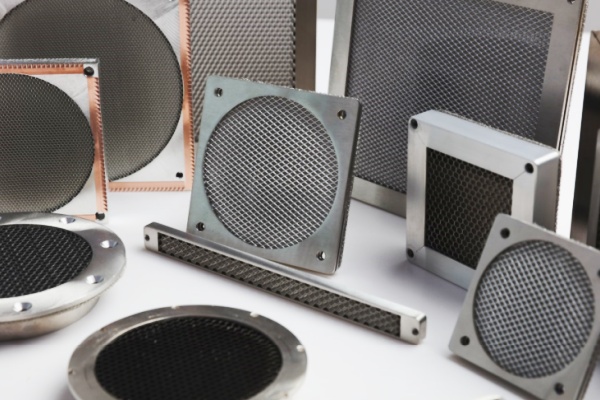
This is the old standby. Rectangular waveguides have been around forever, and for good reason. They're straightforward, they handle power well, and they don't lose much signal along the way .
How they work: The signal travels through them in what's called the TE10 mode—basically the simplest, most natural way for waves to move through a rectangular pipe. The dimensions matter a lot; they determine what frequencies the guide will pass. You'll see them labeled with "WR" numbers, where the number tells you the width in inches. A WR90, for instance, has an inner width of 0.90 inches .
What they're made of: Usually aluminum, brass, or copper. For really high frequencies—above 18 GHz—manufacturers often plate the inside with silver to keep losses to a minimum .
Where they show up:
Communication systems – Satellite links, terrestrial microwave relays, and EMC testing setups all rely on them .
Radar – They're integral to transmitting and receiving those high-frequency radar signals .
Scientific instruments – Any lab gear that needs precise microwave transmission .
If rectangular waveguides are the sensible sedan, double-ridge waveguides are the sports utility vehicle. They give up a little power handling in exchange for much wider bandwidth .
What makes them different: Two ridges protrude into the center of the guide, parallel to the short wall. This concentrates the electric field and lets the guide operate over a broader frequency range than a standard rectangular guide of the same size .
The trade-offs: You get more bandwidth and a more compact design, but insertion loss goes up and power handling goes down compared to plain rectangular .
Typical applications:
Broadband microwave comms – When you need to cover a lot of frequencies .
EMC testing – Electromagnetic compatibility work often requires wideband performance .
Radar systems – Especially where frequency agility matters .
Round waveguides have their own charm. They're not as common as rectangular ones, but they shine in specific situations.
Design notes: A circular guide supports different modes than rectangular ones—typically TE11 instead of TE10. The diameter determines the cutoff frequencies .
Specialized uses:
Telecommunications – Particularly in microwave tubes and high-power amplifiers where you need vacuum windows that can handle pressure and temperature extremes .
Particle accelerators – Those "pill-box" windows you see in accelerator sections are often circular waveguides with dielectric plates sealed in to maintain vacuum while passing RF power .
Satellite hardware – Sometimes used in rotary joints where the guide needs to rotate while passing signals .
Material choices: Copper is a favorite here, especially for space applications. Pure copper gives you thermal conductivity around 401 W/(m·K) and electrical conductivity of 59.6 x 10⁶ S/m at room temperature—both excellent for keeping signals clean in the harsh environment of orbit .
This one's newer. SIW is basically rectangular waveguide built into a circuit board. You drill two rows of metallized holes through the dielectric material, and suddenly you've got waveguide transmission lines right on your PCB .
Why bother: It gives you waveguide performance in a flat, planar format that plays nice with microstrip and other PCB transmission lines. You can integrate filters, phase shifters, power dividers, and baluns all on the same board .
Where it's useful:
Millimeter-wave circuits – Think 5G and above, where traditional waveguide would be too bulky .
Compact filters – You can load SIW with complementary split-ring resonators to make bandpass filters that are tiny compared to conventional waveguide filters .
Integrated front-ends – When you need waveguide performance but can't justify a separate machined housing .
Some applications just need all-metal construction. No dielectrics, no PCBs—just metal.
Materials matter: Copper remains the gold standard for low loss. At 10 GHz, a copper waveguide might lose only about 0.1 dB per meter, compared to 0.15 dB for aluminum .
Manufacturing advances: These days, you can 3D print copper waveguides. That opens up geometries that were impossible to machine traditionally. The challenge is surface finish—roughness kills performance at high frequencies. But post-processing like abrasive flow machining can knock that roughness down to where it needs to be .
Space applications:
Inter-satellite links – Waveguides guide signals between spacecraft .
Multi-beam satellite antennas – Complex feed networks that form multiple spot beams. 3D printing lets you pack more channels into the same volume .
Ground terminals – High-power uplinks to geostationary satellites .
Not as common, but worth mentioning. Parallel-plate waveguides are exactly what they sound like—two conductive plates facing each other, with signals bouncing between them.
Modern twists: Researchers are putting arrays of metal posts between the plates to create filters and lenses for terahertz frequencies. Think of it as spoof surface plasmonics—engineering the surface to control waves in ways that natural materials can't .
Emerging applications:
THz imaging – Potential for security and medical imaging.
High-speed data – Future communications above 100 GHz.
So which waveguide plate should you use? It depends.
Need high power handling and low loss? Rectangular waveguide is your friend.
Need wide bandwidth in a compact package? Look at double-ridge.
Building space hardware where weight and thermal performance matter? Copper waveguides, possibly 3D printed.
Working at millimeter-wave and need to integrate with other circuitry? SIW might be the answer.
Dealing with vacuum systems or high-pressure environments? Circular waveguides with dielectric windows are proven solutions.
Each type has its place. The trick is matching the waveguide to the job.