To be a valuable global supplier
for metallic honeycombs and turbine parts


Contact number
0555-2813555

To be a valuable global supplier
for metallic honeycombs and turbine parts

Technological Innovation
Process Management
Continuous Improvement
Customer Satisfaction

Knowledge
Dedication
Diligence
Loyalty
Responsibility
Confidence
Tenacity
Respect

To be a valuable global supplier
for metallic honeycombs and turbine parts
Release time:2026-03-02
If a waveguide window is only used indoors, corrosion rarely becomes a real discussion point. Things change quickly once the equipment is installed near the coast or offshore. Salt in the air doesn’t need direct seawater contact to start causing trouble. Over time, it settles, absorbs moisture, and slowly attacks exposed metal.
That’s why a salt spray resistant waveguide window isn’t a premium upgrade. In many outdoor systems, it’s simply necessary.
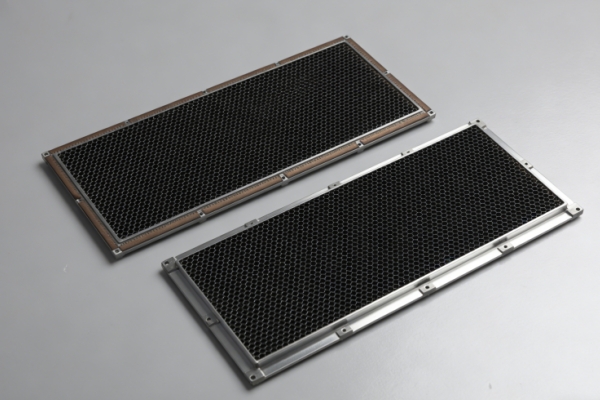
Most RF engineers focus on insertion loss and shielding performance during development. The window passes lab testing, meets the numbers, and everything looks fine.
Field reality is different.
Salt mist creates a thin conductive layer on metal surfaces. Chloride ions accelerate oxidation, especially at edges, fastener interfaces, and contact surfaces. You don’t usually see immediate failure. Instead, what happens is:
Contact resistance increases gradually
Ground continuity becomes unstable
Small surface pits form at flanges
Coatings start lifting at corners
Months later, shielding performance starts drifting. The root cause traces back to corrosion.
Designing a salt spray resistant waveguide window means planning for that long timeline from the beginning.
Switching to stainless steel alone doesn’t solve the problem. Nor does simply adding a thicker coating.
What matters is how the whole structure behaves in a salt environment.
For example:
Are dissimilar metals in contact?
Are bolt holes properly protected?
Is the flange surface evenly compressed?
Does the coating maintain conductivity where grounding is required?
Many failures start at the interface between parts, not in the center of the window.
A good design looks at the full assembly — base metal, plating or coating, fasteners, and gasket system — as one unit.
Waveguide windows depend on consistent geometry and solid electrical continuity. Corrosion disrupts both.
When surfaces oxidize:
Mating contact becomes less reliable
Micro gaps appear
Shielding effectiveness can decrease
Impedance characteristics may shift slightly
None of these issues show up in a short lab test. They show up after exposure cycles — humidity, drying, temperature change, and repeated salt deposition.
That’s the difference between a standard component and a true salt spray resistant waveguide window.
In outdoor systems, salt doesn’t just sit on the surface. It creeps. If flange compression is uneven or sealing pressure drops over time, moisture can slowly work its way into interfaces.
This is why flatness control and gasket selection matter. Even a well-coated surface can fail early if sealing design is weak.
From experience, many outdoor RF failures aren’t dramatic. They’re gradual performance degradation tied to mechanical details that looked minor during design.
Salt spray resistance is especially important for:
Coastal communication infrastructure
Marine radar assemblies
Offshore control systems
Outdoor defense equipment
Industrial plants in humid regions
In these environments, corrosion isn’t accidental. It’s continuous.
A salt spray resistant waveguide window is really about long-term stability. It protects grounding paths, maintains shielding performance, and avoids service calls years after installation.
In lab conditions, almost any window can pass RF testing. The difference shows up in the field.
Designing for salt exposure from day one costs less than redesigning after corrosion starts affecting system performance.