To be a valuable global supplier
for metallic honeycombs and turbine parts


Contact number
0555-2813555

To be a valuable global supplier
for metallic honeycombs and turbine parts

Technological Innovation
Process Management
Continuous Improvement
Customer Satisfaction

Knowledge
Dedication
Diligence
Loyalty
Responsibility
Confidence
Tenacity
Respect

To be a valuable global supplier
for metallic honeycombs and turbine parts
Release time:2026-03-03
If you’ve ever worked on equipment installed near the sea, you know one thing: salt gets everywhere.
It’s not dramatic. There’s no visible splash most of the time. But day after day, fine salt particles settle on metal surfaces. Add humidity, and you have a slow corrosion process that doesn’t stop.
In coastal communication stations, this becomes a real concern for RF hardware — including waveguide windows.
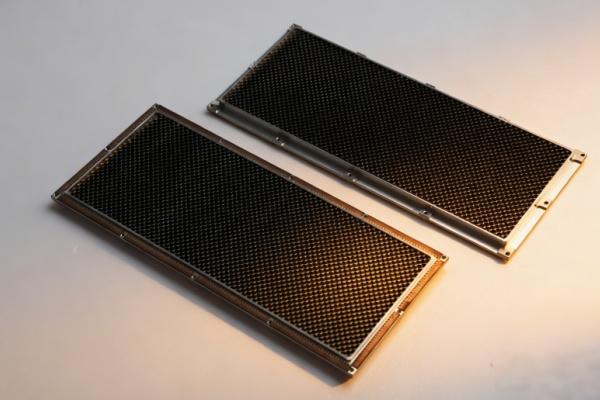
Coastal stations deal with:
High humidity
Salt-laden air
Temperature changes between day and night
Long operating cycles without shutdown
Most cabinets are sealed and coated, but waveguide windows are interface components. They connect internal RF systems to the outside. That makes them structurally and electrically sensitive.
If corrosion starts at the flange or mounting surface, it usually doesn’t fail immediately. What happens instead is gradual degradation.
Contact resistance increases. Ground continuity becomes less stable. Shielding performance can drift slightly. Months later, someone starts investigating unexpected EMC behavior.
That’s often when the importance of a salt spray resistant waveguide window becomes clear.
One challenge in coastal installations is that early corrosion can look minor. A small discoloration. Slight oxidation near bolt holes. A bit of surface roughness at the edge.
But for RF components, surface condition matters.
Waveguide windows rely on clean, consistent mating surfaces. Even small irregularities can reduce electrical contact quality. Over time, this can influence shielding effectiveness and mechanical stability.
In some cases, corrosion also weakens sealing performance, allowing more moisture to enter the interface area. That accelerates the cycle.
Switching to stainless steel or applying a thick coating doesn’t automatically solve the issue.
What matters is how the entire assembly behaves:
Are fasteners compatible with the base material?
Is the coating conductive where grounding is required?
Is flange flatness controlled well enough to ensure even pressure?
Are there edges where plating thickness becomes inconsistent?
A true salt spray resistant waveguide window is designed as a system, not just as a coated metal frame.
Most waveguide windows perform well in controlled lab testing. The real difference shows after one or two years in a coastal station.
Communication infrastructure near the sea often runs continuously with limited maintenance access. Replacing a corroded RF component is far more expensive than selecting the right one at the start.
From a practical standpoint, designing for salt spray resistance is simply part of responsible outdoor RF engineering.
In many regions, coastal communication infrastructure is common — ports, offshore facilities, shoreline relay stations, radar sites. Salt exposure isn’t rare; it’s normal operating condition.
In these environments, a salt spray resistant waveguide window helps maintain shielding stability, structural integrity, and predictable RF performance over time.
It’s not about over-engineering. It’s about avoiding slow, preventable failure.