To be a valuable global supplier
for metallic honeycombs and turbine parts


Contact number
0555-2813555
To be a valuable global supplier
for metallic honeycombs and turbine parts

Technological Innovation
Process Management
Continuous Improvement
Customer Satisfaction

Knowledge
Dedication
Diligence
Loyalty
Responsibility
Confidence
Tenacity
Respect

To be a valuable global supplier
for metallic honeycombs and turbine parts
Release time:2026-02-28
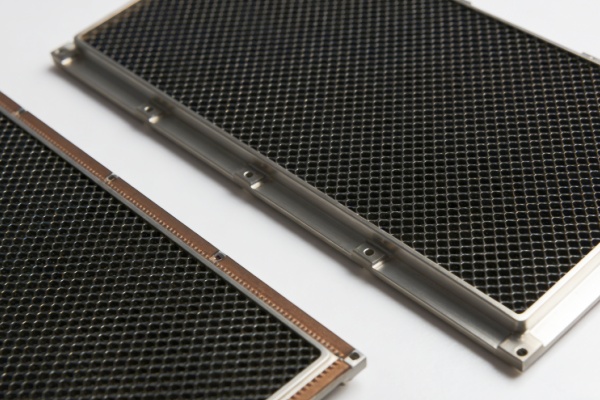
In many enclosure projects, ventilation is discussed only from a thermal standpoint. Airflow, pressure drop, fan selection — these usually dominate the early design phase. Magnetic shielding performance often becomes a concern later, typically after EMC testing exposes leakage paths around vent openings.
This is where magnetic field wave attenuation ventilation becomes critical. Vent openings are structurally necessary, but electromagnetically they behave like weak points. If not properly designed, they allow low-frequency magnetic fields and high-frequency emissions to pass through with minimal attenuation.
Optimizing vent design requires balancing airflow and shielding — and in practice, that balance is rarely straightforward.
From an electromagnetic perspective, a vent is an interruption in the conductive enclosure surface. Even small apertures can act as coupling paths.
Magnetic field attenuation is particularly challenging at low frequencies. Unlike high-frequency electric fields, low-frequency magnetic fields are less affected by simple conductive barriers. Attenuation relies more on:
Material permeability
Path geometry
Thickness
Continuity of conductive contact
In other words, punching holes into a shielded panel without rethinking geometry will almost always degrade performance.
One common mistake is evaluating vents purely based on open area percentage. From a thermal perspective, open area is directly related to airflow. From a magnetic attenuation perspective, the shape and depth of the aperture are often more important.
Waveguide-like structures increase attenuation by forcing electromagnetic waves to travel through a constrained path. Increasing the effective path length improves attenuation without necessarily reducing airflow to unacceptable levels.
In real applications, depth-to-opening ratio becomes a key parameter. Short, wide apertures typically provide minimal magnetic field attenuation. Deeper cellular structures significantly improve performance.
For low-frequency magnetic shielding, conductive materials alone are often insufficient. High-permeability materials help redirect magnetic flux lines rather than simply blocking them.
However, using high-permeability materials introduces new constraints:
Increased weight
Cost considerations
Machining complexity
Corrosion control
Material choice must be aligned with the frequency range of concern. Over-specifying magnetic shielding material where it is not needed increases cost without measurable system benefit.
Even when the vent structure itself is well designed, mechanical integration can undermine performance.
Poor grounding contact between vent frame and enclosure panel creates unintended gaps. These discontinuities can significantly reduce magnetic field attenuation performance.
In several enclosure projects, improvements were achieved not by redesigning the vent core, but by refining:
Mounting pressure distribution
Contact surface preparation
Fastening methods
Gasket selection
Shielding performance depends on the entire assembly, not just the vent insert.
Increasing vent depth or reducing aperture size improves magnetic attenuation but restricts airflow. This often leads to higher internal temperatures.
The optimization process should not focus on maximizing shielding in isolation. Instead, acceptable attenuation levels should be defined based on system EMC requirements, then balanced against thermal targets.
Over-shielding is a real issue. It increases pressure drop, fan power consumption, and system noise, while offering no practical benefit beyond required compliance levels.
In enclosure design, magnetic field wave attenuation ventilation should be considered early in the development cycle, especially for:
Power electronics cabinets
Communication racks
Industrial control systems
Military or high-sensitivity environments
Early coordination between thermal engineers and EMC engineers avoids redesign cycles later.
Rather than treating ventilation and shielding as separate tasks, the vent should be considered a controlled electromagnetic structure integrated into the enclosure design.
Magnetic field wave attenuation ventilation is not about eliminating every possible emission. It is about designing vent structures that meet system-level shielding requirements without compromising airflow or mechanical reliability.
The most effective solutions usually result from iterative design — adjusting geometry, material, and integration details together — rather than relying on a single parameter such as open area or material thickness.