To be a valuable global supplier
for metallic honeycombs and turbine parts


Contact number
0555-2813555
To be a valuable global supplier
for metallic honeycombs and turbine parts
Technological Innovation
Process Management
Continuous Improvement
Customer Satisfaction
Knowledge
Dedication
Diligence
Loyalty
Responsibility
Confidence
Tenacity
Respect
To be a valuable global supplier
for metallic honeycombs and turbine parts
Release time:2026-02-02
In aerospace systems, catalytic elements are usually selected as part of a larger balance. Flow behavior, pressure margin, thermal response, and long-term stability all interact. In that context, the honeycomb catalyst substrate remains a common choice.
There are other reactor structures available. Packed beds, foams, and coated surfaces can all increase surface area. Under controlled conditions, some of them show higher reaction rates. The issue is not whether they work, but how they behave when conditions are not ideal.
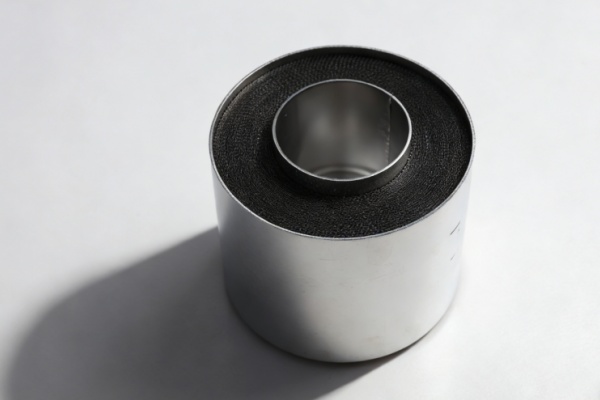
In small propulsion and control systems, flow rarely enters the catalyst section perfectly aligned. Minor asymmetry at the inlet can turn into uneven temperature distribution downstream. This does not always cause immediate failure, but it affects coating life and reaction stability.
A honeycomb catalyst substrate limits how much that inlet variation can grow. The channels impose direction. Gas moves forward, not sideways. Flow differences still exist, but they tend to stay within a narrow range.
From a design standpoint, this makes results easier to reproduce across units. Once the behavior is understood, it tends to stay the same.
Pressure loss through a catalyst is not just a local parameter. It influences feed system design and control margins. Structures that rely on loose media or deformable geometry can change over time, especially under vibration and thermal cycling.
With a honeycomb catalyst substrate, pressure drop is mainly set by channel geometry and length. Those parameters do not change unless the structure is damaged. In most cases, pressure behavior shifts slowly and predictably.
That characteristic simplifies system-level assumptions. Engineers can allocate pressure margins early and avoid adding compensation later.
Higher surface area does not always translate into better system behavior. In aerospace applications, reaction performance needs to correlate with models and test data. If small manufacturing variations lead to large performance swings, the design becomes harder to qualify.
Honeycomb catalyst substrates are relatively tolerant in this regard. Channel size and surface exposure are consistent, and coating distribution can be controlled. Reaction behavior tends to scale in a linear way with flow and temperature.
This makes qualification data more transferable between configurations.
Catalyst performance will change over time. The question is how. Sudden shifts are difficult to manage, especially when the system cannot be accessed after deployment.
Honeycomb structures usually degrade in a distributed manner. Channels remain open, and loss of activity is gradual. This behavior aligns better with long-duration operation and conservative life predictions.
From an engineering perspective, predictable degradation is easier to accept than higher initial performance with uncertain aging.
The continued use of honeycomb catalyst substrate in aerospace systems is not driven by habit. It reflects a preference for components that behave consistently under known constraints.
They offer controlled flow paths, stable pressure characteristics, and repeatable reaction behavior. In systems where uncertainty carries a high cost, those traits matter more than peak efficiency.