To be a valuable global supplier
for metallic honeycombs and turbine parts


Contact number
0555-2813555
To be a valuable global supplier
for metallic honeycombs and turbine parts
Technological Innovation
Process Management
Continuous Improvement
Customer Satisfaction
Knowledge
Dedication
Diligence
Loyalty
Responsibility
Confidence
Tenacity
Respect

To be a valuable global supplier
for metallic honeycombs and turbine parts
Release time:2026-01-31
In aerospace systems, reactor structure selection is usually conservative. The reason is simple. Once a system is launched, there is no opportunity to adjust, repair, or rebalance. Any structure used for catalytic reaction must behave in a predictable way over time. This requirement has a strong influence on Catalyst Substrate selection.
Several alternative reactor structures have been considered and tested in different programs. Packed particle beds, foam-based structures, and coated wall reactors all offer specific advantages. None of them are new concepts. The continued use of honeycomb Catalyst Substrate designs is mainly driven by system-level behavior rather than catalytic theory.
Particle beds provide a large catalytic surface area. From a reaction standpoint, this is attractive. In practice, particle beds are difficult to control in aerospace environments.
Flow through a packed bed depends heavily on particle size distribution and packing quality. Small differences can create preferred flow paths or stagnant zones. Over time, vibration and thermal cycling can cause particles to shift or settle. When that happens, pressure drop and reaction behavior change.
Pressure loss across particle beds is also harder to predict accurately. In small propulsion systems or RCS units, this uncertainty affects response timing and stability. For flight systems, this is usually considered an unacceptable risk, even if the initial catalytic performance is good.
Metallic and ceramic foams offer more open structures than particle beds. They provide good mixing and heat transfer in some applications. Laboratory testing often shows promising results.
The issue is consistency. Foam structures are inherently irregular. Pore size and connectivity vary across the component and between production batches. This makes flow modeling less reliable. Two substrates with the same external dimensions may behave differently.
Thermal behavior is another concern. Under certain operating conditions, local hot spots can develop within the foam. These areas can accelerate coating degradation or damage the substrate material. In aerospace systems, where long-term stability matters more than peak performance, this variability is difficult to accept.
Coated wall reactors reduce part count. The catalyst is applied directly to internal surfaces of a chamber or duct. From a mechanical integration perspective, this can be appealing.
The limitation is surface area. In compact systems, available wall area is often insufficient to support the required reaction rate. Increasing reaction length or operating temperature may compensate, but both approaches introduce new constraints.
Coating uniformity over complex internal surfaces is also difficult to control. Variations in coating thickness lead to uneven reaction behavior, which affects thermal and flow stability.
For low-demand or tightly integrated applications, coated wall reactors may be acceptable. For propulsion-related systems, they are often too limited.
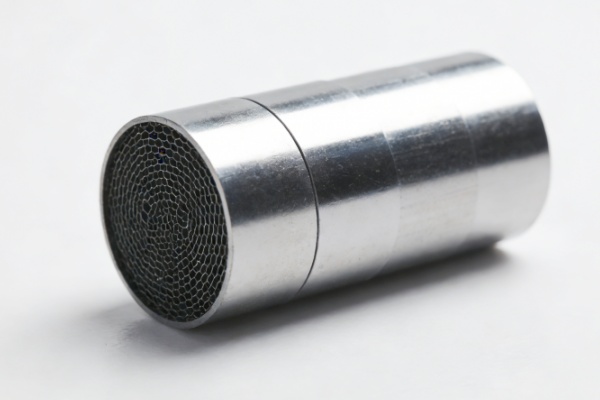
Honeycomb Catalyst Substrate designs offer defined geometry. Flow paths are known. Channel dimensions are controlled. Pressure drop can be estimated with reasonable accuracy.
This predictability is the main reason honeycomb structures remain common. Each channel behaves in a similar way. Flow distribution is more uniform. Reaction zones are easier to manage.
Channel density and wall thickness can be adjusted to balance surface area and pressure loss. This allows the substrate to be tailored to the system without introducing large uncertainties.
In aerospace propulsion systems, pressure behavior matters. Sudden changes in pressure drop can affect ignition, thrust consistency, and control accuracy. Honeycomb Catalyst Substrate designs allow pressure characteristics to be controlled through geometry.
Compared with particle beds or foam structures, honeycomb substrates show more stable pressure behavior over time. This stability simplifies system control and qualification.
Honeycomb structures provide good mechanical strength relative to mass. They tolerate vibration, shock, and thermal cycling better than loosely packed or highly irregular structures.
This robustness reduces the risk of structural degradation during launch and operation. It also simplifies testing and qualification, which is a significant factor in aerospace programs.
Aerospace systems are designed around predictability. Components are selected based on how consistently they perform across a defined operating envelope. Catalyst Substrate selection follows the same principle.
Honeycomb structures may not provide the highest possible surface area. They do, however, provide repeatable behavior. Flow, thermal response, and mechanical performance can be modeled and verified with confidence.
For flight systems, this predictability often outweighs theoretical performance gains offered by alternative reactor structures.
The continued use of honeycomb Catalyst Substrate designs is not based on habit. It reflects accumulated experience from multiple aerospace programs. When weight, volume, reliability, and control are all constrained, structured substrates offer a balance that other designs struggle to match.
Alternative reactor structures remain useful for research and specialized ground applications. In aerospace systems, where failure is not an option, honeycomb Catalyst Substrate designs remain a practical choice.