To be a valuable global supplier
for metallic honeycombs and turbine parts


Contact number
0555-2813555
To be a valuable global supplier
for metallic honeycombs and turbine parts
Technological Innovation
Process Management
Continuous Improvement
Customer Satisfaction

Knowledge
Dedication
Diligence
Loyalty
Responsibility
Confidence
Tenacity
Respect

To be a valuable global supplier
for metallic honeycombs and turbine parts
Release time:2026-01-23
I’ve worked on a few systems where the airflow just wouldn’t behave. The funny thing is, the setup looked fine on paper: a straight duct, a grid, maybe a perforated plate. But once it ran for a while, the downstream flow was still messy. It wasn’t always obvious, but you could feel it in the results — data fluctuating, noise getting worse, or just a general sense that the flow wasn’t consistent.
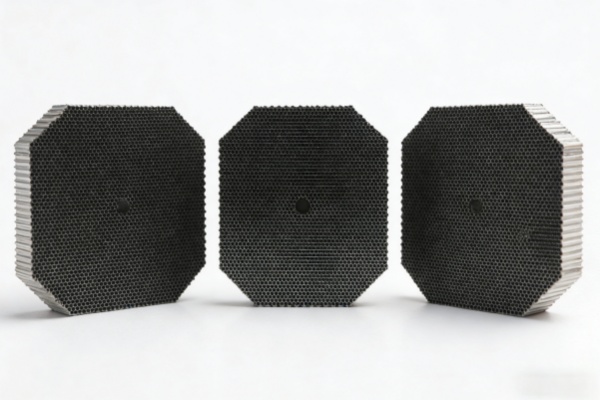
A honeycomb straightener usually fixes this better than those traditional options. Not because it’s more complicated, but because it’s more “honest” about what it does. Instead of trying to block or redirect the airflow, it simply gives the air a bunch of straight channels. The air enters, gets divided, and comes out more aligned. It’s not magic — it’s just how the structure forces the flow to behave.
What’s interesting is how it handles messy upstream conditions. In the real world, upstream flow is almost never clean. There are bends, fans, valves, transitions… all sorts of things that create turbulence. Traditional straighteners can help, but they often need a long straight section to work properly. If you don’t have that, the flow stays uneven. Honeycomb straighteners are less picky. They stabilize the flow inside the block, so downstream you get something more consistent even if the upstream isn’t perfect.
Another thing I noticed is the distribution. With perforated plates, some holes carry more flow than others. That means some parts of the cross-section move faster, some slower. Downstream, you can see that imbalance. Honeycomb cells are all the same, so the flow doesn’t “choose” a preferred path as easily. The result is a more even velocity profile, and that’s what makes the flow feel stable.
People often worry about pressure loss, but in practice it’s not always a big deal. The channels are straight, so the air doesn’t need to keep turning or bending. Compared to a multi-layer grid or screen, the pressure drop can actually be reasonable. The stability you get is usually worth it.
And there’s a practical point: durability. Grids and screens can deform, especially under long-term high-speed flow. Once the geometry changes, the flow behavior changes too. Honeycomb blocks are usually more rigid, and they keep their shape better over time. So the performance stays more consistent.
So yeah, the reason honeycomb straightener feel more stable is simple: they guide the flow instead of forcing it. They’re not trying to “fix” the flow with resistance. They just let the flow settle into a stable pattern. That’s why they show up in wind tunnels, test chambers, and systems where stable airflow actually matters.https://en.mat-cm.com/honeycomb-products/18.html#pdetail