To be a valuable global supplier
for metallic honeycombs and turbine parts


Contact number
0555-2813555
To be a valuable global supplier
for metallic honeycombs and turbine parts
Technological Innovation
Process Management
Continuous Improvement
Customer Satisfaction

Knowledge
Dedication
Diligence
Loyalty
Responsibility
Confidence
Tenacity
Respect
To be a valuable global supplier
for metallic honeycombs and turbine parts
Release time:2026-01-22
Data centers move a lot of air. At the same time, they generate a lot of electromagnetic noise. Those two things meet at the vent opening, and that is usually where trouble starts.
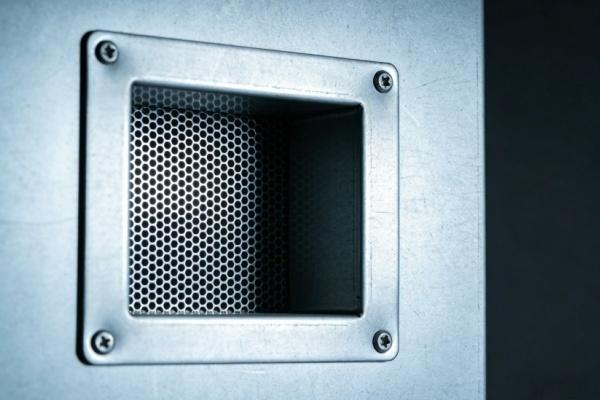
Most cabinets use perforated panels. They are cheap and airflow is easy. From an EMI point of view, they are unpredictable. Once equipment starts switching at high frequency, the vent opening becomes a leakage path. This is often noticed only after the system is already in operation.
Planar Wave Shielded Ventilation takes a different approach. Instead of open holes, the vent uses defined channels. Each channel behaves like a waveguide. If the frequency is above the cutoff, it does not pass through. Air still does.
There is no mesh to rely on and no coating that slowly loses conductivity. The shielding is built into the geometry.
Cooling efficiency is where many designs fail. A vent panel that blocks EMI very well can also block air. When that happens, fans run harder. Temperatures rise. Power consumption goes up. The panel did its job electrically, but the system suffers.
With a planar wave structure, airflow is easier to control. Channel size, length, and open area all affect pressure loss. These are fixed, mechanical parameters. If they are matched to the cabinet’s airflow requirement, the cooling system stays stable.
Installation matters more than people expect. A good panel with poor contact performs poorly. The frame must bond properly to the cabinet. In most data centers, that means clean metal contact and consistent mounting pressure. Once installed, there is very little to maintain.
This type of ventilation is typically used in racks with high switching activity. Network cabinets. Power distribution units. UPS enclosures. Places where airflow cannot be reduced, but EMI cannot be ignored.
In data centers, shielding and energy efficiency are not separate topics. A ventilation solution that increases cooling load is not really a solution. Planar Wave Shielded Ventilation works when it is sized for the actual airflow and the actual frequencies involved. Anything beyond that is usually unnecessary.