To be a valuable global supplier
for metallic honeycombs and turbine parts


Contact number
0555-2813555
To be a valuable global supplier
for metallic honeycombs and turbine parts
Technological Innovation
Process Management
Continuous Improvement
Customer Satisfaction

Knowledge
Dedication
Diligence
Loyalty
Responsibility
Confidence
Tenacity
Respect

To be a valuable global supplier
for metallic honeycombs and turbine parts
Release time:2026-01-21
In our work, we often see a situation where the vent panel is chosen too conservatively. The team wants strong EMI shielding, so they pick a panel with very high attenuation. The result is not better performance. It’s a cooling issue.
Airflow drops.
Internal temperature rises.
Fans run at higher speed.
Equipment runs hotter than designed.
Long-term reliability goes down.
So, overshielding is not “too much shielding”. It is shielding that hurts airflow.
Most people select a vent panel based on EMI numbers only. They ignore the fact that vent panels also create pressure drop. A panel that blocks EMI well can still be a bad choice if it blocks air too much.
Another common mistake is using a standard panel for all cabinets. But each cabinet has different airflow demand and different EMI sources. One panel cannot fit all.
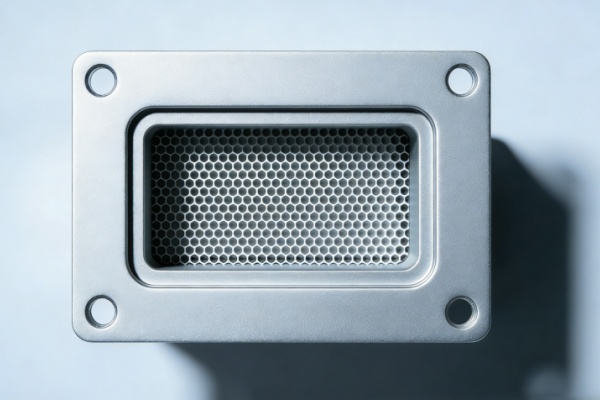
A Planar Wave Shielded Ventilation Panel uses a waveguide cutoff concept. The panel has structured channels. Air passes through, but high-frequency waves cannot.
This works, but it needs proper sizing:
Channel size determines cutoff frequency.
Channel length affects attenuation.
Open area affects airflow.
If you change one parameter, the others change too.
We don’t sell “one-size-fits-all” panels. We design based on the actual cabinet and the actual airflow demand.
The process is simple:
Check the cabinet’s airflow requirement
Check the EMI frequency range to block
Confirm installation constraints
Adjust the panel design
Verify airflow and shielding in real conditions
We can customize:
channel size and shape
panel thickness
material and surface treatment
mounting method
gasket and grounding design
The goal is to avoid overshielding while still meeting EMI requirements.
Overshielding happens when a vent panel is chosen only for EMI performance, without considering airflow. A Planar Wave Shielded Ventilation Panel can solve EMI leakage, but only if the panel is sized and installed correctly.
If the airflow is not considered, you end up with a cabinet that runs hotter, not a better shielded system.