To be a valuable global supplier
for metallic honeycombs and turbine parts


Contact number
0555-2813555
To be a valuable global supplier
for metallic honeycombs and turbine parts
Technological Innovation
Process Management
Continuous Improvement
Customer Satisfaction
Knowledge
Dedication
Diligence
Loyalty
Responsibility
Confidence
Tenacity
Respect
To be a valuable global supplier
for metallic honeycombs and turbine parts
Release time:2026-01-20
High-power electronic equipment generates heat continuously. Power converters, transmitters, RF amplifiers, and high-density control systems all rely on forced cooling to stay within operating limits. At the same time, these systems often operate in environments where electromagnetic leakage cannot be ignored.
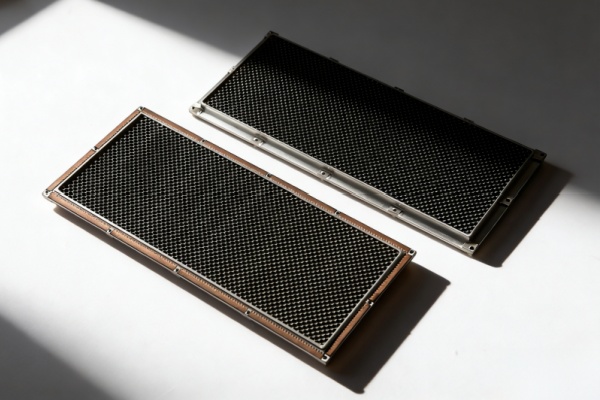
Cooling openings are necessary, but they also weaken enclosure shielding. Shielded vent panels are used to deal with this conflict.
High-power equipment usually runs at steady load. Heat output is predictable, but airflow demand is high. Fans are sized to move large volumes of air, often through limited openings.
When airflow is restricted, internal temperatures rise quickly. For this reason, cooling design is usually driven by thermal requirements first. Shielding is added afterward to prevent EMI problems caused by the openings.
Standard perforated panels or louvers allow air to pass easily, but they provide little control over electromagnetic leakage. In high-power systems, switching frequencies and harmonics can extend well into high-frequency ranges.
Once these signals escape through ventilation openings, they can interfere with nearby equipment or fail compliance tests. Shielded vent panels are used to limit this leakage while keeping airflow paths open.
Shielded vent panels are installed directly in the main airflow path. This means they see constant pressure and vibration from fans.
In high-power equipment, airflow is rarely uniform. Some areas see higher velocity, others less. If the incoming flow is uneven, localized pressure can build up on the panel. Over time, this can affect flatness, especially on larger panels.
Because of this, panel stiffness and mounting method matter as much as shielding performance.
Every shielded vent panel introduces resistance. In high-power systems, even a small increase in pressure drop can reduce airflow enough to affect cooling margins.
Designers usually check pressure drop at operating airflow, not just at nominal values. If the pressure drop is too high, fan speed may need to increase, which adds noise, vibration, and power consumption.
This trade-off is a common issue in high-power cooling design.
Shielding performance is often measured under static conditions. In real equipment, fans run continuously, and internal temperatures change.
Thermal expansion, vibration, and long operating hours can affect the contact between the vent panel and the enclosure. If grounding relies only on mechanical contact, shielding performance may degrade over time.
For high-power equipment, grounding paths around the vent opening are often reinforced to maintain stable performance.
Installation quality plays a major role. Uneven fastener tightening or slight gaps at the panel edge can reduce shielding effectiveness.
During maintenance, panels are sometimes removed and reinstalled. Each reinstall carries a risk of misalignment. For this reason, clear installation references and repeatable mounting methods are usually preferred.
In high-power electronic equipment, shielded vent panels are not a standalone solution. Their performance depends on airflow design, mounting structure, and grounding quality.
Most issues are not discovered during initial testing, but after extended operation under load. Cooling performance and EMI control need to be checked together, not separately.