To be a valuable global supplier
for metallic honeycombs and turbine parts


Contact number
0555-2813555
To be a valuable global supplier
for metallic honeycombs and turbine parts
Technological Innovation
Process Management
Continuous Improvement
Customer Satisfaction
Knowledge
Dedication
Diligence
Loyalty
Responsibility
Confidence
Tenacity
Respect
To be a valuable global supplier
for metallic honeycombs and turbine parts
Release time:2026-01-08
At MAT Aviation Manufacturing Co., Ltd., production of a shielded ventilation window starts with material control. Performance depends on the first step.
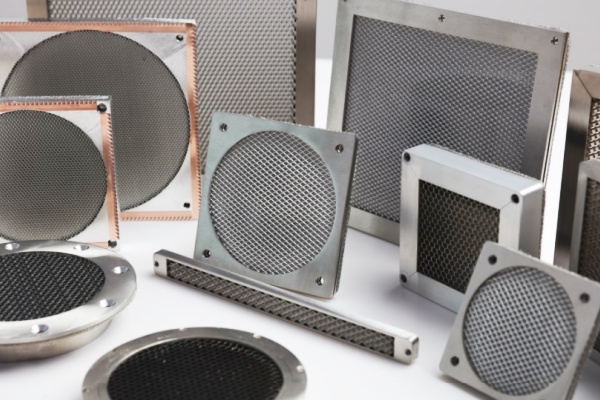
All incoming materials are inspected before entering our production line.
Metal sheets, waveguide cores, frame materials.
We check:
Thickness consistency
Surface flatness
Electrical conductivity
Oxidation and contamination
Materials that do not meet requirements are separated immediately.
They are not mixed into production.
Each batch is recorded for traceability.
Approved materials are cut according to engineering drawings.
Dimensional tolerance is controlled at this stage.
Edges are deburred.
Sharp corners removed.
Surfaces cleaned to eliminate oil and dust.
We do not skip this step.
Poor preparation leads to assembly and performance issues later.
The waveguide core defines the shielding behavior of the product.
Channel size, length, and spacing determine attenuation performance.
At MAT, waveguide structures are formed using dedicated tooling.
Consistency across the entire panel is required.
After forming, each core is checked for:
Deformation
Blocked channels
Uneven geometry
Cores that fail inspection are rejected before assembly.
Frames provide mechanical strength and electrical continuity.
Flatness is critical.
Depending on design, frames are machined or stamped.
Contact surfaces are kept free of insulating coatings.
Before assembly, we verify the fit between frame and waveguide core.
Any mismatch increases the risk of EMI leakage.
Assembly is carried out under controlled conditions.
Waveguide cores are aligned with frames manually and visually.
Fasteners are applied using specified torque values.
Over-tightening causes distortion.
Under-tightening creates gaps.
During assembly, our operators verify:
Core alignment
Frame contact quality
Mechanical stability
Units that do not meet requirements are corrected or removed from the line.
Some shielded ventilation windows require surface treatment for corrosion resistance.
This process is controlled carefully.
Coating thickness is monitored.
Excess coating reduces conductivity.
Insufficient coating affects durability.
Electrical contact areas remain conductive.
Finished products undergo inspection before release.
We perform:
Dimensional measurement
Visual inspection
Electrical continuity checks
Shielding effectiveness testing is conducted based on project or customer requirements.
Only qualified electromagnetic shielding ventilation windows proceed to packaging.
Products are cleaned before packaging.
Protective materials are used to prevent deformation during transport.
Batch numbers link finished products back to raw material records.
This allows us to trace and respond quickly if issues arise after installation.
At MAT Aviation Manufacturing Co., Ltd., every step from raw material to finished product affects performance.
This process control is how we maintain consistency in shielded ventilation window production.