To be a valuable global supplier
for metallic honeycombs and turbine parts


Contact number
0555-2813555
To be a valuable global supplier
for metallic honeycombs and turbine parts
Technological Innovation
Process Management
Continuous Improvement
Customer Satisfaction

Knowledge
Dedication
Diligence
Loyalty
Responsibility
Confidence
Tenacity
Respect

To be a valuable global supplier
for metallic honeycombs and turbine parts
Release time:2026-01-07
Communication equipment rooms generate heat.
Racks run continuously. Power density is high. Cooling is not optional.
At the same time, these rooms are sensitive to electromagnetic interference.
Base stations, servers, switching systems, control units.
Signal stability matters.
This is where the electromagnetic shielding ventilation window becomes necessary.
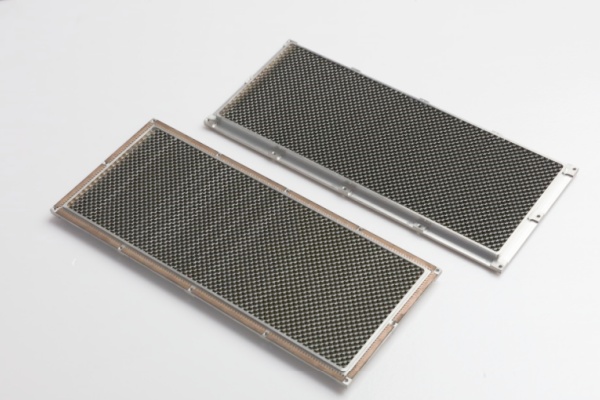
Equipment rooms usually require air intake and exhaust openings.
Once an opening is created, shielding continuity is broken.
Without proper treatment, ventilation holes allow EMI leakage.
External interference enters.
Internal noise escapes.
In communication systems, this can lead to:
Signal instability
Increased error rates
Interference between adjacent equipment
Compliance issues during EMC testing
Standard ventilation panels are not enough in these environments.
An electromagnetic shielding ventilation window allows airflow while maintaining shielding performance.
The core principle is simple.
Air passes through.
Electromagnetic waves do not.
This is achieved through waveguide structures, controlled aperture size, and conductive materials.
When designed correctly, the ventilation window becomes part of the shielding system rather than a weak spot.
Shielded ventilation windows are commonly used in:
Equipment room walls
Shielded cabinets and enclosures
Air inlet and outlet panels
Cooling paths between isolated zones
In high-density rooms, multiple ventilation windows may be installed to balance airflow and attenuation.
Placement matters.
So does orientation.
Improper positioning can reduce effectiveness even if the product itself meets specifications.
Communication equipment rooms operate continuously.
This affects how ventilation windows are selected.
Key factors include:
Required shielding effectiveness across target frequency ranges
Airflow volume and pressure drop
Structural strength for long-term operation
Resistance to corrosion and dust
An electromagnetic shielding ventilation window designed for light industrial use may not be suitable for communication rooms.
Design must match the actual operating environment.
Performance loss often comes from installation, not product design.
Common issues include:
Gaps between the ventilation window and mounting surface
Poor electrical contact
Inconsistent fastening torque
Paint or coating interfering with conductivity
In communication equipment rooms, grounding continuity is critical.
Ventilation windows must be electrically bonded to surrounding structures.
This step is often overlooked during on-site installation.
Communication rooms are not static environments.
Temperature changes.
Humidity fluctuates.
Dust accumulates.
Over time, shielding performance can degrade if ventilation windows are not inspected.
Routine checks usually focus on:
Mechanical deformation
Surface corrosion
Loosened fasteners
Blocked airflow channels
A damaged or contaminated ventilation window can affect both cooling and EMI control.
When properly selected and installed, an electromagnetic shielding ventilation window supports system stability.
Cooling remains effective.
Shielding integrity is preserved.
Interference risks are reduced.
For communication equipment rooms, this is not an accessory component.
It is part of the overall EMC strategy.
Ignoring ventilation shielding often leads to problems later.
Addressing it during design and installation avoids costly rework.