To be a valuable global supplier
for metallic honeycombs and turbine parts


Contact number
0555-2813555
To be a valuable global supplier
for metallic honeycombs and turbine parts
Technological Innovation
Process Management
Continuous Improvement
Customer Satisfaction
Knowledge
Dedication
Diligence
Loyalty
Responsibility
Confidence
Tenacity
Respect

To be a valuable global supplier
for metallic honeycombs and turbine parts
Release time:2025-12-17
In real applications, a honeycomb metal sheet is rarely chosen because it “looks strong.”It’s chosen because it solves several problems at the same time—strength, airflow, heat, and weight—without forcing compromises elsewhere in the system.
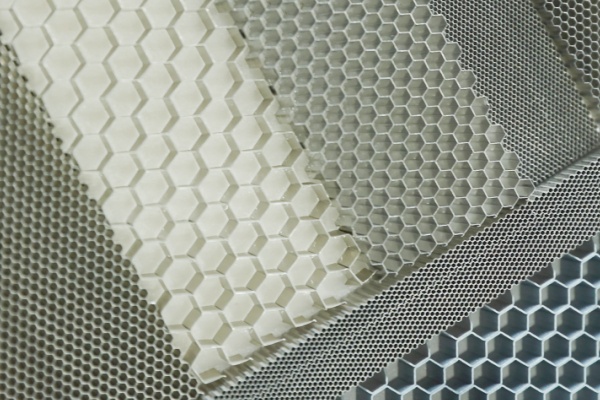
Structurally, a honeycomb metal sheet is made from thin metal walls formed into repeating cells, most commonly hexagonal. The idea is simple: instead of using thick, solid metal to resist load, the geometry itself carries the stress. This is why the sheet can stay lightweight while still handling vibration, pressure, or repeated thermal cycles.
In practice, the materials are usually stainless steel, FeCrAl alloy, or aluminum. The choice depends less on theory and more on operating conditions—temperature range, corrosion risk, and how long the part is expected to last once it’s installed.
One thing engineers notice quickly is how rigid a honeycomb metal sheet feels compared to a flat or perforated plate of the same weight. Loads are spread across many connected walls, not concentrated in one area. That distribution is what gives the structure its fatigue resistance, especially in systems that run continuously or experience vibration.
Airflow behavior is another reason these sheets are widely used. When air or gas passes through the honeycomb cells, the flow is naturally straightened. Swirl and cross-flow are reduced because each cell forces the gas into a narrow, parallel path. This is very different from a punched or perforated sheet, which restricts flow but does little to stabilize it.
Because of this, honeycomb metal sheets are often used where predictable flow matters—ventilation panels, air straighteners, and exhaust-related components. You don’t need moving parts or additional baffles; the geometry does the work on its own.
Temperature performance is where metal honeycomb structures really stand out. In high-heat environments, especially exhaust or industrial heating systems, the thin walls heat up quickly and cool down evenly. That helps avoid the large temperature gradients that cause warping or cracking in thicker solid parts.
When FeCrAl alloy is used, the metal forms a stable oxide layer during operation. This layer protects the surface from further oxidation and also improves long-term durability. That’s one reason FeCrAl-based honeycomb metal sheets show up so often in catalytic and high-temperature applications.
From a mechanical standpoint, the low mass of the structure also matters. Less weight means lower inertia under vibration or shock. In real-world equipment—generators, engines, industrial machinery—that translates into fewer stress failures over time, not just on paper.
Manufacturing quality plays a big role here. Cell size, wall thickness, and bonding consistency all affect performance. If the geometry isn’t uniform, airflow becomes uneven. If joints are weak, vibration will find them. That’s why industrial-grade honeycomb metal sheets are brazed or bonded with tight process control rather than simply pressed together.
You’ll find honeycomb metal sheets used as catalytic converter supports, airflow conditioning panels, EMI shielding vents, and protective guards where airflow must remain open. In many cases, one sheet replaces multiple separate components, simplifying the overall design.
In the end, a honeycomb metal sheet works because it lets geometry do what mass normally would. It carries load, manages heat, and controls flow without adding unnecessary material. That efficiency is what keeps it relevant in demanding industrial systems, long after simpler sheet designs hit their limits.