To be a valuable global supplier
for metallic honeycombs and turbine parts


Contact number
0555-2813555
To be a valuable global supplier
for metallic honeycombs and turbine parts
Technological Innovation
Process Management
Continuous Improvement
Customer Satisfaction
Knowledge
Dedication
Diligence
Loyalty
Responsibility
Confidence
Tenacity
Respect
To be a valuable global supplier
for metallic honeycombs and turbine parts
Release time:2025-12-12
A catalytic converter may look like a simple metal can from the outside, but inside it’s a carefully engineered system designed to clean exhaust gases before they leave the tailpipe. Whether it’s used on gasoline engines, diesel engines, or industrial equipment, the internal structure is what determines how well it reduces emissions. Here’s a clear look at what’s actually inside a catalytic converter and what each part is there to do.
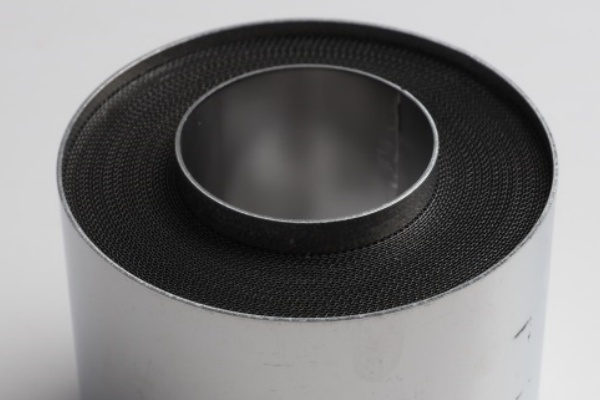
Every catalytic converter starts with a stainless steel housing. It needs to be strong enough to handle heat, vibration, and corrosion from years of exhaust flow. The shell doesn’t participate in the chemical reactions; it simply keeps everything inside aligned and protected.
Inside the shell sits the substrate—the core of the converter. This is where most of the engineering work happens. Substrates come in two main types:
Usually made from cordierite
Handle high temperatures well
Cost-effective for mass production
More sensitive to sudden thermal shock
Often made from FeCrAl stainless alloy
Heat up faster than ceramic
Handle vibration better (ideal for off-road and industrial engines)
Allow thinner walls and more open area
Regardless of the material, the substrate is shaped like a honeycomb. The thin channels increase surface area and give exhaust gases room to flow.
The substrate on its own cannot perform catalytic reactions. It needs a washcoat—a rough, porous layer typically made from aluminum oxide, cerium oxide, or similar materials.
The washcoat’s job is simple:
create more microscopic surface area so the catalyst can adhere evenly.
A high-quality washcoat helps the converter store oxygen, survive thermal cycles, and maintain stable performance over time.
The real chemical reactions happen on this final layer. Most catalytic converters use a blend of precious metals such as:
Platinum (Pt): excellent for oxidation
Palladium (Pd): commonly used in gasoline applications
Rhodium (Rh): critical for NOx reduction in three-way catalysts
Diesel oxidation catalysts (DOCs) use mainly Pt or Pd, while gasoline three-way catalysts (TWCs) use all three.
These metals don’t get used up in the process—they simply help the reactions happen faster.
Between the shell and the substrate is a heat-resistant mat. It cushions the substrate, absorbs vibration, and keeps the core from shifting. This layer expands with temperature, so the substrate stays firmly locked in place even under rough conditions.
When exhaust enters a catalytic converter:
CO (carbon monoxide) is oxidized into CO₂
HC (unburned hydrocarbons) turn into CO₂ and water vapor
NOx (nitrogen oxides) are reduced to harmless nitrogen (in three-way systems)
Soot and organic fractions are oxidized (in diesel systems)
Each part—the honeycomb structure, the washcoat, and the precious metals—plays a role in making these reactions efficient.
The converter may only have a few main components, but small design choices make a big difference:
Wall thickness affects warm-up time
Cell density impacts backpressure and flow
Alloy choice influences durability
Catalyst formulation affects emission performance
A well-built catalytic converter lasts thousands of hours. A poorly designed one can fail early or struggle to meet emission standards.
A catalytic converter is more than just a metal box in the exhaust system. Inside it is a precisely engineered combination of materials—ceramic or metal substrates, washcoats, precious metals, and insulation—all working together to clean exhaust gas efficiently. Understanding what’s inside helps manufacturers, engineers, and operators choose the right converter for their engines and meet emission regulations with confidence.