To be a valuable global supplier
for metallic honeycombs and turbine parts


Contact number
0555-2813555
To be a valuable global supplier
for metallic honeycombs and turbine parts
Technological Innovation
Process Management
Continuous Improvement
Customer Satisfaction

Knowledge
Dedication
Diligence
Loyalty
Responsibility
Confidence
Tenacity
Respect

To be a valuable global supplier
for metallic honeycombs and turbine parts
Release time:2025-12-11
If you look at modern small engines, motorcycles, or compact industrial machines, you’ll notice one thing: the muffler and the catalytic converter are no longer two separate parts. Many manufacturers now use a Muffler Catalytic Converter, an integrated unit that handles noise control and exhaust purification at the same time.
This design keeps the exhaust system compact, helps engines meet stricter emission standards, and makes installation much easier for OEMs.
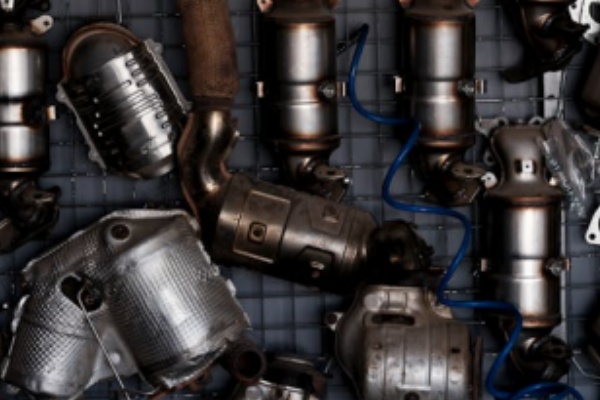
At its core, a Muffler Catalytic Converter is a hybrid component.
It contains:
A catalyst substrate (usually ceramic or metal honeycomb) that oxidizes pollutants
A muffler chamber that reduces exhaust noise through acoustic damping
A shared housing designed to manage heat, vibration, and gas flow
Instead of routing exhaust through two separate devices, the engine sends hot gases into one combined assembly where sound and emissions are treated simultaneously.
There are a few practical reasons manufacturers go this route:
Because the catalyst sits very close to the engine, it heats up quicker. Faster heat-up = better emission control during cold start.
A properly designed integrated unit avoids the pressure spikes that come from chaining separate components together.
Only one housing to fabricate, weld, and mount.
One bracket, one design, one installation process.
Especially useful in compact machines: generators, pumps, ATVs, and motorcycles.
Although everything sits inside one shell, the working process still happens in stages.
Hot gases flow through the honeycomb substrate.
The catalyst coating helps convert:
CO → CO₂
HC → H₂O + CO₂
Some designs also reduce odor and smoke, which is important for small gasoline engines.
These chambers and tubes change the pressure and speed of the exhaust, canceling sound waves and cutting down engine noise.
A good Muffler Catalytic Converter keeps the gas flow smooth (no turbulence) and holds temperature long enough for the catalyst to work efficiently.
This balance is what separates cheap units from proper OEM-grade hardware.
You’ll find this integrated setup in:
Portable generators
Garden and forestry machinery
Small gasoline engines
Motorcycles and scooters
Compact construction equipment
ATVs and recreational vehicles
Anywhere space is tight and emissions laws are getting tougher, this solution makes sense.
A Muffler Catalytic Converter may look like a simple exhaust can, but the engineering behind it is doing double duty—quieting the engine while cleaning the exhaust stream. As emission rules continue tightening worldwide, integrated designs like this will only become more common.