To be a valuable global supplier
for metallic honeycombs and turbine parts


Contact number
0555-2813555
To be a valuable global supplier
for metallic honeycombs and turbine parts
Technological Innovation
Process Management
Continuous Improvement
Customer Satisfaction

Knowledge
Dedication
Diligence
Loyalty
Responsibility
Confidence
Tenacity
Respect

To be a valuable global supplier
for metallic honeycombs and turbine parts
Release time:2025-07-25
In an era dominated by 5G networks and IoT devices, electromagnetic shielding ventilation window have emerged as critical components for sensitive facilities. These specialized installations uniquely address the paradoxical requirements of maintaining stringent electromagnetic isolation while ensuring adequate environmental ventilation - a technological breakthrough with far-reaching implications across multiple industries.
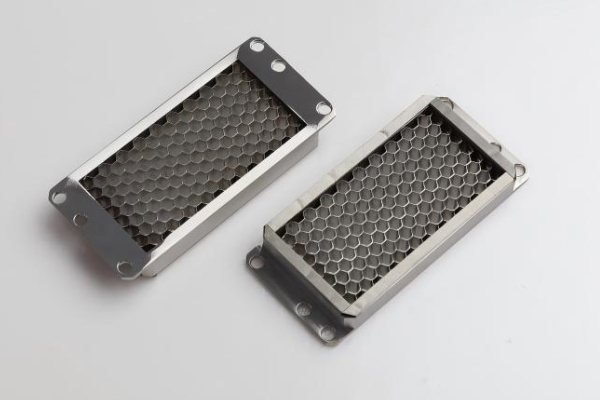
The electromagnetic shielding ventilation window represents a sophisticated engineering solution where form precisely follows function. By integrating wave-guide theory with fluid dynamics, these systems achieve:
Dual-frequency operation: Effective across 10kHz-40GHz spectrum while permitting 200m³/h·m² airflow
Structural intelligence: Hexagonal honeycomb arrays with ≤1.5mm apertures provide 70% open area ratio
Environmental resilience: Withstand 500-hour salt spray tests and -80℃ to 200℃ thermal cycles
Military installations adopting electromagnetic shielding ventilation windows report 40dB attenuation at 28GHz millimeter-wave frequencies - crucial for countering modern electronic warfare threats. Simultaneously, hospital MRI suites benefit from their ability to maintain 60dB shielding at 300MHz while meeting strict air exchange regulations.
Electromagnetic shielding ventilation windows leverage three fundamental principles:
Cutoff waveguide effect: Apertures dimensioned below λ/2 create frequency-selective barriers
Impedance mismatch: Conductive surfaces reflect incident waves through charge redistribution
Eddy current dissipation: Induced currents convert EM energy into negligible heat
Recent advancements have seen electromagnetic shielding ventilation windows incorporate smart materials like shape-memory alloys, enabling automatic aperture adjustment within 30 seconds when detecting temperature fluctuations. This innovation reduces HVAC energy consumption by 18-22% in shielded data centers.
The versatility of electromagnetic shielding ventilation windows is demonstrated through their deployment in:
Telecom infrastructure: Solving 5G base station overheating without compromising RF containment
Financial security: Preventing TEMPEST attacks in trading server rooms
Aerospace: Maintaining cabin pressure differentials while blocking radar interference
Case studies show that properly installed electromagnetic shielding ventilation windows can extend electronic equipment lifespan by 3-5 years by reducing thermal stress and EMI-induced component degradation.
As electromagnetic pollution becomes increasingly pervasive, electromagnetic shielding ventilation window stand at the forefront of protective architecture. Their ability to reconcile historically conflicting requirements - robust EMI shielding and natural ventilation - makes them indispensable for critical infrastructure worldwide. The ongoing evolution of this technology promises to unlock new possibilities in electromagnetic hygiene and energy-efficient building design.