To be a valuable global supplier
for metallic honeycombs and turbine parts


Contact number
0555-2813555
To be a valuable global supplier
for metallic honeycombs and turbine parts
Technological Innovation
Process Management
Continuous Improvement
Customer Satisfaction
Knowledge
Dedication
Diligence
Loyalty
Responsibility
Confidence
Tenacity
Respect
To be a valuable global supplier
for metallic honeycombs and turbine parts
Release time:2025-07-22
The catalytic converter stands as one of the most important emission control devices in modern automobiles. This ingenious piece of engineering serves as the first line of defense against harmful vehicle emissions, transforming dangerous pollutants into relatively harmless substances before they exit the exhaust system.
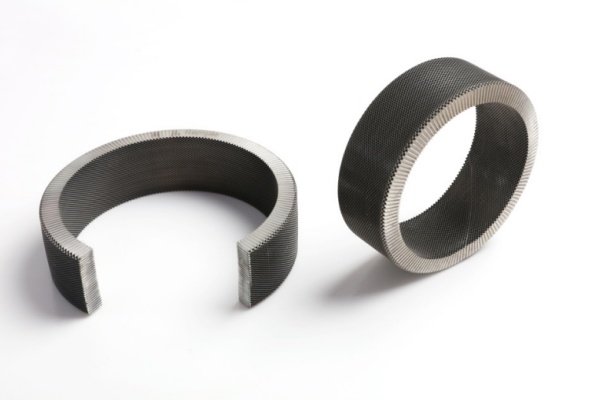
At its core, a catalytic converter is an exhaust aftertreatment device that utilizes precious metal catalysts to facilitate chemical reactions. The catalytic converter typically contains platinum, palladium, and rhodium which work synergistically to convert carbon monoxide (CO), hydrocarbons (HC), and nitrogen oxides (NOx) into carbon dioxide (CO₂), water (H₂O), and nitrogen (N₂).
The metal substrate catalytic converter offers several distinct advantages. First, its superior thermal conductivity allows faster light-off time - the metal substrate catalytic converter reaches optimal operating temperature about 30-40% quicker than ceramic equivalents, significantly reducing cold-start emissions.
They can withstand extreme temperatures exceeding 1000°C without structural degradation, making them ideal for high-performance applications. The metal substrate's mechanical strength also provides better resistance to vibration and thermal shock compared to ceramic alternatives.
Manufacturers can create various cell shapes and densities to optimize exhaust flow characteristics. This results in lower backpressure while maintaining excellent conversion efficiency - the catalytic converter achieves over 95% conversion rates for most pollutants under optimal conditions.
The manufacturing process for metal substrate catalytic converters involves precision welding of thin metallic foils into honeycomb structures. Though more expensive to produce than ceramic versions, the metal substrate catalytic converter offers longer service life and better performance consistency throughout its lifespan.
As emission regulations become increasingly stringent worldwide, the catalytic converter continues to evolve. The metal substrate catalytic converter represents a significant technological advancement, combining durability with exceptional emission reduction capabilities. Future developments in catalytic converter technology will likely focus on further improving conversion efficiency while reducing precious metal content and manufacturing costs.