To be a valuable global supplier
for metallic honeycombs and turbine parts


Contact number
0555-2813555

To be a valuable global supplier
for metallic honeycombs and turbine parts

Technological Innovation
Process Management
Continuous Improvement
Customer Satisfaction

Knowledge
Dedication
Diligence
Loyalty
Responsibility
Confidence
Tenacity
Respect

To be a valuable global supplier
for metallic honeycombs and turbine parts
Release time:2026-08-24
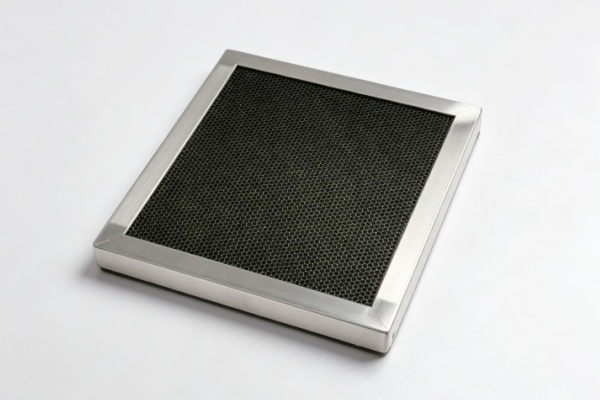
You see two vents side by side. Look the same. Same honeycomb, same size. One costs twice as much.
Buy the cheap one, put it on a coastal site, and six months later you're replacing it. The honeycomb is flaking, the frame is pitted, and the shielding is gone.
That's the difference between an ordinary vent and a salt spray resistant waveguide window . Same shape, completely different survival rate.
Here's what separates them.
What Salt Does to an Ordinary Vent
Standard EMI vents are aluminum. Lightweight, good conductivity, easy to make. Works fine in a server room or a factory floor .
Put that same vent near the coast, and things change fast. Salt accumulates in the honeycomb cells. Moisture sits there. Corrosion starts at the cell walls and spreads.
The metal doesn't just look bad. It loses conductivity. Shielding drops.
We tested an aluminum vent after 500 hours of salt spray. Shielding dropped 30 dB . The cells had literally flaked away. Airflow still worked, sort of. Shielding was gone. Might as well have left the hole open .
Uncoated aluminum in coastal areas shows visible pitting within 18 months. On a ship, it's even faster.
The frame corrodes too. Mix metals – stainless frame with aluminum honeycomb – and you get galvanic corrosion. Salt water acts as electrolyte, and your vent becomes a battery. One metal corrodes faster to protect the other. Usually the aluminum loses .
What Makes a Vent Salt Spray Resistant
Material. Start with the metal. Stainless steel 316L is the answer . It's got molybdenum, which resists chlorides . Corrosion rate in salt spray is about 0.01 mm per year, compared to 0.1 mm for regular steel .
Some vents use nickel-plated aluminum. Helps, but coatings can scratch or wear. Once salt gets under the coating, it spreads fast . Stainless just sits there and doesn't corrode.
Frame compatibility. Stainless honeycomb bolted into an aluminum frame? Bad idea. Salt water turns it into a battery . A salt spray resistant vent uses the same material throughout – 316L frame with 316L honeycomb. No galvanic mismatch .
Better sealing. Salt doesn't just sit on the surface. It creeps. If flange compression is uneven or sealing pressure drops, moisture works its way into interfaces . Some marine vents use dual O-ring seals to keep salt fog away from the joint. IP68-rated seals exist for a reason .
Rain lips and drain holes. Indoor vents don't seal against rain. Water gets in, sits in the honeycomb, and corrodes the aluminum . Outdoor vents have raised edges that direct water away from the seal, and drain holes at the bottom to let water out .
UV-resistant gaskets. Foam gaskets turn to dust in a year outdoors . Salt spray resistant vents use UV-resistant silicone or beryllium copper fingers .
Test Standards
Standard salt spray testing runs 96 hours in 5% NaCl solution at 35°C, high humidity . Good marine vents come out looking like they went in – no corrosion, no blistering, no peeling .
A proper salt spray resistant vent should hold up to 500 hours or more. Some stainless vents pass 1000-hour tests. After salt exposure, a quality vent should show less than 0.1 dB change in insertion loss .
The Cost Difference
Salt spray resistant vents cost more – figure 30% to 50% above standard models. But replacing a failed vent on a ship or coastal site costs more than the upfront difference.
Standard aluminum vents with foam gaskets die fast. Salt spray eats them. The cheap vent isn't cheaper. You buy it twice.
Bottom Line
Ordinary vent = aluminum, foam gasket, no weather seal. Works indoors. Dies outside.
Salt spray resistant = 316L stainless, UV-resistant gasket, rain lips, drain holes. Survives coastal environments for years.
If your gear's going near the ocean, don't buy the cheap vent. You'll replace it in a year.
We make salt spray resistant waveguide vents. That's what we do.