To be a valuable global supplier
for metallic honeycombs and turbine parts


Contact number
0555-2813555
To be a valuable global supplier
for metallic honeycombs and turbine parts

Technological Innovation
Process Management
Continuous Improvement
Customer Satisfaction

Knowledge
Dedication
Diligence
Loyalty
Responsibility
Confidence
Tenacity
Respect

To be a valuable global supplier
for metallic honeycombs and turbine parts
Release time:2026-08-21
An EMI Shielded Ventilation Panel does two things at once. Air goes through. RF doesn't. Same holes, two different behaviors.
The trick is a piece of physics called waveguide below cutoff. It's not complicated. Let me walk through it.
A hollow metal tube is a waveguide. In electromagnetics, that's what it is. It guides waves along its length.
Every waveguide has a cutoff frequency. Signals below the cutoff can pass. Signals above it can't. They hit the walls, bounce, lose energy.
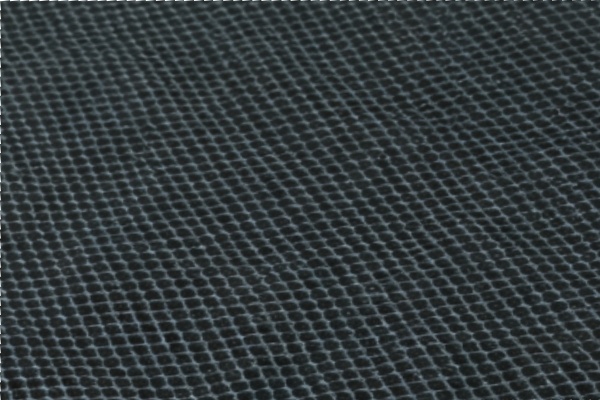
So here's what we do with a honeycomb vent. We size the cells so the cutoff is lower than the frequency we want to block. The interference tries to get through, hits the cell walls, bounces around, and dies. Air doesn't care about any of this. Air goes straight through.
The honeycomb makes this practical.
Each hex cell is a cutoff waveguide. The hex shape gives you the best balance of open area and strength. You get good airflow and a structure that doesn't collapse.
The key number is the 4:1 depth-to-width ratio. Cell depth has to be about four times the cell diameter. A 3.18 mm cell needs roughly 12.7 mm of depth. Without that depth, the waveguide effect doesn't happen.
Conductivity matters too. The panels are usually aluminum – conductive enough and light. The connection between honeycomb and frame has to be continuous. Laser welding or good adhesives keep the path intact.
Shielding effectiveness is measured in decibels. Higher is better.
A good honeycomb vent can hit 120 dB of plane wave shielding. Some high-end designs push 135 dB.
What affects performance?
Cell size. Smaller cells block higher frequencies. 0.060 inch cells are for 18 GHz and up.
Material. Steel shields better than brass. Brass better than aluminum.
Construction. Continuous conductivity beats spot connections every time.
More shielding usually means less airflow. Smaller cells and deeper channels block more RF, but they also block more air.
Engineers balance the two. For applications below 18 GHz, 0.125 inch cells are common. If airflow is the priority, you might go to 0.188 or 0.250 inch cells – trade some high-frequency shielding for better cooling.
For higher performance, stack two honeycomb layers at 90°. Cross-polarized. Attenuates waves from different directions, but adds pressure drop.
That's the principle. Each cell is a cutoff waveguide. The 4:1 depth-to-width ratio makes it work.
Air passes through. RF bounces and dies. The right material, the right cell size, proper construction – that turns a simple honeycomb into an EMI shield that still breathes.
We make EMI Shielded Ventilation Panel. That's what we do.